



The Treasury’s Quiet Hand: How Government Bond Buybacks Are Rewriting the Bitcoin Playbook
In the high-stakes world of global finance, the intricate dance between government debt and risk assets often dictates the rhythm of the markets. For months, analysts have painted a cautious picture for Bitcoin, suggesting that the cryptocurrency would trudge sideways through the autumn months, tethered to its historical four-year cycles. However, a seismic shift in fiscal policy is threatening to tear up that playbook. The recent announcement of a Treasury buyback program—initially modest in scale but potentially explosive in scope—has sent ripples through trading desks, prompting a reevaluation of when the next major bull run might ignite. This is a story about how a seemingly mundane bureaucratic tool intended to stabilize the bond market could inadvertently become the catalyst that propels Bitcoin to unprecedented heights.
At the heart of this narrative is a fundamental economic mechanism that every savvy investor understands: the correlation between Treasury yields and risk appetite. When yields on government bonds rise, they become an increasingly attractive haven for capital, drawing liquidity away from volatile assets like equities and cryptocurrencies. High yields effectively tighten financial conditions, making it more expensive to borrow and reducing the relative appeal of holding non-yielding assets. The introduction of a Treasury buyback program—where the government repurchases its own debt—directly challenges this dynamic. By injecting demand into the bond market, these buybacks support bond prices and, crucially, help contain those creeping yields. For digital assets, which thrive in an environment of abundant liquidity and low real yields, this policy shift acts as a subtle but potent tailwind.
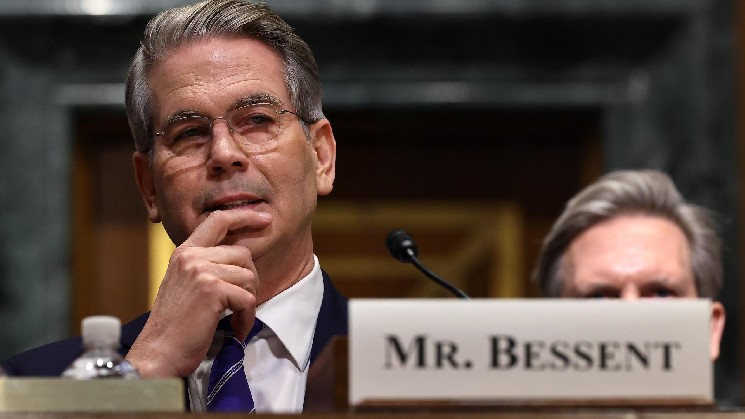
While the initial foray into this strategy is cautious, the forward-looking projections paint a picture of significant intervention. According to market strategist Connors, the early purchases are just a testing of the waters, a toe dipped into a pool that could soon become a wave. He projects that monthly Treasury support could eventually swell to between $10 billion and $30 billion. This is a stark contrast to the modest $4 billion initially announced by Treasury Secretary Bessent, suggesting a trajectory of aggressive intervention that few have fully priced in. Should this materialize, the steady absorption of government debt would serve as a powerful mechanism to cap runaway yields, creating a more hospitable macroeconomic backdrop for risk-on assets. It is this potential for scale, rather than the initial execution, that has captured the attention of crypto analysts and institutional investors alike.
This evolving fiscal landscape has forced a dramatic pivot in Connors’ outlook on Bitcoin. Previously, his analysis suggested that BTC would remain subdued, trading in a listless range until November as it followed the rhythm of its traditional four-year halving cycle. The market braced for a period of consolidation and patience. However, the premise of government bond market intervention has introduced a new variable that overrides cyclical history. “I am now less certain that investors will have to wait that long,” Connors remarked, signaling a departure from the consensus timeline. The logic is elegant: if Treasury buybacks successfully suppress yieldsaging a risk-on environment, capital flows into Bitcoin could accelerate far sooner than the third quarter of this year. The usual waiting period associated with post-halving accumulation phases may be compressed, ushering in an earlier than expected shift in momentum.
But the Treasury’s playbook may have more pages yet to turn. Connors points to another potential lever that could supercharge this process: a modification to the supplementary leverage ratio, or SLR. This regulatory metric dictates how much Treasury debt banks can hold relative to their capital reserves, effectively acting as a constraint on their ability to absorb new supply. Easing these constraints would be a dual-purpose weapon. It would not only free up bank balance sheets to soak up more government bonds—further easing yields—but it would also loosen broader financial conditions. The removal of such regulatory friction is widely seen as a form of quiet quantitative easing. According to Connors, this is the domino that needs to fall to unlock the market’s true potential. “When that happens, that’s when bitcoin starts to seek that first $180,000 price threshold,” he asserted, reiterating his ambitious cycle target range of $180,000 to $360,000 through 2030. The trigger is not just buybacks, but a comprehensive relaxation of the regulatory framework governing how banks interact with public debt.
The immediate implications of this thesis are perhaps most visible at a specific price marker: $72,000. Rather than being a just a psychological level, this figure carries significant technical weight due to the current positioning of leveraged traders. According to advanced modeling from Charles Schwab’s director of crypto research, Jim Ferraioli, a substantial concentration of leveraged Bitcoin shorts is clustered precisely around this price point. In the derivative markets, a high concentration of shorts creates a “squeeze” scenario. If the macroeconomic tailwinds from the Treasury policies are strong enough to push BTC above this threshold, it could trigger a cascade of forced liquidations among those short-sellers. These liquidations act as fuel for the fire, accelerating price appreciation in a sharp, violent rally that could quickly detach from fundamental valuation and ride purely on momentum.
In conclusion, the complex interplay between sovereign debt management and digital asset prices is entering a new, more volatile phase. The conventional wisdom that Bitcoin will simply idle until the end of the year appears to be on shaky ground as the Treasury signals a shift toward more aggressive bond market intervention. With projections of large-scale monthly purchases and the potential for SLR reform, the government is inadvertently creating the exact conditions for a liquidity-driven rally in risk assets. As Connors and other analysts recalibrate their models, the focus tightens on the $72,000 level—a battleground where leveraged speculative positioning meets massive fiscal policy shifts. Whether this convergence triggers the predicted surge to $180,000 remains to be seen, but one thing is certain: the traditional four-year crypto cycle may have just met its match in the form of modern monetary policy. The waiting game for Bitcoin bulls might be over sooner than anyone expected)Skip to content