




OpenAI Postpones Public Offering to 2027 as Altman Prioritizes Safety and Alignment
A Calculated Pause in the Race to Go Public
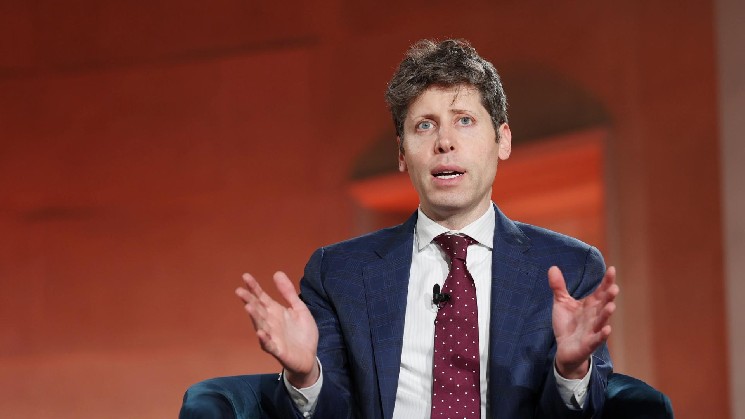
In a move that has sent ripples through the technology and investment communities, OpenAI’s highly anticipated initial public offering appears to be off the table until at least 2027. Sam Altman, the company’s chief executive, made the announcement during a recent interview with Fortune, framing the decision not as a financial setback but as a deliberate strategic recalibration. “I actually think that, given everything happening with safety, right now would be an ill-advised moment to go public, and we don’t feel pressure on that,” Altman told the outlet. The statement marks a rare moment of restraint from one of the most closely watched companies in the artificial intelligence sector, which has seen explosive growth since the launch of ChatGPT in late 2022. OpenAI, now routinely valued at well over $100 billion in private markets, has long been the subject of IPO speculation. But according to Altman, the conditions are not right — not because of market volatility or financial performance, but because the company’s work is far from complete. For a generation of investors eager to see the AI giant open its books to the public, the news is a sobering reminder that some of the most transformative technologies take time to mature responsibly.
Altman’s comments suggest that OpenAI is consciously stepping away from the traditional Silicon Valley playbook, where rapid growth and public market debuts are seen as the ultimate validation. Instead, the company is signaling a more cautious path, one that prioritizes mission over momentum. The decision also underscores a broader unease within the industry about the pace of AI development and the readiness of companies to navigate the enormous ethical, legal, and societal questions that come with it. While the public offering could still happen before the end of the decade, the CEO’s language makes it clear that a 2027 timeline is not a commitment but a floor — and that any further delays would be driven by the same safety-first mindset.
Why Now Is the Wrong Time, According to Altman
To understand why Altman is willing to put the IPO on hold, one has to look at the extraordinary list of challenges facing OpenAI behind the scenes. In his conversation with Fortune, he elaborated on the reasoning behind the delay, emphasizing that the company has significant work to do on what he calls safety and alignment. “We got a lot of stuff to do, like meeting this moment of what is going to be required for safety and alignment, and how the industry and governments can work together,” Altman said. The phrase “alignment” refers to the field of AI research dedicated to ensuring that machine learning systems act in accordance with human intentions and values. It is not an abstract concern; it is the central technical and philosophical problem of the modern AI era. As models become more powerful and more autonomous, the risks of unintended behavior, biased decision-making, or even catastrophic misuse grow exponentially. Altman’s decision to delay the IPO can be read as an acknowledgment that the company is not yet ready to manage these risks under the intense, short-term pressures of the public markets.
There is also a governance dimension. Going public would subject OpenAI to quarterly earnings calls, shareholder expectations, and a regulatory environment that is still struggling to catch up with the pace of AI innovation. Altman’s comments suggest that he believes such pressures would be counterproductive right now. A public company is forced to answer to Wall Street, and Wall Street has historically rewarded speed, not caution. By staying private, OpenAI retains the freedom to make long-term investments in safety research, government relations, and infrastructure without having to justify every decision to a broader base of investors. The CEO’s language also hints at a more collaborative future, one where the industry does not operate in a vacuum but instead works alongside governments to build guardrails. That kind of cooperation is difficult to achieve when companies are in the middle of an IPO process, a time when legal and financial constraints often limit open dialogue with regulators and competitors.
An Industry-Wide Call for Caution
Altman’s decision arrives at a moment when the broader AI community is grappling with similar questions about the pace of development. Just days before the Fortune interview, Anthropic CEO Dario Amodei publicly called for a slowdown in the AI race, a statement that immediately captured the attention of technologists, policymakers, and business leaders around the world. Amodei’s call was notable not just for its urgency but for its timing, as competition between frontier AI labs has reached an unprecedented level of intensity. What made the moment even more striking was the response: Altman, who leads OpenAI, and Elon Musk, the founder of xAI and a longtime critic of OpenAI’s direction, both quickly agreed with Amodei’s sentiment. The fact that three figures who often find themselves on opposite sides of the AI debate could align on the need for caution speaks volumes about the current state of the industry. It is a rare moment of consensus, one that suggests even the people building these technologies are worried about how quickly things are moving.
The call for a slowdown is not rooted in a rejection of artificial intelligence. On the contrary, Amodei, Altman, and Musk all see AI as one of the most transformative tools ever created. Their concern lies in the potential consequences of deploying such powerful systems before society is prepared to handle them. This includes everything from disinformation and economic disruption to the existential risks associated with advanced general intelligence. By publicly calling for a more measured approach, these leaders are attempting to reset expectations and encourage a culture of responsibility across the sector. The agreement among them also signals to regulators that the industry is not monolithic. Some of the most prominent voices in AI are actively asking for oversight, not resisting it. For governments trying to craft policy, that is a significant development. It opens the door to collaboration between the public and private sectors, exactly the kind of partnership Altman referenced in his comments about the IPO delay.
The Road to an OpenAI IPO Has Been Anything but Ordinary
To appreciate the significance of this delay, it helps to understand how extraordinary OpenAI’s journey has been. Founded in 2015 as a nonprofit research laboratory, the company was initially focused on developing AI in a way that would benefit humanity as a whole. In 2019, it created a hybrid structure known as a capped-profit entity to attract outside investment while still maintaining its nonprofit mission. That structure has been a point of contention and confusion ever since, particularly when Microsoft invested billions of dollars into the organization. The launch of ChatGPT in November 2022 turned OpenAI into a global phenomenon almost overnight. Suddenly, the company was not just a research lab; it was a household name and the driving force behind a technological wave that reshaped entire industries. Valuations soared, competitors scrambled to catch up, and regulators began to take a much harder look at how AI systems are developed and deployed. By late 2023, the company was thrown into turmoil when its board unexpectedly fired Altman, only to reinstate him days later following an employee revolt and intense pressure from Microsoft. That episode laid bare the governance challenges at the heart of OpenAI and raised serious questions about whether the company was ready for the scrutiny of a public listing.
Since then, OpenAI has continued to push boundaries, releasing increasingly powerful models and expanding its commercial offerings. But it has also attracted significant regulatory attention, including investigations into its safety practices, privacy policies, and market influence. The company’s unusual corporate structure has been a particular focus of discussion among legal experts, who have wondered how it would translate to the public markets. An IPO would require OpenAI to reconcile its mission-driven ethos with the demands of shareholders, a task that has never been attempted at this scale. By pushing the timeline to 2027, Altman is effectively buying time to solve some of these structural and regulatory puzzles. It is a practical decision, but also a symbolic one. It says that OpenAI intends to do things differently, even if that means moving more slowly than its investors might prefer. It also suggests that the company recognizes the need to build a more solid foundation before it can responsibly become a public institution.
What the Delay Means for Investors and the AI Market
For investors, the news is undeniably significant. OpenAI is widely considered one of the most valuable private companies in the world, and many saw its eventual IPO as a once-in-a-generation opportunity to own a piece of the AI revolution. The announcement that they may have to wait until 2027 will likely lead to renewed interest in secondary markets, where shares of private companies are bought and sold among accredited investors. It could also prompt a reassessment of the broader AI investment landscape. If OpenAI, the sector’s most prominent player, is not ready to go public, what does that say about other AI startups hoping to tap the public markets? The delay could cool some of the speculative fervor that has characterized the AI boom, but it may also have a stabilizing effect. By taking an IPO off the table for the immediate future, OpenAI removes one of the major potential catalysts for a market bubble. At the same time, the continued interest in the company — and in AI more broadly — is unlikely to fade. Venture capital funding for AI startups has remained strong, and major technology companies continue to pour resources into research and development.
The delay also affects employees, many of whom hold equity that they cannot easily convert into cash until the company goes public. For early team members, the wait may be frustrating, but it is not necessarily a reason for panic. OpenAI has demonstrated an ability to retain top talent and attract new recruits, in part because of its mission and in part because the potential rewards of a successful IPO remain enormous. Meanwhile, competitors are watching closely. Anthropic, which was founded by former OpenAI researchers, has emerged as a leading voice in AI safety and has also been the subject of IPO speculation. By delaying its own public offering, OpenAI may set a precedent that encourages other AI companies to follow suit. That would be a remarkable shift in an industry known for rapid scaling and aggressive commercialization. The long-term effects could be profound: a more patient, more thoughtful approach to bringing AI companies to market could ultimately lead to stronger, safer, and more sustainable businesses.
A Defining Moment for Artificial Intelligence Governance
Altman’s announcement is more than just a corporate update; it is a signal about the future of artificial intelligence and the responsibilities of those who build it. For years, the dominant narrative in Silicon Valley has been one of relentless acceleration — move fast, break things, and worry about the consequences later. The AI industry, in particular, has been characterized by competitive pressure to release bigger and better models as quickly as possible. But a growing chorus of leaders, including Altman, Amodei, and Musk, is now pushing back against that mindset. The decision to delay OpenAI’s IPO is a concrete manifestation of that shift. It is a public acknowledgment that the technology is too important to be rushed, and that the companies building it have a duty to ensure it is developed safely. The reference to industry and government working together is particularly telling. It suggests that the next phase of AI development will require a coordinated effort between the public and private sectors, not just individual corporate initiatives.
As the calendar moves toward 2027, the world will be watching to see whether OpenAI can maintain its commitment to safety while continuing to innovate. The company faces enormous expectations, not only from investors but from society as a whole. It must navigate a complicated regulatory landscape, manage its unusual corporate structure, and address the profound ethical questions that its own technology raises. The decision to postpone the IPO is a step in that direction, but it is only the beginning. Whether the company can live up to its own ideals will be one of the defining questions of the decade. In the meantime, the message from OpenAI is clear: the future of artificial intelligence is not just about what we can build, but how wisely we build it. And if that means waiting a little longer before going public, so be it. The stakes, after all, could not be higher.