





The New Frontier of Onchain Finance: Why Ripple Swell 2026 Marks a Critical Turning Point for Institutional Crypto Adoption
The global financial landscape is standing on the precipice of a profound structural shift, one where the boundaries between legacy banking systems and decentralized technology are rapidly dissolving. At the center of this transformation is Ripple, a trailblazer in enterprise blockchain solutions, which has officially fired the opening salvo for its highly anticipated flagship conference, Ripple Swell 2026. Scheduled to take place from October 27 through October 29 at The Shed—New York City’s premier architectural and cultural landmark in Manhattan—this year’s gathering is shaping up to be radically different from its predecessors. In a public announcement that sparked immediate interest across both Wall Street and Silicon Valley, Ripple confirmed that early-bird registration pricing is set to expire, signaling a race for tickets among global financial policymakers, blockchain developers, and digital asset enthusiasts. By positioning this year’s summit in the heart of the world’s financial capital, Ripple is signaling its ready-state to transition from a cross-border payments challenger into the foundational infrastructure layer for the modern internet of value.
What makes the 2026 iteration of Swell uniquely compelling is its vastly expanded operational scope, representing an intentional departure from the siloed cryptocurrency conventions of the past. Traditionally, blockchain events have been sharply divided: one side features closed-door, suit-and-tie summits for traditional finance (TradFi) executives, while the other hosts casual, highly technical hackathons populated by autonomous developers. Ripple is systematically dismantling this dichotomy. Through a targeted promotional campaign on social media, the company extended a unified invitation to financial leaders, protocol builders, cryptographic engineers, and the passionate, global $XRP community to converge under one roof. This deliberate bridging of ecosystems is not merely a marketing tactic; it is an acknowledgment that the long-promised “onchain economy” cannot scale without institutional liquidity, and traditional financial institutions cannot modernize without the cutting-edge utility of public ledgers like the XRP Ledger (XRPL). As the early-bird ticket window narrows—transitioning from a $1,000 promotional rate to a standard $1,200 fee—the sheer diversity of the prospective attendee list underscores a growing consensus: the integration of decentralized ledger technology into global treasury management is no longer a speculative future, but an active, multi-trillion-dollar migration.
   RIPPLE SWELL 2026: A UNIFIED CRYPTO-TRADFI ECOSYSTEM

   +----------------------------------------------------+
   |                  THE SHED, NYC                     |
   +----------------------------------------------------+
                             |
     +-----------------------+-----------------------+
     |                                               |
     v                                               v
TRADITIONAL FINANCE ONCHAIN ECONOMY
- Wall Street Executives – XRPL Developers
- Regulatory Policymakers – DeFi Protocol Architects
- Institutional Advisors – Tokenization Engineers
| |
+———————–+———————–+
|
v
[ HYBRID COLLABORATION ]
Real-World Assets (RWAs) & Stablecoins
To fully appreciate why Swell 2026 represents a historic milestone, one must look at the unprecedented structural consolidation of the event itself. For the first time, Ripple is merging Swell with Apex—the premier developer conference historically dedicated to the technical growth and engineering standards of the XRP Ledger. By dissolving the boundary between these two flagship events, Ripple is placing core developers and protocol architects in direct, face-to-face contact with the very sovereign wealth funds, commercial banks, and multinational fintech corporations that require their technical solutions. This structural marriage addresses a historical bottleneck in the Web3 sector: the gap between theoretical software engineering and practical corporate feasibility. At The Shed, a developer showcasing a novel smart contract capability or a new decentralized finance (DeFi) mechanism will be presenting directly to decision-makers who possess the capital and legal licensing to deploy those applications at scale. This cross-pollination is designed to accelerate product-market fit for novel decentralized applications, transforming raw blockchain code into production-ready financial machinery.
The scale of the unified program is massive, reflecting Ripple’s ambitious vision for a multi-chain, institutional-grade ecosystem. With over 1,500 delegates, at least 75 high-profile speakers, and more than 50 highly specialized sessions distributed across three distinct stages, the three-day agenda reads like a blueprint for the future of capital markets. The curated topics steer clear of speculative retail hype, focusing instead on structural macroeconomic themes: secure cross-border payment rails, the regulatory evolution of dollar-backed stablecoins, the tokenization of real-world assets (RWAs), global capital markets optimization, decentralized finance security, and proactive enterprise cybersecurity. Central to these discussions will be the evolving utility of $XRP as a neutral bridge asset. As treasury departments look for ways to optimize liquidity and minimize idle capital in foreign bank accounts, the utility of the XRP Ledger as an onchain settlement layer is expected to take center stage. The comprehensive agenda proves that Ripple is no longer just selling a software product; they are cultivating a robust, self-sustaining financial ecosystem capable of handling institutional-grade transaction volumes under strict regulatory frameworks.
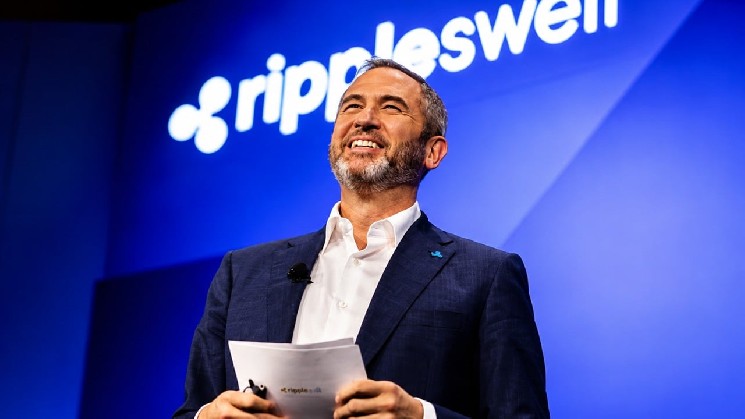
This holistic approach is further validated by a speaker lineup that seamlessly blends cryptocurrency royalty with institutional financial heavyweights and global humanitarian leaders. Representing Ripple’s executive branch are CEO Brad Garlinghouse, President Monica Long, and Chief Technology Officer Emeritus David Schwartz—voices that have spent years defending the utility and regulatory clarity of digital assets on the world stage. They will be joined by corporate titans who command immense influence over traditional trading and asset management, including Bullish Chairman and CEO Tom Farley (former President of the New York Stock Exchange) and Tradeweb CEO Billy Hult, whose platform facilitates trillions of dollars in daily interest rate and credit transactions. Adding a profound layer of human-centric purpose to the roster is Matt Damon, the Academy Award-winning actor and co-founder of Water.org. Damon’s presence highlights an often-overlooked aspect of blockchain utility: the democratization of microfinance and clean water infrastructure funding in emerging markets through decentralized ledger technology. This diverse assembly of speakers signals that the conversations at Swell 2026 will extend far beyond asset speculation, addressing instead the structural rebuilding of global economic pipelines to be faster, fairer, and more transparent.
====================================================================
KEYNOTE RUNTIME & SEGMENTS
[Oct 24-25] [Oct 27] [Oct 28] [Oct 29]
Hackathon – Institutional Summit – Main-Stage Panels – Expo Hall
-
Welcome Reception – Technical Deep Dives – Closing Address
As the industry looks toward late October, the strategic roadmap leading up to the conference suggests that the real-world impact of Swell 2026 will extend far beyond the main stage presentations. The event kicks off with an intensive developer hackathon on October 24 and 25, allowing global programmers to stress-test raw code and build functional prototypes on the XRP Ledger before the executives even arrive. This is followed on October 27 by an invite-only Institutional Summit, a closed-door forum where central bankers, sovereign reserve managers, and regulatory compliance officers can engage in candid, off-the-record discussions regarding monetary policy, stablecoin frameworks, and systemic risks. When the main conference doors open for the final two days, the insights forged during these preliminary sessions will feed directly into the public breakout panels and product demonstrations. For an industry that has weathered years of legal scrutiny, market volatility, and macroeconomic uncertainty, Ripple Swell 2026 represents a crucial testing ground. The partnerships forged, products launched, and regulatory frameworks debated in New York City this October may very well dictate the trajectory of the onchain economy for the decade to come, cementing blockchain technology as an indispensable pillar of global finance.