






Geopolitical Sparks and the Crypto Rebound
The weekend trading sessions in the global financial landscape often operate as a quiet crucible of sentiment, yet the recent performance of the cryptocurrency market demonstrated how swiftly geopolitical developments can shift the tides of risk-on assets. Over the course of Sunday, major digital currencies ticked upward, reflecting a cautious but palpable relief among global investors who spent the weekend analyzing former President Donald Trump’s statements regarding a potential diplomatic breakthrough in the Middle East. Trump’s remarks, which suggested that Tehran and other neighboring nations had initiated communications requesting a temporary pause in hostilities to facilitate a broader peace agreement, injected a sudden wave of optimism into a market that had been otherwise paralyzed by macroeconomic uncertainty. Historically, digital assets like Bitcoin have behaved as highly sensitive barometers of global tension, fluctuating wildly in response to military escalations, inflationary pressures, and shifting foreign policies. This particular weekend movement underscored the modern reality of cryptocurrency trading: rather than existing in a vacuum of decentralized isolation, digital assets are deeply interwoven with the broader geopolitical tapestry, responding to the speeches of political figures and the prospects of international diplomacy. During periods of lower liquidity, such as weekend trading sessions, even minor shifts in diplomatic rhetoric can trigger outsized reactions as automated trading algorithms and active retail desks scramble to position themselves ahead of the Monday morning opening bell on traditional exchanges. The potential for a diplomatic resolution between long-standing adversaries in the region acted as a temporary sedative for volatile markets, replacing immediate war anxieties with a speculative appetite for riskier, high-yield assets. As market participants parsed the implications of a de-escalation in the Middle East, the global cryptocurrency market capitalization experienced a steady lift, eventually settling at $2.17 trillion, representing a modest but significant 0.82% increase over a twenty-four-hour period. This minor rebound served as a poignant reminder that even amidst structural industry changes, regulatory hurdles, and seasonal doldrums, the overarching narrative of the digital asset economy remains tightly bound to the stability of the physical world.
Analyzing the Numbers: Bitcoin’s Tightrope Walk and Liquidation Squeezes
Within the specific confines of the digital asset exchanges, Bitcoin showcased its typical resilience by navigating a relatively tight but volatile trading band, oscillating between a low of $62,890 and an intraday high of $63,700, all while experiencing a massive 19% surge in twenty-four-hour trading volume. This spike in trading activity suggested that market participants were actively contesting these key price levels, rather than merely sitting on the sidelines. Simultaneously, Ethereum remained largely locked in its own consolidation phase, hovering stubbornly within the $1,800 range, while other major alternative cryptocurrencies, including Ripple’s XRP and the popular meme-inspired Dogecoin, printed notable gains to trade comfortably in green territory. The immediate consequence of this sudden upward drift was felt acutely by leveraged traders, particularly those who had positioned themselves for a market downturn; according to comprehensive on-chain data provided by Coinglass, nearly $150 million was aggressively liquidated across the entire cryptocurrency market over the preceding day, with the vast majority of these losses borne by bearish traders holding short positions. This massive wipeout of short-sellers illustrates the high-risk nature of derivatives trading during periods of macroeconomic transition, as unexpected positive news can quickly trigger a “short squeeze,” forcing bears to buy back their positions at a loss and thereby driving prices even higher. In the derivatives segment, Bitcoin’s open interest crept upward by 0.31%, reflecting a subtle influx of capital into futures contracts. Interestingly, while both retail investors and deep-pocketed “whale” accounts maintained a net-long bias on the world’s largest cryptocurrency, a closer inspection of exchange order books revealed that many of these traders had actually trimmed their overall leverage and exposure compared to the prior day. This cautious posture suggests that while the prevailing market direction was tilted upward, institutional and retail actors alike were unwilling to overextend themselves in a highly unpredictable macroeconomic climate.
Traditional Markets Find Relief in Diplomacy
The wave of optimism that originated in the cryptocurrency sector found an equally powerful echo in traditional financial markets, as U.S. stock futures climbed steadily during overnight trading on Sunday. Futures tied to the Dow Jones Industrial Average led the charge, rising by 205 points, or approximately 0.39%, as of late evening Eastern Daylight Time, indicating a robust opening for the impending Wall Street trading session. This upward momentum was mirrored across the broader market, with S&P 500 futures advancing by 0.42% and the tech-heavy Nasdaq 100 futures rallying by an impressive 0.65%, demonstrating a widespread appetite for equities as investors welcomed the potential easing of geopolitical tensions. The primary catalyst driving this sudden overnight surge was the dissemination of remarks by former President Donald Trump, who claimed that Tehran and several other Middle Eastern nations had actively reached out to his camp, requesting that he and other Western leaders “hold off” on further aggressive actions to allow an overarching peace agreement to be negotiated. This development, if realized, would represent a monumental shift in geopolitical dynamics, easing fears of an escalated energy crisis and supply chain disruptions that have haunted global markets for months. Wall Street’s positive reaction highlights the profound degree to which equity valuations are currently tethered to global energy prices and supply-chain stability, both of which are highly vulnerable to conflict in the Middle East. For equity investors, the prospect of a diplomatic resolution underpins a more stable macroeconomic outlook, potentially allowing the Federal Reserve and other central banks to manage monetary policy without the added pressure of war-driven commodity shocks. As a result, the synchronous rally of both cryptocurrency and stock futures on Sunday evening serves as a powerful testament to the convergence of these two asset classes, which are increasingly moving in lockstep when confronted with major macroeconomic and geopolitical catalysts.
The Paradox of Fear: Sentiment Reaches Historic Lows
Despite the positive price action observed in both the cryptocurrency and equity markets, a fascinating psychological paradox continues to grip the digital asset community, characterized by deep-seated anxiety and historic levels of market skepticism. The widely monitored Crypto Fear & Greed Index remained firmly anchored in “Fear” territory, reflecting a pervasive reluctance among everyday retail investors to fully embrace the latest upward trajectory. This general unease was further validated by sophisticated metrics compiled by on-chain intelligence firm Santiment, which revealed that Bitcoin’s social sentiment had plummeted to its lowest positive-to-negative commentary ratio across major social media platforms. Specifically, Santiment’s data pointed to a staggeringly bearish ratio of just 0.58 bullish comments for every single bearish comment, a statistic that underscores a profound lack of confidence among the investing public. According to Santiment’s analysts, this extreme panic reading is actually larger and more pronounced than the peak war fears recorded earlier this year, as well as several other major black swan events in cryptocurrency’s recent history. This disconnect between recovering asset prices and overwhelmingly negative public sentiment is a classic hallmark of market consolidation phases, where retail participants, burned by previous market volatility, remain highly skeptical of any upward movement, viewing it as a “bull trap” rather than a sustainable recovery. However, seasoned market analysts often interpret such extreme levels of negative sentiment as a contrarian indicator; when the vast majority of market participants are expecting a downward move, the market often does the exact opposite, catching off-guard short-sellers by surprise. This deep reservoir of skepticism suggests that the current rally is climbing a “wall of worry,” a phenomenon in which asset prices rise despite prevailing negative sentiment, driven by quiet institutional accumulation and the systematic washing out of overleveraged speculators who had over-anticipated a complete market collapse.
The Technical Coiled Spring: van de Poppe’s Breakout Blueprint
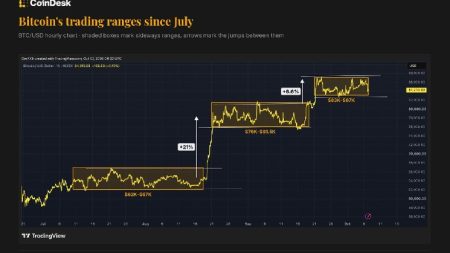
Navigating this complex landscape of fear and price consolidation requires a careful examination of the market’s underlying technical structure, a topic heavily analyzed by prominent cryptocurrency trader and strategist Michaël van de Poppe. Observing the current market cycle, van de Poppe pointed out the historic nature of the record-low Bitcoin sentiment and the exceptionally high level of net negative positioning among active traders. He noted that such structural imbalances often create a “coiled spring” effect, where a market that has been heavily compressed by bearish sentiment and aggressive short-selling becomes primed for an explosive move in the opposite direction. According to his technical blueprint, the key to unlocking this explosive upward potential lies in Bitcoin’s ability to achieve and sustain a decisive breakout above the formidable resistance zone stretching between $67,000 and $68,000. van de Poppe predicted that once this critical threshold is breached, it will inevitably trigger a “strong and vital move” across the entire digital asset space, primarily fueled by the rapid, automated liquidation of short positions that have accumulated during this period of intense fear. As these short-sellers are systematically forced to buy back Bitcoin to cover their losses, the sheer volume of buying pressure will likely act as an accelerator, driving the price upward at a velocity that catches the broader market completely unprepared. This technical perspective suggests that the current consolidation range is not a sign of weakness, but rather a crucial accumulation phase where smart money is quietly absorbing sell-side pressure from panicked retail investors. If van de Poppe’s thesis holds true, the transition from extreme fear to intense greed could happen in a matter of days, turning what currently looks like a fragile and tentative weekend bounce into the foundation for the next major leg of the multi-year cryptocurrency bull market.
Synthesis: A Market Caught Between Geopolitics and Macroeconomics
Ultimately, the synchronized movements of the global cryptocurrency market cap, which now holds firm at a valuation of $2.17 trillion, alongside traditional equity futures, paint a picture of a financial ecosystem standing at a crucial crossroads. Investors find themselves caught in a delicate balancing act, forced to weigh the immediate benefits of potential diplomatic achievements, such as a Middle East peace deal, against the background noise of persistent inflation, fluctuating interest rates, and regulatory uncertainties. The coming weeks will undoubtedly test the resilience of both digital and traditional assets, determining whether the weekend’s positive momentum is a sustainable trend or merely a temporary relief rally before another downward correction. Should the proposed diplomatic negotiations yield fruit, the resulting drop in geopolitical premium could act as a powerful tailwind for global risk assets, unlocking institutional capital that has hitherto remained sidelined due to global instability fears. On the other hand, should diplomatic efforts falter, the market’s extreme negative sentiment could become a self-fulfilling prophecy, pushing prices back down to test lower support levels. However, the structural data—marked by high short open interest, extreme social panic, and a steady underlying volume—suggests that the market is structurally prepared for a major shift, with the path of least resistance potentially tilting upward as the leverage is flushed out. As professional journalists and market observers watch this high-stakes financial drama unfold, one thing remains absolutely clear: the line separating digital assets from the broader global economy has completely dissolved. Whether analyzing the tweets of political figures, the policy decisions of central banks, or the technical charts of Bitcoin, modern investors must navigate a unified global market where a single diplomatic spark can instantly ignite a multi-billion-dollar rally across both Wall Street and the blockchain.