

Headline: Warren Demands Answers: Nvidia CEO Jensen Huang Called to Testify Over China Chip Sales
By [Your Name/Reporter’s Name]
Date: [Current Date]
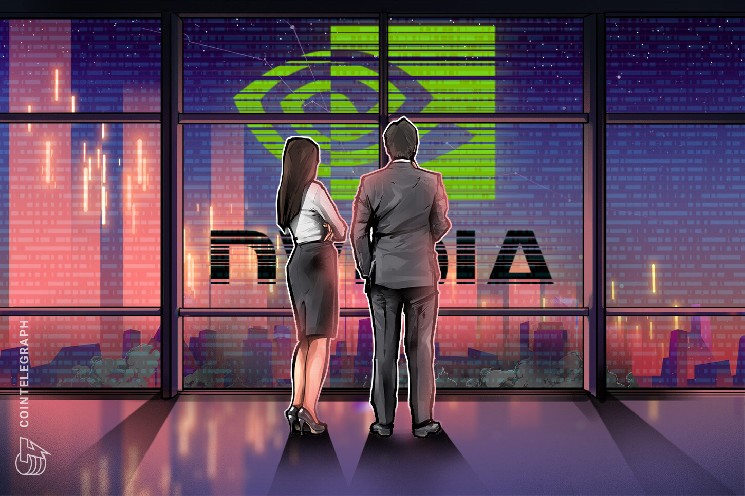
In a significant escalation of Washington’s scrutiny over the nation’s most valuable semiconductor firm, Democratic Senator Elizabeth Warren has formally called for Nvidia CEO Jensen Huang to testify before Congress. The request, first reported by Semafor, centers on the company’s intricate and controversial sales of advanced artificial intelligence chips to the Chinese market. The move places the tech titan squarely in the crosshairs of a political firestorm that questions whether corporate profits are being prioritized over national security imperatives, while simultaneously testing the delicate relationship between the White House and one of the most influential figures in the global tech industry.
The Senator’s demand arrives amid a backdrop of heightened tensions regarding the export of cutting-edge technology to Beijing. Warren’s office is reportedly seeking clarity on the specifics of Nvidia’s sales strategy, particularly regarding the development of “China-specific” chips that are designed to comply with existing export controls while still capturing a share of the lucrative Chinese market. For lawmakers like Warren, the issue is one of enforcement and intent—specifically, whether the technical workarounds employed by the Santa Clara-based giant undermine the spirit of the sanctions that were established to stymie the advancement of China’s military and artificial intelligence capabilities.
However, the political landscape surrounding Huang’s potential testimony is far from a simple partisan battle. The situation is complicated by Huang’s unique proximity to the current administration. Cointelegraph reported earlier this year that former President Donald Trump had appointed Huang to the Council of Advisors on Science and Technology, a distinguished panel that includes leaders from the crypto, blockchain, and artificial intelligence sectors. This appointment signaled a degree of trust and reliance on industry expertise to guide national policy. Yet, the relationship between the executive branch and Nvidia has proven to be a complex dance, with Huang having previously met with the president directly to discuss the very export controls now under the congressional microscope.
The core of the conflict lies in the dual nature of Nvidia’s business. On one hand, the company is the undisputed global leader in graphics processing units (GPUs), the engines that power the global AI boom and are now considered critical infrastructure for data centers, defense systems, and advanced research. On the other hand, China represents a massive revenue stream that the company has historically been reluctant to fully abandon. While strict export controls have prohibited the sale of the most advanced H100 and A100 chips, Nvidia has engineered modified versions, such as the H800 and A800, in an attempt to thread the needle—offering high-performance hardware that theoretically remains below the regulatory thresholds. For Senator Warren and other critics, this “tiering” strategy represents a dangerous loophole that threatens to give China a foothold in the AI race.
The pressure on Huang is mounting at a critical juncture for the global tech economy. As the demand for AI computing power skyrockets, the definition of “national security” has expanded to include rare earth minerals, advanced lithography equipment, and most notably, AI capabilities. The question of whether Huang will comply with the Senate’s request remains unanswered as of press time, but industry analysts suggest that his testimony could become a landmark moment for tech regulation. If he testifies, he will be forced to reconcile his role as a global merchant of technology with his recent advisory role to the U.S. government, potentially exposing the tensions between the commercial imperative to sell and the geopolitical necessity to restrict.
Furthermore, the investigation into Nvidia is not occurring in a vacuum. It highlights a broader regulatory chasm regarding the speed at which AI technology is developing compared to the legal frameworks designed to govern it. The upcoming political climate, particularly in the wake of the recent midterm sweeps, indicates a renewed vigor among lawmakers to assert oversight over the tech sector. As noted in a recent analysis of the Democrats’ congressional victories, legislative efforts like the CLARITY Act are expected to gain momentum, aiming to shine a light on the opaque algorithms and business practices of major tech firms. The demand for Huang’s testimony is likely a precursor to a more aggressive regulatory stance, leveraging the chip export issue as a wedge to demand greater transparency from the entire industry.
In conclusion, the call for Jensen Huang to testify represents a pivotal moment in the intersection of American capitalism and statecraft. While Nvidia continues to see its market valuation soar to unprecedented heights, it now faces the distinct possibility of a public grilling in front of a skeptical Congress. The outcome of this standoff will likely set a precedent for how the United States manages the export of dual-use technologies in the future. Whether Huang can navigate this political minefield without sacrificing his company’s dominant market position—or his credibility with the Trump administration—remains the most pressing question facing the semiconductor industry today. With the world watching, the battle over the future of AI chips is moving from the server rooms of Silicon Valley to the hearing rooms of the United States Capitol.