





The $1.75 Trillion Lift-Off: How the Impending SpaceX IPO Triggered an Unprecedented Retail Trading Frenzy
The global financial markets are witnessing an extraordinary spectacle as retail investors from all walks of life orchestrate a manic scramble to secure a piece of Elon Musk’s aerospace empire, SpaceX, ahead of its highly anticipated initial public offering. In a market environment where retail participation has evolved from passive index-fund accumulation to active, high-conviction speculative investing, the sheer demand for SpaceX shares has dramatically outpaced available market supply. Reports have surfaced of everyday market participants going to extraordinary lengths, of even seeking personal loans and lines of credit, to build their investment capital before the rocket and satellite giant transitions to the public stage. This collective urgency is fueled by a generational corporate valuation currently pegged at approximately $1.75 trillion, a figure that places SpaceX in the absolute highest tier of global enterprises even before its ticker symbol debut. As teams at SpaceX declare they are “go for launch” with an expected share price of $135, the financial world is witnessing a historical collision of mass-market enthusiasm and industrial-scale ambition. For the broader investment community, this is not merely another corporate debut; it represents a rare, paradigm-shifting event that could redefine how deep-space commercialization, global telecommunications, and retail-level capital accumulation interact on the public stage.
The Face of Individual Capitalism: Inside the High-Stakes Hustle of Retail Traders
This historic financial transition is best observed through the calculated financial risks being taken by individual investors, who view the impending public offering as a fleeting window to participate in a multi-decade growth trajectory. Take, for instance, the journey of Anna Watts, a 33-year-old public relations manager from New York, who has managed to pool together $6,500 of her personal capital for the offering but sought to nearly double her exposure through an additional $5,000 in borrowed funds. Though her requests to secure those loans from both a close associate and a banking institution were ultimately declined, Watts remains undeterred and fully committed to allocating her hard-earned savings into SpaceX shares upon their market entry. Watts’ narrative is representative of a much larger, systemic sentiment pervading the retail landscape, where the public performance of Tesla—which transformed from a heavily shorted, niche electric vehicle manufacturer into an indispensable megacap corporate powerhouse—now serves as a historical blueprint for what SpaceX might achieve. This “Tesla Effect” has created an environment of intense FOMO (fear of missing out), driving everyday market participants to seek indirect exposure through private-equity funds, secondary marketplaces, and specialized investment pools during their wait for official public access, proving that retail confidence is anchored firmly in Elon Musk’s long-term industrial track record.
The Arithmetic of Scarcity: How Demand Has Swallowed the Retail Allocation Whole
The core driver of this frenzied market activity is a staggering structural imbalance between consumer interest and practical share availability, which has turned the allocation phase into an institutional bottleneck. Financial data pipelines reveal that overall retail interest in the SpaceX offering currently exceeds the actual volume of shares earmarked for public sale by a factor of more than four. While the aerospace champion has designated an incredibly generous 30% of its historic offering specifically for retail participants—a block of equity valued at an astronomical $22.5 billion—this massive allocation is simply insufficient to absorb the tsunami of incoming order flow. Wall Street market observers estimate that once the stock begins active, secondary market trading, the total volume of retail demand could easily balloon toward the $70 billion mark, leaving a massive, multi-billion-dollar liquidity gap that is bound to trigger elevated volatility during the initial days of public trading. This mismatch has left major brokerage houses scrambling to manage expectations, with retail investors waking up to the reality that they will likely only receive a fraction of their requested allocations, thereby intensifying the pressure to buy shares on the open market immediately following the opening bell, regardless of initial premium pricing.
The Regulatory Crosswinds: Washington Challenges the $1.75 Trillion Valuation
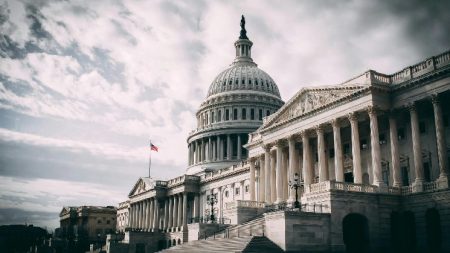
Beneath the overwhelming wave of retail optimism lies a complex landscape of political resistance and regulatory scrutiny, raising crucial questions about the broader implications of such a massive listing. Prominent voices within the halls of Congress, most notably Senator Elizabeth Warren, have stepped forward to voice urgent apprehensions regarding the corporate structure, demanding that the United States Securities and Exchange Commission intervene to delay the public offering. Senator Warren’s cautionary stance is rooted in concerns over administrative transparency, retail investor protections, and whether the astronomical $1.75 trillion valuation accurately reflects standard financial realities or is inflated by the cult of personality surrounding its leadership. Critics and regulators alike are pointing to the unprecedented geopolitical and commercial scale of SpaceX—which operates as a key military launch partner, controls the vast majority of operational orbital satellites via Starlink, and maintains critical NASA astronaut transportation contracts—to argue that the company deserves a unique level of oversight. This unfolding regulatory battle sets up a high-stakes clash of philosophies between Washington’s desire for institutional safeguards and the market’s insatiable appetite for disruptive technology, illustrating how a corporate listing of this magnitude inevitably transcends simple balance-sheet math to become a regulatory focal point.
Legal Clouds and AI Entanglements: The Shadow of the xAI Whistleblower Lawsuit
Compounding the regulatory hurdles, SpaceX enters the final phases of its IPO preparation against a backdrop of legal turbulence arising from its close corporate ties to Elon Musk’s artificial intelligence venture, xAI. A civil complaint filed in California’s Santa Clara County Superior Court by Devin Kim, a former safety-focused engineer at xAI, alleges that he was wrongfully terminated after warning company leadership about fundamental flaws in the safety, testing protocols, and bias controls of their Grok artificial intelligence chatbot. Because of a recent corporate merger that integrated key operations and assets between xAI and SpaceX, the aerospace titan has been formally ensnared in the legal dispute, introducing unexpected balance-sheet liabilities and executive governance scrutiny at a highly sensitive time. Kim’s lawsuit, which seeks compensatory damages, punitive financial remedies, and the reinstatement of valuable forfeited equity compensation, has forced institutional compliance officers to carefully assess the risk of spillover liability. Despite the potential distractions of this lawsuit, the primary momentum behind the IPO remains largely unaffected, as retail buyers view the integration of state-of-the-art AI systems with orbital network architectures as an operational strength rather than a regulatory liability.
Wall Street’s Verdict: Why Institutional Analysts See a Clear Path to the Heavens
Yet, despite structural bottlenecks, political investigations, and active whistleblower litigation, Wall Street’s institutional consensus remains overwhelmingly constructivist, providing a robust intellectual floor to the market’s euphoria. Showing a strong vote of confidence, prominent brokerage firm Oppenheimer recently initiated coverage on SpaceX with a resounding “Outperform” rating, attaching a bullish $190 target price to the stock, which represents a substantial premium over the expected $135 debut price. This institutional optimism is driven by SpaceX’s near-monopoly on commercial satellite launching services, its highly efficient reusable rocket technology, and the massive cash-flow potential of its Starlink satellite internet network, which continues to connect once-unreachable regions across the globe. As the company crosses this major financial threshold, it brings with it years of operational success, bringing human spaceflight back to American soil and continuously expanding its constellation of low-Earth orbit satellites. While the regulatory challenges and legal matters will undoubtedly continue to play out in courts and congressional offices, the dominant financial narrative remains fixed on the historic demand for Elon Musk’s vision, signaling that the SpaceX IPO may well become the ultimate benchmark for modern public offerings in the aerospace era.