







Institutional Renaissance: SharpLink Gaming Gains Entry to the Prestigious Russell Indexes
In a move that signals a profound shift in how Wall Street perceives digital asset-backed equities, financial technology disruptor SharpLink Gaming (NASDAQ: SBET) is poised to join both the broad-market Russell 3000 Index and the small-cap-centric Russell 2000 Index at the conclusion of June’s trading session. According to an official press release from FTSE Russell, this highly anticipated inclusion will take effect after the closing bell on June 29, acting as a centerpiece of the index provider’s annual, multi-week reconstitution process. For SBET, a firm that has aggressively transformed its corporate identity from a conventional interactive sports gaming technology outlet into a massive treasury vehicle for decentralized assets, this milestone represents far more than a nominal badge of honor; it is a direct pipeline to institutional capital. Passive exchange-traded funds (ETFs) and mutual funds that systematically mirror the Russell indexes—which collectively govern an estimated $12 trillion in assets under management—will be legally and structurally mandated to buy up shares of SBET to align with their tracking mandates. By entering these closely watched benchmarks, SharpLink is prepared to transition from an exotic, micro-cap digital asset curiosity into a liquid, high-volume equity proxy for institutional investors seeking exposure to the Web3 ecosystem without directly navigating the operational, cryptographic, and regulatory hurdles of purchasing and custodying spot cryptocurrency.
The Genesis of the Ether Standard: Joe Lubin’s Influence and the Corporate Treasury Shift
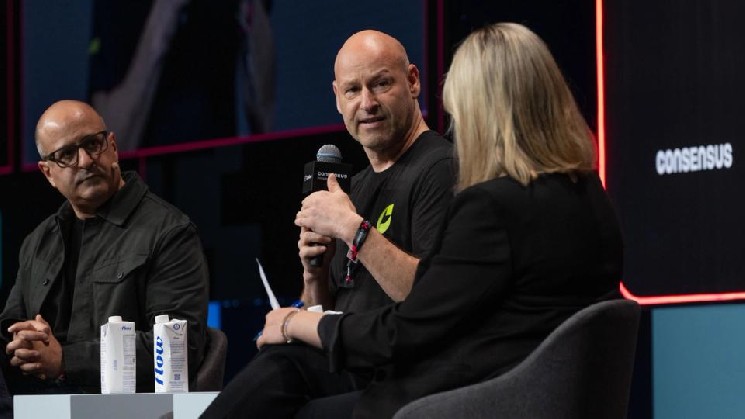
To understand the gravity of SharpLink’s market evolution, one must examine the genesis of its balance-sheet philosophy, which was inspired in large part by its high-profile backer, ConsenSys founder and Ethereum co-creator Joseph Lubin. Seeking to chart a new frontier for corporate capitalization, SharpLink adopted a pioneering “Ether standard” treasury model, closely modeled after the aggressive, Bitcoin-centric treasury strategy popularized by Michael Saylor’s MicroStrategy (NASDAQ: MSTR). While Saylor’s relentless accumulation of Bitcoin turned MicroStrategy into a de facto corporate savior of the leading cryptocurrency, SharpLink chose to champion Ethereum, highlighting the smart-contract platform’s unique utility, decentralization milestones, and yield-bearing potential through Proof-of-Stake protocols. However, whereas MicroStrategy’s play was widely replicated during the heights of the low-interest-rate environment, the subsequent macroeconomic contraction forced the vast majority of digital asset treasury pioneers to abandon, pause, or outright liquidate their crypto holdings as their underlying equities cratered. SharpLink, fortified by Lubin’s strategic guidance and an early-stage institutional conviction, refused to succumb to the panic selling that characterized the 2022 crypto winter, choosing instead to preserve its massive digital reservation as a bedrock value proposition for public market investors who demand a direct sovereign play on the foundational layer of decentralized application infrastructure.
By the Numbers: Valuing SharpLink’s Massive $1.8 Billion Ethereum Reserve
According to its latest consolidated quarterly financial statements, SharpLink’s balance sheet boasts an extraordinary hoard of 872,984 Ether ($ETH), positioning the firm as the second-largest public-market corporate holder of Ethereum on earth, trailing only the massive 5.4 million ETH treasury held by the specialized mining enterprise Bitmine. At prevailing spot market valuations, SharpLink’s cold-storage holdings are valued at approximately $1.8 billion—a massive cryptographic vault that stands in stark contrast to the firm’s relatively modest historical operating revenues as a technology and user-acquisition engine. Intriguingly, the company hasn’t reported a single acquisition or disposal of ETH since October, indicating that management has shifted to a preservationist, yield-maximizing, or tactical-holding phase in response to the changing winds of monetary policy and global regulatory crackdowns. This prolonged accumulation freeze suggests that SharpLink has completed the structural architecture of its treasury foundation, electing to preserve cash flow and let market beta do the heavy lifting as the broader digital asset space recovers. In comparison to traditional corporate cash management strategies—which typically rely on short-term U.S. Treasury bills, commercial paper, or money market funds yielding nominal returns—SharpLink’s massive exposure to Ether offers a high-risk, high-reward alternative that transforms every share of SBET into a hybrid asset: part software-driven gaming enterprise, and part leveraged, institutional-grade trust containing one of the world’s most valuable decentralized platforms.
Riding the Volatility Wave: Reconciling a 95% Drawdown with Long-Term Strategic Gains
The financial trajectory of SharpLink Gaming serves as a masterclass in market volatility, illustrating the dizzying heights and punishing depths of the digital frontier. During the speculative mania of last May, when global liquidity flowed freely and retail enthusiasm pushed digital assets to unprecedented levels, SBET shares experienced a parabolic rally as investors aggressively sought exposure to anything tied to Ethereum’s decentralized boom. From that peak of speculative froth, the stock has suffered a painful 95% correction, mirroring the wider, systemic deleveraging of DeFi protocols, centralized lenders, and speculative tech equities. Yet, despite this massive peak-to-trough drawdown, a broader historical perspective reveals that the company’s underlying stock price is still trading at more than double the level it maintained prior to embarking on its transformative Ethereum treasury strategy. On Tuesday, the stock ticked down roughly 2%, moving in near-perfect lockstep with a broader minor pullback in spot Ether prices, confirming that Wall Street now values SBET primarily as a liquid tracking stock for the Ethereum ecosystem. This persistent premium over its pre-pivot valuation demonstrates that public market investors are highly willing to afford a structural “liquidity premium” to compliant, SEC-reporting corporations that hold underlying digital assets, validating the initial hypothesis of SharpLink’s executive board that crypto-treasuries could permanently elevate a micro-cap firm’s cost of capital.
Institutional Legitimacy: Deciphering CEO Joseph Chalom’s Capital Market Vision
For SharpLink Gaming’s Chief Executive Officer, Joseph Chalom, the upcoming FTSE Russell rebalancing is not merely an algorithmic adjustment; it is a fundamental vindication of a highly scrutinized, bold corporate treasury experiment. In a statement following the announcement, Chalom emphasized that the inclusion formally validates the company’s “institutional-grade ETH treasury strategy,” pointing out that representation within the Russell 2000 and 3000 indexes will significantly fortify the firm’s direct “access to capital markets.” For a company that has operated on the speculative margins of the micro-cap markets, gaining index inclusion opens up critical pathways for sophisticated capital allocation: it eases the process of securing corporate debt, lowers the cost of equity financing, and attracts analytical coverage from premier Wall Street investment banking research desks. Furthermore, because passive index funds are price-insensitive buyers that purchase shares strictly based on weightings, the inclusion acts as a structural stabilizer against the wild, retail-driven price swings that have historically plagued SBET. Chalom’s vision hinges on leveraging this newly acquired institutional credibility to convert volatile balance sheet assets into cheap, non-dilutive capital, which can eventually be deployed to acquire cash-flowing Web3 technologies, fund advanced customer-acquisition software, or further entrench the company’s position as a premium market-maker in the crypto-adjacent corporate sector.
The Digital Horizon: How Russell Inclusion Forges a Permanent Bridge Between TradFi and DeFi
As the scheduled June 29 reconstitution date approaches, the broader financial world is watching SharpLink Gaming’s entry into the Russell indexes as an active case study in the convergence of Traditional Finance (TradFi) and Decentralized Finance (DeFi). In an era marked by shifting regulatory stances, intense SEC scrutiny over spot exchange-traded products, and a growing demand from pension funds and family offices for regulated digital exposure, SBET’s newly minted status as an index constituent changes the calculation for institutional asset managers. Rather than forcing risk-averse compliance departments to navigate complex exchange mechanisms or cold-storage custody, the index inclusion essentially brings Ethereum directly to their pre-existing portfolios via standard equity packages. This systemic bridging of ecosystems could set a major precedent for other small-and-mid-cap corporations pondering treasury diversification, demonstrating that early-stage corporate risks in the digital landscape can ultimately lead to mainstream Wall Street indexes and institutional-grade capital liquidity. Ultimately, SharpLink’s transition into these premier benchmarks marks a major milestone for crypto-backed public equities, offering a compelling glimpse into a future where the line separating decentralized networks from traditional, regulated equity indexes is permanently erased.