






XRP Ledger Eyes Dominance in Real World Asset Issuance: Insights from Flare Founder Hugo Philion
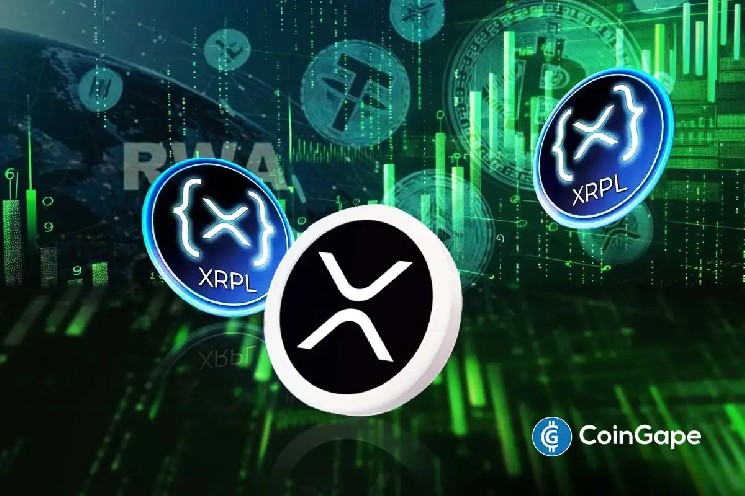
In the ever-evolving landscape of blockchain technology, where virtual currencies are increasingly intersecting with tangible assets, a prominent voice in the crypto space is predicting a seismic shift. Hugo Philion, the visionary founder of Flare, a smart contract platform bridging various blockchains, has recently shared compelling thoughts on the XRP Ledger (XRPL). He posits that this decentralized network, known for powering the XRP cryptocurrency, could emerge as a frontrunner in the issuance of real world assets (RWAs). This isn’t just speculative chatter; it’s grounded in the ledger’s unique strengths, particularly its unparalleled global reach. As cryptocurrencies continue to mature beyond mere speculation, Philion’s commentary highlights XRPL’s potential to democratize access to financial instruments typically reserved for institutional players.
Delving deeper into Philion’s perspective, RWAs represent a game-changing frontier in blockchain innovation. These are digital representations of physical assets—ranging from real estate deeds and commodities like gold to intellectual property and even carbon credits—tokenized on the blockchain for fractional ownership, liquidity, and seamless transferability. What sets XRPL apart, according to Philion, is not merely its technical prowess but its inherent design for efficient, borderless transactions. Unlike some blockchains burdened by high fees and scalability issues during peak times, XRPL boasts rapid settlement speeds, often completing transactions in seconds at a fraction of the cost. This efficiency becomes crucial when imagining a world where an investor in Tokyo could instantly acquire a slice of a Manhattan skyscraper or a farmer in Kenya could tokenize grain certificates for global crowdfunding. Philion’s optimism stems from observing how XRPL’s architecture supports such decentralized applications without compromising on speed or security.
Central to Philion’s argument is the XRP Ledger’s global distribution channel, a feature that he describes as a built-in advantage for RWA adoption. The network operates on a consensus mechanism that relies on trusted validators worldwide, ensuring not just transaction finality but a level of interoperability that few other platforms can match. This setup allows assets to move across borders with minimal friction, aligning perfectly with the international nature of RWAs. For instance, consider how traditional securities often face regulatory hurdles and intermediary bottlenecks—think stockbrokers, custodians, and clearinghouses—that inflate costs and exclude smaller participants. XRPL, by contrast, offers direct, peer-to-peer transfers, potentially slashing these inefficiencies. Philion points to XRP’s history, where the ripple effects of borderless payments have already disrupted remittance markets, as a blueprint for RWAs. If issuers can leverage this channel, it could pave the way for hyper-accessible investment opportunities, especially in emerging markets where banking infrastructure lags.
Beyond the XRP Ledger’s capabilities, Philion emphasizes the synergistic role of the Flare network within the broader XRP ecosystem. Flare serves as a compatibility layer, enabling smart contracts and decentralized finance (DeFi) protocols on otherwise scriptless chains. For XRP holders, this translates to unprecedented access to DeFi services, where they can stake, lend, or borrow against their assets without migrating to costlier platforms like Ethereum. Philion notes that Flare’s integration maintains the essence of XRP—speed and affordability—while unlocking advanced features. This isn’t just an add-on; it’s a strategic extension that broadens XRP’s utility. As RWAs gain traction, Flare could act as the conduit, allowing tokenized assets on XRPL to interact with DeFi primitives like yield farming or automated market makers. Philion imagines a scenario where an art collector holds wrapped XRP-backed NFTs representing Picasso paintings, all while earning passive income through DeFi protocols— a blend of art, finance, and fintech that feels both innovative and inevitable.
The implications for XRP holders are profound, extending far beyond Philion’s remarks on DeFi access. In a market where cryptocurrencies are scrutinized for their volatility and utility, positioning XRP as a key player in RWA issuance could enhance its real-world adoption. Holders might soon find themselves at the heart of a tokenized economy, where XRP facilitates micro-investments in global ventures. For example, envision a coalition of small-scale investors funding sustainable energy projects via XRPL-issued tokens, with Flare enabling DeFi rewards on their holdings. This dual role—XRPL as the foundation for asset issuance and Flare as the enhancer for financial services—creates a virtuous cycle. Philion’s insights suggest that XRP isn’t just a digital currency; it’s evolving into a catalyst for inclusive finance, potentially attracting a new demographic of users wary of traditional banks. However, this trajectory isn’t without challenges; regulatory clarity on tokenized assets remains a hurdle, and Philion calls for thoughtful collaboration between blockchain projects and policymakers to ensure legitimacy and compliance.
Looking ahead, Philion’s vision for XRPL’s dominance in RWA issuance signals a broader maturation of the crypto industry. As sectors like real estate, commodities, and intellectual property experiment with tokenization, platforms that prioritize efficiency and accessibility will likely lead the charge. XRPL’s global distribution channel, coupled with Flare’s DeFi innovations, positions it as a formidable contender against established giants. Yet, success hinges on community adoption, developer engagement, and navigating the intricate web of international regulations. Philion concludes by urging the ecosystem to embrace these opportunities, reminding us that blockchain’s true power lies in bridging digital and physical worlds. In this narrative, XRP isn’t trending toward irrelevance—it’s stepping into a spotlight as a transformative force in global finance. As the industry watches these developments unfold, one thing is clear: the fusion of cryptocurrencies with real assets could redefine how we think about value, ownership, and investment in the 21st century.
XRP Ledger’s Global Advantage: Why It Could Outpace Competitors in Real World Asset Markets
Expanding on Philion’s endorsement, the XRP Ledger’s global distribution channel deserves a closer examination, as it’s often the unsung hero behind its potential dominance in real world assets. The ledger’s native architecture supports a sprawling network of servers and validators distributed across continents, ensuring that no single entity controls the flow of transactions. This decentralization isn’t just a buzzword; it enables operations in regions with varying infrastructures, from high-speed internet hubs in Europe to remote areas in Africa. When it comes to RWAs, which must adhere to global standards yet remain accessible, XRPL’s design minimizes latency and maximizes inclusivity. Philion argues that this channel could make XRPL the go-to platform for international asset issuers, sidestepping geopolitical tensions that plague centralized systems. For instance, during economic crises or sanctions, a blockchain-bound asset via XRPL could offer continuity that fiat alternatives might not, fostering a more resilient financial ecosystem.
Moreover, the network’s efficiency in handling micro-transactions at scale is pivotal. Traditional RWA markets involve hefty fees and intermediaries, but XRPL processes transfers almost instantly, with low energy consumption compared to proof-of-work chains. This efficiency could democratize access, allowing retail investors to participate in asset classes previously dominated by the wealthy. Philion draws parallels with XRP’s role in facilitating quicker, cheaper cross-border payments—a success story that Ripple, the company behind XRPL, has been touting for years. By extension, RWAs on this ledger could streamline supply chains, like tokenizing shipping manifests for agricultural goods, reducing fraud and delays. As global trade digitizes, XRPL’s distribution prowess might not just compete but redefine how real assets circulate in a digital age, amplifying Philion’s confidence in its leadership.
Flare Network’s Integral Role: Amplifying DeFi Access for XRP Holders
Transitioning to the microcosm of the XRP ecosystem, Hugo Philion sheds light on how the Flare network amplifies the value proposition for XRP holders through seamless DeFi integration. While XRPL excels in basic transfers, Flare introduces programmable logic, enabling complex financial operations without sacrificing the ledger’s core strengths. For XRP community members—long frustrated by limited applications—Flare represents a gateway to broader utilities. Philion explains that by interpreting XRPL’s scripts into compatible formats, Flare allows holders to engage in staking, lending pools, and even decentralized exchanges natively. This is game-changing for a coin often criticized for its static nature; suddenly, XRP becomes a dynamic asset in a DeFi world characterized by passive income and liquidity provision.
Furthermore, Philion highlights that Flare’s design ensures minimal disruption to XRPL’s ecosystem. Unlike bridges that demand asset wrapping and add layers of risk, Flare’s native integration keeps XRP liquid and secure. Imagine holding XRP while earning yields from collateralized loans or participating in prediction markets—all without locking funds elsewhere. Philion’s practical outlook foresees this catalyzing growth, as DeFi attracts users from crowded platforms overwhelmed by congestion and fees. By providing DeFi access specifically for XRP holders, Flare not only enhances individual portfolios but strengthens the entire network, potentially increasing XRP’s market relevance. This symbiotic relationship, as Philion articulates, turns XRP from a mere medium of exchange into a cornerstone of decentralized finance, bridging gaps between traditional assets and innovative protocols.
Implications and Opportunities: A New Era for XRP and Blockchain Finance
Building on these technical advantages, the broader implications of Philion’s statements resonate deeply in today’s crypto narrative. As XRPL positions itself for RWA dominance via its global distribution and Flare empowers XRP with DeFi tools, the ripple effects could extend to economic equity. Historically, real world assets have been gatekept by elite institutions, but tokenization democratizes them. Philion envisions a scenario where everyday investors tokenize assets like carbon credits or rental income streams, using XRP for transactions and Flare for complex manipulations. This could spur innovation in sectors like real estate crowdfunding, where a community fundraises for affordable housing, bypassing banks’ stringent criteria.
Yet, Philion isn’t blind to obstacles—regulatory uncertainty looms large. Tokenized RWAs must navigate securities laws, and platforms like XRPL could face scrutiny. He advocates for proactive dialogue, suggesting collaborations with regulators to establish frameworks that protect investors without stifling innovation. For XRP holders, this translates to heightened value, as their asset evolves into an essential tool for global finance. The intersection of RWAs and DeFi, facilitated by these networks, might also attract institutional adoption, elevating XRP to enterprise-level prominence. In this context, Philion’s remarks aren’t hype; they’re a call to action for the crypto community to embrace this evolution, potentially leading to sustainable, inclusive growth.
Challenges Ahead: Balancing Innovation with Compliance in Real World Asset Tokenization
Despite the optimistic outlook, Philion cautions that realizing XRPL’s dominance in RWAs and Flare’s DeFi prowess requires addressing real challenges. Scalability, while a strength, must accommodate surges in RWA transactions without bottlenecks. Moreover, the global nature of XRPL introduces compliance complexities—jurisdictions vary widely on asset digitalization, from the EU’s MiCA regulations to U.S. SEC guidelines. Philion stresses the need for robust KYC and AML integrations to prevent illicit uses, ensuring RWAs don’t become havens for fraud. Flare, as the enabler, must also uphold security standards to avoid exploits that could erode trust.
Philion proposes solutions rooted in collaboration: partnerships with legal experts and ongoing protocol upgrades to align with emerging standards. For XRP holders, this means vigilance—participating in governance to shape the ecosystem. While hurdles exist, Philion sees them as surmountable, with successful precedents in Ripple’s work with institutions. Ultimately, the path forward involves balancing innovation with responsibility, transforming potential risks into opportunities for a more transparent financial world. As XRPL and Flare mature, their roles in RWAs and DeFi could set benchmarks for the industry, validating Philion’s vision of a decentralized, accessible economy.
The Future of Blockchain Finance: XRPL and Beyond
As we synthesize Philion’s insights, the trajectory for XRP Ledger and Flare networks paints a picture of transformative potential in blockchain finance. RWAs, powered by XRPL’s global distribution and enhanced by Flare’s DeFi access, could unlock untold value, from micro-investments to global trade facilitation. Philion’s perspective encourages a forward-looking approach, where challenges are met with innovation. In essence, XRP isn’t just a cryptocurrency—it’s a bridge to a more equitable world, where assets are democratized and financial power is redistributed. As the industry evolves, staying attuned to developments from leaders like Philion will be key, reminding us that the future of finance is decentralized, inclusive, and irrevocably changed by technologies like XRPL. The question isn’t if this dominance will occur, but how quickly the world will adapt to embrace it.