






Federal Reserve’s Arduous Path: Navigating Interest Rates Amid Uncertainty
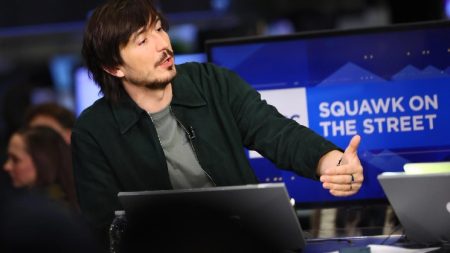
In the ever-evolving world of monetary policy, few storytellers captivate audiences like Nick Timiraos, the Wall Street Journal’s Fed reporter whose insider insights have shed light on the Federal Reserve’s inner workings for years. His latest dispatch paints a picture of a central bank at a crossroads, where long-standing expectations of interest rate cuts are giving way to a more cautionary stance. Timiraos, drawing on his deep connections within Fed circles, reports that internal discussions have hit a pivotal moment. No longer are policymakers primarily debating the timing of reductions in borrowing costs; instead, they’re grappling with scenarios that could necessitate hikes to stave off inflationary pressures. This shift isn’t just policy minutiae—it’s a reflection of the Fed’s response to a volatile global economy, where traditional strategies are being tested against unforeseen shocks. As Timiraos notes, the Fed’s approach has evolved from proactive easing to a vigilant “wait-and-see” posture, underscoring how rapidly economic forecasts can change. For investors and everyday Americans alike, this evolution signals potential turbulence ahead, as the institution charged with stabilizing the nation’s economy recalibrates its compass. With Jerome Powell’s chairmanship drawing to a close, the stage is set for what could be a defining chapter in central banking history, one where prudence trumps expediency.
Building on this theme, the Fed’s internal dialogues have undergone a profound transformation, underscoring the challenges of predicting economic trajectories in an unpredictable landscape. Timiraos highlights conversations that have pivoted away from the “when” of rate cuts to the “if” of potential increases, a rare admission from an institution typically inclined toward gradual adjustments. Officials are now weighing conditions that might force their hand, such as persistent inflationary flare-ups fueled by external disruptions. This isn’t mere speculation; it’s a strategic reassessment rooted in the realities of slow economic recovery post-pandemic and mounting global uncertainties. For instance, the Fed has observed how geopolitical tensions can ripple through supply chains, amplifying costs and complicating domestic stability efforts. Economists have long debated the merits of data-dependent policies, but Timiraos’ insights reveal a Fed increasingly wary of overconfidence. By shifting focus, the central bank is acknowledging that the road to prosperity isn’t a straight line—it’s fraught with detours dictated by factors like labor market resilience or international trade dynamics. This pragmatic turn reflects a broader lesson in adaptability, reminding observers that monetary policy isn’t crafted in isolation but in dialogue with the world’s shifting tides.
Adding fuel to the narrative, the Fed’s latest policy meeting statement unveiled fractures within its traditionally unified front, marking a notable chapter in its storied history. For the first time in recent memory, key officials voiced formal objections, diverging from the collective stance. Dallas Federal Reserve President Lorie Logan, Cleveland’s Beth Hammack, and Minneapolis’s Neel Kashkari dissented against the phrase suggesting that an upcoming rate cut was “most likely,” a rare act of public discord that underscored simmering tensions. This move isn’t rebellious posturing; it’s a calculated expression of caution born from divergent economic views. The Fed’s Federal Open Market Committee (FOMC) has always prided itself on consensus-building, but such objections reveal how global headwinds are testing the limits of agreement. In an era of heightened supply chain disruptions and fluctuating energy costs, these dissenting voices argue for greater prudence, potentially delaying relief for borrowers. Timiraos captures the essence of this divergence, portraying it as a microcosm of the broader debates raging within economic policy circles. It’s a reminder that even venerable institutions like the Fed must contend with the pluralism of ideas, where individual perspectives can influence collective outcomes in substantive ways.
Jerome Powell, the man at the helm whose leadership has navigated the Fed through tumultuous times, offered candor in the aftermath of the meeting, shedding light on the “intense discussions” that characterized the deliberations. Far from downplaying the discord, Powell validated the dissenters’ concerns, describing their arguments as “completely valid.” This acknowledgment speaks volumes about the Fed’s evolving ethos—a shift from dovish optimism toward a more neutral, evidence-based neutrality. While procedural hurdles prevented a wholesale rewrite of the statement, Powell’s words indicated a departure from signals hinting at imminent rate cuts. Instead, the Fed is embracing a “wait-and-see” approach, prioritizing data over presumption. This stance resonates with Powell’s tenure, marked by efforts to balance growth and inflation amid unprecedented challenges like the COVID-19 fallout. Analysts interpret this as Powell’s way of preparing for uncertainty, ensuring the Fed remains agile in the face of variables beyond its control. Such transparency is refreshingly human, revealing behind-the-scenes deliberation rather than monolithic decree. As Timiraos relays, this isn’t just window-dressing; it’s a strategic pivot that could influence markets for months to come, embodying the Fed’s role as a stabilizing force in uncertain times.
Delving deeper into the catalysts behind this policy evolution, a seismic shock to energy markets emerges as the primary driver, exposing vulnerabilities that have forced the Fed’s hand. The de facto closure of the Strait of Hormuz, a vital artery for global oil flows, has ignited fears of prolonged high energy prices, transforming what might have been a transient spike into a structural threat. Experts point to this as a catalyst elevating inflation expectations, compelling the Fed to rethink its accommodative posture. Minneapolis Fed President Neel Kashkari, in a compelling address, warned that without swift resolution—perhaps reopening the Straits—the specter of rate hikes could return, even at the risk of straining the labor market. His rhetoric echoes broader concerns about prioritizing inflation control, a mantra that has defined much of the Fed’s post-pandemic strategy. Contrasting this view, former Fed economist William English critiqued the current steadying of rates as “passive easing,” arguing that it enables inflationary creep without fostering sustainable growth. This juxtaposition highlights the tough choices facing policymakers: safeguard employment or curb rising prices? The energy disruption, tied to geopolitical strife, illustrates how international events can dictate domestic outcomes, pushing the Fed toward vigilance. In an interconnected world, such shocks remind us that economic stability is fragile, dependent on far-flung factors that defy easy prediction.
As Jerome Powell’s era wanes and Kevin Warsh prepares to assume the chairmanship come mid-May, the Fed stands at a juncture where new leadership could amplify these ongoing debates. The last comparable challenge to policy statements dates back to September 2020, during the height of pandemic uncertainty, underscoring the cyclical nature of such tensions. Warsh, known for his hawkish leanings, may steer the ship toward tighter reins, particularly as the first post-Powell FOMC meeting looms as a litmus test for monetary direction. This transition injects anticipation into an already charged atmosphere, where strategic shifts could reshape investor sentiment and consumer borrowing costs. Timiraos envisions these deliberations intensifying, with the upcoming gatherings potentially unveiling bolder pivots. Amidst this flux, it’s crucial to contextualize the Fed’s role—not as infallible oracles, but as stewards navigating an unpredictable fiscal terrain. As always, economic prognostication remains an art as much as a science, where today’s assumptions can crumble under tomorrow’s headlines. Ultimately, while the Fed’s pivot toward caution reflects a maturing response to global instability, it also invites reflection on the broader societal impacts of policy choices. *This is not investment advice.