







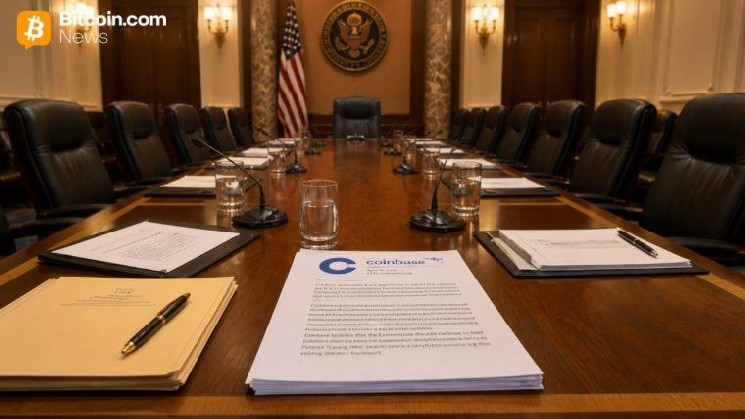
Coinbase Champions CFTC Dominance Over Prediction Markets Amid Mounting Legal Battles
In the fast-paced world of cryptocurrency, where innovation often outpaces regulation, major players are stepping up to shape the future of emerging technologies. Coinbase Global Inc., the San Francisco-based exchange that’s become a household name in digital assets, has thrown its weight behind a call for clearer oversight of prediction markets under the U.S. Commodity Futures Trading Commission (CFTC). By urging federal regulators to treat these speculative instruments as derivatives under existing law, Coinbase is positioning itself as a voice of reason in a heated debate that pits national consistency against state-level autonomy. The company’s stance, articulated in a formal comment letter and a public post by Chief Policy Officer Faryar Shirzad on May 3, comes at a pivotal moment when the crypto industry grapples with jurisdictional uncertainty. This push not only highlights Coinbase’s proactive role in regulatory discourse but also underscores the broader implications for how prediction markets—platforms where users bet on real-world events like elections or weather outcomes—might evolve in a regulated framework.
Coinbase’s arguments center on the idea that prediction markets are not revolutionary anomalies but rather a natural extension of established financial tools. Shirzad pointed out that event-based contracts, the backbone of these markets, already align seamlessly with the CFTC’s mandate over derivatives. “Prediction markets may look novel, but they sit comfortably within existing statutory authority—no new mandate required,” he said in a quote that encapsulates the company’s confidence in piecemeal evolution over sweeping change. This first point is crucial because it challenges the notion that prediction markets demand bespoke legislation, instead framing them as derivatives that enable hedging and information aggregation, much like traditional futures contracts on commodities or indices. By doing so, Coinbase draws a parallel to how futures markets have historically allowed traders to speculate on uncertainties, from agricultural yields to stock market swings. For instance, just as a wheat futures contract helps farmers lock in prices against volatile harvests, prediction markets on political outcomes let participants express beliefs about events ranging from presidential elections to natural disasters, potentially providing valuable data for analysts and decision-makers.
Beyond legal fit, Coinbase emphasizes the functional similarities these markets share with regulated derivatives, reinforcing that federal oversight is not just appropriate but essential. Their second point delves into how these platforms synthesize dispersed knowledge into actionable prices, mirroring the information efficiency of the broader derivatives ecosystem. Participants in prediction markets aren’t merely gambling on outcomes; they’re contributing to a collective forecast, where odds shift in response to insider insights, public sentiment, or breaking news. This resembles the way futures exchanges have democratized access to sophisticated hedging tools, empowering everyone from institutional investors to individual traders. However, without a uniform federal framework, the risk of market fragmentation looms large, as Shirzad and his team argue in their third point. Congress designed the CFTC to oversee derivatives nationally, precisely to avoid the chaos of state-by-state rules that could stifle interstate commerce. Imagine a prediction market on a national event like the Super Bowl—federally regulated, it might flourish across state lines, but under disparate state laws, it could face patchwork restrictions, turning seamless wagering into a logistical nightmare. To illustrate, scenarios where one state licenses platforms while neighbors outlaw them could deter innovation and create arbitrage opportunities for savvy operators, ultimately harming consumers.
The stakes of this debate have escalated dramatically, with federal and state authorities clashing in courtrooms nationwide. The CFTC, under Chairman Michael Selig’s leadership, has aggressively asserted its exclusive jurisdiction, classifying prediction markets as “swaps” under the Commodity Exchange Act and claiming federal preemption over state interventions. This stance is rooted in a desire to maintain a cohesive financial regulatory environment, preventing what the commission sees as undue interference by states that view these products through the lens of gambling rather than finance. States like Texas, Arizona, Nevada, and New Jersey have countered fiercely, arguing that platforms such as Kalshi and Polymarket facilitate betting akin to casinos or lotteries, which they contend fall under their purview. This jurisdictional tug-of-war isn’t abstract; it’s manifested in a flurry of lawsuits and enforcement actions. The CFTC has filed suits against several states—including Arizona, Connecticut, Illinois, New York, and Wisconsin—to halt their crackdowns onPrediction Markets operators. Simultaneously, states have pursued aggressive measures: New York sued Coinbase Financial Markets and Gemini for alleged violations, Arizona brought criminal charges against Kalshi executives, and cease-and-desist orders have been issued in Wisconsin, Connecticut, and Illinois, targeting firms in this burgeoning space. Courts have split on the issues, with some rulings upholding federal supremacy by deeming Prediction Markets as derivatives exempt from state oversight, while others have sided with states, allowing them to enforce gambling laws against disruptive platforms. These conflicting decisions highlight a legal landscape that’s as fragmented as it is unpredictable, raising questions about how prediction markets will navigate this quagmire without clear guidelines.
At the heart of Coinbase’s advocacy is a plea for the CFTC to leverage its existing enforcement toolkit to foster integrity and growth. The company’s fourth point underscores that the regulator already possesses robust powers to monitor, amend, or ban contracts posing risks like market manipulation or broader harm to the public interest. Rather than inventing new wheels, Coinbase urges refining these guardrails incrementally as prediction markets mature. This approach contrasts with the binarism of state-federal clashes, promoting a pragmatic middle ground where innovation thrives under watchful federal eyes. Shirzad encapsulated this view in another insightful quote: “Prediction markets are maturing. The question is not whether they fit within the law—they do—but how to ensure they develop with integrity, clarity, and appropriate guardrails.” By signaling continued engagement with the CFTC, Coinbase positions itself as a collaborative partner in shaping a regulatory ethos that balances innovation with safeguards. This isn’t just corporate lobbying; it’s a recognition that prediction markets could revolutionize data aggregation—think real-time crowd-sourced insights on everything from economic forecasts to disaster preparedness—provided they aren’t hamstrung by regulatory red tape.
As the dust settles on these debates, the Coinbase-led push for CFTC oversight emerges as a blueprint for harmonizing the wild west of prediction markets with the structured world of derivatives. This advocacy arrives against a backdrop where the crypto sector is maturing, shedding its speculative image for one of mainstream financial utility. Prediction markets, once fringe experiments on platforms like Augur or PredictIt, now attract millions in bets, with 2024 election contracts drawing massive interest and demonstrating their potential to democratize forecasting. Yet, without federal consistency, the industry risks Balkanization, where talent flees inconsistent jurisdictions and consumers face unwieldy red tape. Coinbase’s four-point framework not only defends the status quo but advances a vision of inclusive regulation that could set a precedent for other crypto innovations. As regulators and courts continue weighing in, the outcome could define whether prediction markets become a cornerstone of modern finance or a footnote in regulatory lore. For Coinbase, this isn’t just about defending market share—it’s a strategic move to ensure the ecosystem grows sustainably, benefiting users, developers, and the economy at large. With ongoing dialogues promising further refinements, the future of these markets hangs in a delicate balance, one that demands vigilance, collaboration, and above all, coherent oversight.