





The Scene at Trump National Doral Golf Club
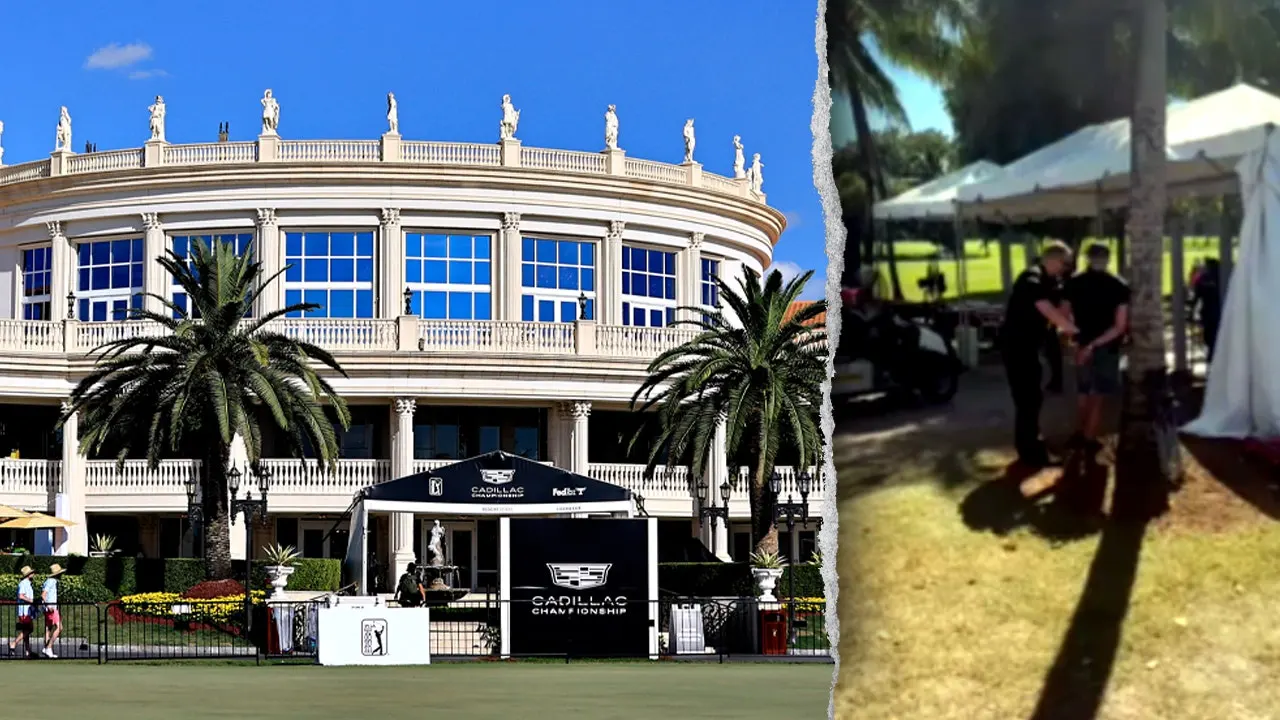
It was a sunny Tuesday afternoon in Miami-Dade County, Florida, where the lush greens of Trump National Doral Golf Club stretch out like a verdant oasis amidst the urban sprawl. This isn’t just any golf course; it’s a sprawling estate that Donald Trump has branded as his own, a symbol of opulence and power frequented by politicians, celebrities, and well-heeled golfers alike. The club, with its perfectly manicured fairways and towering palm trees, often serves as a backdrop for high-stakes events, including visits from former President Trump himself. On this particular day, around 4:15 p.m., the usual tranquility was shattered by an incident that unfolded at the club’s security screening area. A man approached this checkpoint, where Secret Service agents and local police officers stood vigilant, their presence a reminder of the heightened security that wraps around Trump’s world. Eyewitnesses later described the scene as tense, with the man appearing agitated from the start. He wasn’t there to play a round of golf or attend a gala; instead, he seemed driven by frustration or dissent. As alarm bells rang internally for the security team, the man began to confront the personnel onsite. Reports indicate he became visibly disruptive, raising his voice and refusing to heed instructions to calm down or move away from the restricted zone. This wasn’t just a minor scuffle; it escalated into a direct challenge to the authority guarding one of America’s most prominent figures. Imagine the agents, clad in their professional attire, trying to de-escalate the situation, their training kicking in to protect the integrity of the property. The man, whose identity remains shrouded in mystery, appeared determined to make his point, whatever it might be, amidst a crowd of onlookers and the imposing backdrop of the golf club’s entrance. Whispers among bystanders hinted at political motivations, given the club’s association with Trump, but officials emphasized that the former president wasn’t even on the premises at the time. The confrontation painted a picture of everyday tensions bubbling over in public spaces tied to larger national dramas, highlighting how security protocols at such venues operate to maintain order without compromise.
The Confrontation Escalates
Delving deeper into the incident, the man’s behavior quickly turned physical, marking a pivotal moment that drew immediate attention from everyone involved. According to the Secret Service’s Miami field office, the individual approached the screening area with an air of defiance, his actions disrupting the flow of security checks that are standard procedure at Trump National Doral. These checkpoints aren’t arbitrary; they’re designed to vet visitors, prevent unauthorized access, and ensure that any potential threats are neutralized before they can cause harm. On this Tuesday, the man’s refusal to comply with lawful orders sparked a chain reaction. He became increasingly aggressive, ignoring repeated warnings to step back and behave appropriately. This wasn’t just minor disobedience; it escalated to physical contact with a Secret Service agent, a grave violation that could endanger lives and undermine the integrity of protective operations. Eyewitness accounts describe a heated exchange, with the man gesturing emphatically, perhaps shouting grievances that echoed broader societal frustrations. In a world where political figures like Trump polarize opinions, golf clubs bearing his name often become flashpoints for dissent. Think about it: here was an ordinary man, perhaps fueled by news headlines or personal grievances, standing toe-to-toe with trained professionals tasked with safeguarding national icons. The agent’s response was swift and controlled, reflecting the rigorous training Secret Service personnel undergo to handle unpredictable scenarios. No weapons were drawn, and no one else was harmed, but the man’s actions breached the invisible line of acceptable behavior. This incident serves as a stark reminder of how quickly peace can unravel in public settings, especially when emotions run high and personal freedoms clash with security necessities. The confrontation wasn’t prolonged, but it left an indelible mark on those present, underscoring the delicate balance between free expression and the rule of law in America.
The Official Response and Arrest
Acting Special Agent in Charge Michael Townsend provided a clear and concise account of the unfolding events, his words cutting through the chaos with professional detachment. “During the encounter, the individual became disruptive and failed to comply with lawful orders,” Townsend stated in an official release. “He then made physical contact with a member of the Secret Service and was taken into custody without further incident.” This statement, issued by the Miami field office, encapsulated the gravity of the situation without sensationalism. Townsend, a seasoned veteran in the Secret Service, emphasized that the agent’s handling of the altercation exemplified the agency’s commitment to minimizing risk while upholding accountability. The arrest came quickly, with Doral police stepping in to take the man into custody at the scene. Charges included disorderly conduct and resisting without violence, crimes that reflect a legal framework designed to curb unruly behavior in public spaces. Reflecting on similar past incidents, like the one reported outside Trump’s West Palm Beach golf course where another agitator faced battery charges, this event fits into a pattern of individuals testing boundaries at Trump-related venues. Authorities acted decisively, ensuring the situation didn’t spiral into something more dangerous. It’s human to wonder what drove this man—perhaps a personal vendetta, misplaced anger, or even a misguided attempt at activism in an era of escalating political rhetoric. In humanizing this, consider the agent’s perspective: hours of training for moments like these, balancing empathy with enforcement. For the man, it might have started as a misunderstanding but escalated into a costly mistake. The resolution highlighted the efficiency of law enforcement, proving that productivity and restraint can coexist in high-tension scenarios.
Witness Perspectives and Video Evidence
Adding a layer of raw, human emotion to the event was a video captured by a bystander, offering an unfiltered glimpse into the arrest. The footage, circulated in news reports, showed the man being escorted away in handcuffs, his demeanor a mix of defiance and resignation. A voice in the video, likely that of the person filming, quipped, “He’s getting the business now,” a colloquial expression capturing the schadenfreude or validation felt by onlookers when justice appears to be served swiftly. This bystander perspective reminds us of how incidents like these ripple through communities, drawing crowds and sparking conversations. People gather at such venues not just for recreation but to witness history or controversy unfold, turning everyday security stops into shareable spectacles. In a more personal sense, the individuals involved—a frustrated man, vigilant agents, and curious witnesses—represent the broader tapestry of American life, where anonymity collides with authority. The man, unnamed at the time of reporting, became a temporary emblem of resistance against symbols of power. Officials withheld details about his identity, preserving due process while investigations proceeded. This silence only fueled speculation: Was he a protester, a disgruntled employee, or someone acting on impulse? Humanizing this moment means acknowledging the mix of adrenaline, fear, and expectation that coursed through everyone—from the agents enforcing protocol to the bystanders capturing the moment on their phones. It underscores how technology amplifies everyday dramas, transforming private confrontations into public narratives that echo in online forums and news cycles.
Broader Context and Related Headlines
To fully appreciate the depth of this incident, it’s essential to place it within the larger context of security challenges surrounding high-profile figures like Donald Trump. Headlines flashing across platforms often link such events to ongoing narratives, such as the FBI and Secret Service probe into a Wisconsin brewery owner accused of offering free beer in connection with an alleged threat to the former president after an assassination attempt. These stories paint a picture of a polarized society where dissent can manifest in unexpected ways, from golf clubs to breweries. The Doral arrest, while contained, resonated with parallel cases, illustrating a pattern of individuals clashing with security forces at Trump-affiliated sites. It’s tempting to view these as isolated outbursts, but they reflect deeper undercurrents of political tension, where supporters and critics alike traverse blurred lines. Humanely, we can empathize with the man’s possible desperation—perhaps driven by economic woes, ideological fervor, or mental health struggles—in a nation grappling with division. Agencies like the Secret Service operate under immense pressure, their days blending routine vigilance with sporadic crises. For instance, at Trump National Doral, security isn’t just about golf; it’s about safeguarding legacies and futures. The man’s charges of disorderly conduct and resisting without violence speak to a system that punishes escalation, reminding us that freedom of expression has limits when it endangers others. Yet, in human terms, these individuals are not caricatures but people navigating complex emotions. The brewery probe, for example, highlights how business owners can unintentionally entangle themselves in national security concerns, blurring personal livelihoods with public safety. Reflecting on this, one sees a society where everyday actions can snowball into headlines, forcing authorities to navigate ethical dilemmas while prioritizing protection.
Resolution and Future Implications
Fortunately, the incident at Trump National Doral was resolved swiftly and without broader repercussions, a testament to the preparedness of security teams. Acting Special Agent Townsend assured the public that the president’s absence at the time meant no personal endangerment, reinforcing that “at no point did this situation impact the established security posture for any upcoming visits to Trump National Doral National Golf Club by Secret Service protectees.” This statement provided reassurance, emphasizing continuity in operations despite the disruption. Doral police handled the immediate aftermath, directing inquiries about the suspect and charges to their department, a procedural step that ensures accountability and transparency. For the community, this outcome likely instilled confidence in local law enforcement’s ability to maintain order. Humanizing the resolution involves considering the psychological toll on all parties—the agent’s debriefing, the man’s legal proceedings, and the bystanders’ reflections. It prompts us to think about prevention: could better public education reduce such confrontations? or is this an inevitable byproduct of fame and freedom? Looking ahead, venues like Trump National Doral will continue to attract scrutiny, serving as stages for both leisure and contention. This event, while minor in scope, echoes larger themes of security, dissent, and governance in modern America. By treating participants as individuals with stories—frustrated, dutiful, or observant—we foster understanding rather than division. In the end, incidents like these highlight the human element in enforcement, where compassion and firmness must coexist to uphold justice. For those following such news, it reinforces the value of civic engagement without escalation, ensuring that golf courses remain places of peace, not protest. The ability to download apps like the Fox News app to stay informed connects these real-world events to our daily lives, keeping democracy vibrant and accountable. As investigations conclude, this chapter closes with lessons on balance, reminding us that in a free society, the pursuit of order requires empathy towards complexity.