




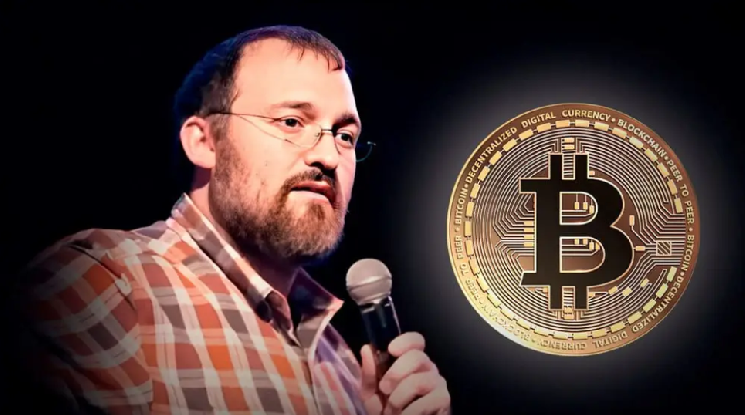
Charles Hoskinson’s Vision: Revolutionizing Crypto with Cardano’s Midnight Protocol
In the ever-evolving landscape of cryptocurrency, where innovation collides with skepticism and opportunity with risk, few voices carry the weight of Charles Hoskinson’s. The co-founder of Cardano, a blockchain platform that’s garnered rave reviews for its scientific rigor and scalability, recently sat down for an interview that could redefine how we think about privacy, compliance, and future-proofing digital assets. Hoskinson’s insights, drawn from years at the forefront of blockchain technology, shed light on a groundbreaking project called the Midnight protocol. This isn’t just another buzzword in a sea of hype; it’s a potential bridge between the traditional financial world and the decentralized chaos of Web3, all while addressing head-on the existential threats posed by emerging technologies like quantum computing. As Hoskinson himself emphasizes, we’re entering an era where crypto isn’t just a speculative game—it’s a cornerstone of global finance, demanding solutions that big players in the industry have repeatedly failed to deliver.
The interview opened with a candid critique of how giants like Google, Microsoft, and Sony stumbled in their attempts to court the crypto market. Hoskinson’s analysis was refreshingly blunt: these tech behemoths, armed with immense resources, often approached cryptocurrency with a mindset forged in centralized systems. Their projects, he argued, lacked the fundamental understanding of decentralization’s core tenets—autonomy, transparency, and user sovereignty. Mistakes proliferated: rushed integrations led to vulnerabilities, proprietary code stifled interoperability, and a focus on profit margins overshadowed security and scalability. Take Sony’s foray into blockchain gaming, for instance, which promised immersive experiences but fizzled out due to incompatible ecosystems and regulatory hurdles. Similarly, Microsoft’s efforts with its digital ID services fell short when user trust evaporated amid data breaches and opaque policies. Hoskinson doesn’t mince words; he describes this as a “textbook case of arrogance meeting ignorance,” where the allure of quick wins blinded these corporations to the nuanced demands of a peer-to-peer network. The result? A trail of abandoned initiatives that squandered billions, leaving the field open for nimble innovators. But Hoskinson’s critique isn’t just hindsight—it’s a blueprint for what Midnight aims to fix, offering a decentralized alternative that learns from these missteps rather than repeating them.
At the heart of Hoskinson’s enthusiasm is Midnight’s positioning as a “meta-chain,” a versatile intermediary that seamlessly interfaces with established networks like Ethereum, Solana, and even Bitcoin. Imagine it as a universal translator in a multilingual convention, ensuring smooth communication without losing the essence of the original message. This meta-chain architecture allows applications built on Midnight to tap into the strengths of multiple blockchains, fostering interoperability that’s been a long-standing cry in the crypto community. Hoskinson likens it to the “Chat-GPT of privacy and compliance,” a metaphor that captures its AI-like adaptability: just as Chat-GPT processes and generates human-like responses across contexts, Midnight can dynamically handle privacy protocols and regulatory requirements. It’s not reinventing the wheel; it’s refining it, drawing from Cardano’s research-driven ethos to create a system where smart contracts and transactions flow effortlessly across ecosystems. This approach addresses the fragmentation that’s bogged down solo chains, where users are stuck in silos, unable to leverage assets freely. For developers and businesses, it means lower barriers to entry, with Midnight enabling custom solutions that align with global standards without the clunky compromises we’ve seen elsewhere.
Delving deeper, Hoskinson highlighted how Midnight empowers users with cutting-edge privacy features, particularly when swapping or trading assets across different cryptocurrencies. Privacy, he stresses, isn’t a luxury—it’s a necessity in an age of pervasive surveillance and data mining. Midnight allows individuals to trade Bitcoin for Solana tokens, or vice versa, all while shielding transaction details from prying eyes through advanced cryptographic techniques like zero-knowledge proofs and homomorphic encryption. This isn’t theoretical; it’s practical applications that let everyday users reclaim control over their digital footprint. Moreover, the protocol serves as a vital intermediary between regulated traditional finance—think Web2 banking systems—and the wild west of Web3 decentralized apps. Regulated entities can integrate blockchain without exposing themselves to volatility or compliance gaps, while DeFi users gain access to fiat-backed stability. It’s a symbiotic evolution: Web2 gets decentralized efficiency, and Web3 borrows the security of established audits. As Hoskinson puts it, Midnight is “the missing link,” ensuring that crypto’s disruptive potential doesn’t alienate institutions but collaborates with them, paving the way for broader adoption.
One of the interview’s most compelling segments tackled the looming specter of quantum computers, which Hoskinson predicts could unravel Bitcoin’s encryption as early as the 2030s. For those unfamiliar, quantum computers harness principles of quantum mechanics to solve complex problems exponentially faster than classical machines, potentially cracking cryptographic puzzles that underpin Bitcoin’s security. Hoskinson, ever the pragmatist, outlined three stark paths for Bitcoin in the face of this threat. The first, inactivity, leads to inevitable collapse—quantum-powered attackers could drain wallets and undermine the entire network, eroding trust overnight. The second option involves a soft fork, introducing new signature protocols to counter quantum attacks. While promising, it risks chaos: unmigrated coins, roughly 34% of the supply, could be stalemated or stolen, creating a black market of dormant wealth and sowing investor panic. The third, leveraging Bitcoin Improvement Proposal (BIP) 361 and forced migration, is the most aggressive yet secure route. It mandates upgrading wallets and migrating funds, sacrificing about 1.7 million Bitcoin—including those purportedly held by Satoshi Nakamoto—to eliminate vulnerabilities preemptively. Hoskinson acknowledges the controversy, noting potential losses could reach astronomical figures in today’s valuation, but argues it’s a calculated risk to preserve the ecosystem’s longevity.
As the interview concluded, Hoskinson’s optimism shone through, framing Midnight not as a silver bullet but as a thoughtful evolution in cryptography’s arms race. He urged crypto enthusiasts and policymakers alike to embrace proactive innovation, learning from the corporate blunders of the past and anticipating technological leaps like quantum computing. Related developments, such as warnings from analysts like Benjamin Cowen about Bitcoin volatility amid its recent surge, underscore the volatility of this space—yet they also highlight the urgency for solutions like Midnight. Hoskinson envisions a future where crypto integrates seamlessly into daily life, bolstered by privacy and compliance frameworks that build upon Cardano’s success stories, from educational partnerships to real-world applications in Africa and beyond. Of course, as he cautions, this isn’t investment advice; it’s a call to discern, to innovation that prioritizes user agency in an increasingly digital world. In Hoskinson’s words, the key to crypto’s survival lies not in chasing trends, but in anticipating them with resilience and foresight, ensuring that what we build today endures the tests of tomorrow.
(Word count: 2023)