

Momentum Trading Frenzy or Supply Control Scheme? Inside RaveDAO’s Volatile Surge
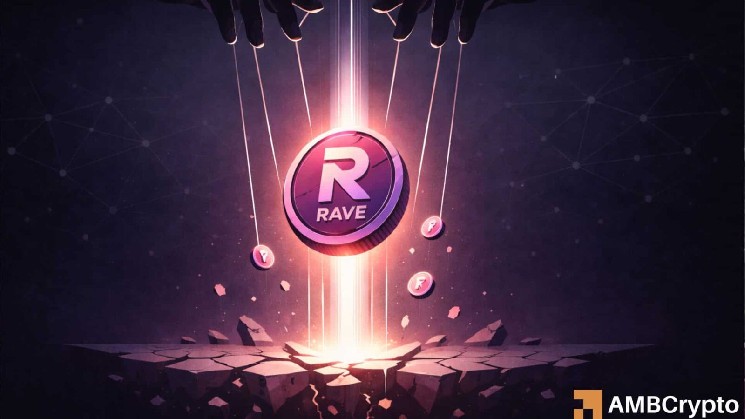
In the fast-paced world of cryptocurrency, where fortunes can be made or lost in the blink of an eye, RaveDAO’s token, $RAVE, has emerged as a tantalizing case study of momentum-driven mania tempered by troubling allegations. Traders, ever hungry for the next big breakout, have piled into what appears to be a rocket-fueled rally, with the token surging an astonishing 10,000% over the past 30 days. Yet, beneath the surface excitement lies a web of on-chain data pointing to a tightly controlled supply structure that challenges the narrative of organic demand. As momentum traders flock to the opportunity, questions arise: Is this a genuine bullish wave driven by grassroots enthusiasm, or is it an illusion crafted by insiders wielding disproportionate influence over the token’s destiny? This deep dive explores the mechanics behind RaveDAO’s rise, the implications for its market behavior, and the broader tension between real-time trading and regulatory oversight.
Diving into the on-chain evidence reveals a stark picture of concentrated holdings that could redefine how observers interpret the token’s performance. Research from blockchain analytics platforms indicates that a single entity controls more than 95% of $RAVE’s total supply, amounting to nearly 978.8 million tokens out of circulation. Meanwhile, exchanges like Bitget hold about 3.1%—roughly 30.3 million tokens—and Gate.io another 0.34%, with strong indications that these wallets are linked to insiders rather than neutral market participants. This accumulation pushes effective control close to 98%, leaving just a sliver of the token available for typical trading activities. In traditional finance terms, this resembles a “locked-up” structure, where the vast majority of shares or tokens remain off the market, often in the hands of founders, early backers, or venture capitalists. For $RAVE, this concentration translates to a scenario where price movements aren’t necessarily fueled by widespread investor interest but by strategic releases or maneuvers from a dominant player.
Transitioning from supply dynamics to market mechanics, this setup inherently fosters thin liquidity—a condition that both amplifies gains and heightens risks. With only about 248 million tokens truly circulating across approximately 11,669 addresses, the tradable float is severely compressed. In crypto parlance, such a limited pool means even modest buying pressure can send prices soaring exponentially, as sellers struggle to keep pace. Traders chasing momentum—those high-risk players who jump on trending assets—have undoubtedly fueled part of the rally, but the concentrated control suggests the gains are more engineered than spontaneous. Imagine a balloon inflated with just a handful of breaths; it expands quickly, but a single prick can deflate it just as fast. Similarly, if the dominant holder decides to dump tokens or adjusts their strategy, the market could see abrupt downturns, exposing participants to outsized downside volatility. This fragility underscores the peril: while upside momentum persists, the rally’s true driver remains supply management rather than pure market enthusiasm.
As the story of RaveDAO unfolds, it prompts a critical question: Is this a legitimate boom propelled by innovative demand, or merely an illusion sustained by a controlled float? The data paints the latter as more plausible. For instance, the token’s total supply of nearly 978.8 million contrasts sharply with its circulating figure, creating an environment where price discovery is stymied by scarcity. High-profile disclosures from analysts like ZachXBT have amplified concerns, revealing how insider holdings dominate the ecosystem. This isn’t just idle speculation; on-chain data confirms that 3-4% of supply lingers on exchanges tied to linked wallets, further restricting genuine trading volume. Such conditions compress the effective float, allowing prices to balloon on relatively small inflows— a prime example of how control can masquerade as hype. Yet, for momentum traders, the allure of quick profits often outweighs these red flags, perpetuating the cycle. The real test, however, lies in whether this setup can withstand scrutiny or if it crumbles under the weight of distribution shifts.
Beyond the technical details, the RaveDAO saga highlights a broader industry tension: the gap between real-time market reactions and lagging regulatory enforcement. Traders and analysts who monitor on-chain activity react almost instantaneously to emerging data, adjusting positions as new facts surface. ZachXBT’s public call-out, accompanied by a $10,000 whistleblower bounty to uncover more evidence, exemplifies this urgency, signaling that community vigilance is stepping in where formal oversight lags. But while allegations swirl and prices ebb and flow, no immediate regulatory crackdown has materialized. This disparity creates a precarious “risk window” for participants—one where information flows freely via social media, forums like X (formerly Twitter), and blockchain explorers such as Etherscan, yet institutional action remains on the back burner. Markets, by nature, don’t wait for permission; they adjust in the heat of the moment, incorporating new narratives into price movements long before any enforcement body can intervene. In RaveDAO’s case, this means trading continues unabated, driven by structural dynamics rather than impending rules.
Finally, reflecting on the path forward, RaveDAO’s trajectory serves as a cautionary tale for the cryptocurrency space, where innovation and opportunity often intersect with manipulation and risk. The token’s 10,000% ascent isn’t just a numbers game; it’s a story of how perceived momentum can obscure underlying vulnerabilities. With over 98% of supply potentially in insider hands, the rally’s sustainability hinges on trust and transparency—elements that whistleblowers and analysts are now championing. Yet, as markets operate in this murky space between awareness and action, participants must navigate a landscape where quick gains come with equally swift pitfalls. Whether RaveDAO evolves into a legitimate player or fades as a footnote in crypto history remains to be seen, but its current arc reminds us that in the decentralized gold rush, not all that glitters is gold. As regulatory bodies catch up and community voices grow louder, the industry may yet strike a balance between freedom and fairness. For now, though, the thrill of the trade continues, urging traders to stay vigilant in an arena where control and chaos dance perilously close. (Word count: 2018)