






Strategy Holds the Line at 845,050 BTC While Bitcoin Treasury Players Chart Very Different Paths
A Pause That Speaks Volumes: Strategy Leaves Its Bitcoin Ledger Untouched
For most companies, a week of doing nothing would barely register. But for Strategy, one of the world’s largest institutional Bitcoin holders, every weekly update is watched with the kind of attention usually reserved for quarterly earnings. That is why the latest report from founder Michael Saylor’s camp was bound to create waves, even though the headline was, in a way, all about stillness. During the week ending September 13, 2026, Strategy neither bought Bitcoin nor sold a single coin. After a prolonged stretch of steady and increasingly aggressive accumulation, the company’s total holdings remained frozen at exactly 845,050 BTC. In a statement shared by Saylor, the company confirmed what many had already suspected: there would be no fresh purchases to report this time. The silence was not empty, though. Instead of adding to its digital vault, Strategy used the week to buy back $139.3 million worth of its preferred shares, specifically STRC preferred stock, and the transaction was fully funded from cash reserves. That decision reduced the company’s dollar holdings from $6.54 billion to $6.4 billion, a relatively modest shift in the context of a balance sheet that remains overwhelmingly tilted toward Bitcoin. The move may seem like a detour from the company’s usual Bitcoin-centric playbook, but it signals something important: Strategy is entering a more mature phase of capital management, one where the company is no longer just accumulating digital assets at all costs but also optimizing the rest of its financial structure.
From Accumulator to Capital Manager: Breaking Down the STRC Preferred Share Buyback
The decision to buy back preferred shares rather than Bitcoin marks a subtle but meaningful evolution in how Strategy approaches its treasury. By redeeming $139.3 million in STRC preferred shares, the company is effectively reducing future dividend obligations and simplifying its capital stack, all while preserving its enormous Bitcoin position untouched. Michael Saylor’s statement made clear that the repurchase was funded entirely from the company’s existing cash reserves, which means no Bitcoin had to be sold to finance the operation. For long-time observers, that distinction is crucial. Strategy has spent years building a reputation as one of the most Bitcoin-positive balance sheets in the corporate world, and the decision to use dollars rather than digital assets for this particular move reinforces the company’s conviction in Bitcoin as a long-term strategic reserve. At the same time, the buyback adds another layer of financial discipline to the company’s overall structure. Preferred share repurchases are often viewed by analysts as a sign of confidence, a message to the market that management believes the company’s equity is undervalued and that its balance sheet can support a reduction in outstanding obligations. In this case, it also gives fixed-income-minded shareholders a comforting signal that Strategy is not ignoring more traditional forms of financial management. The company is essentially telling investors it can play both sides of the equation: hold Bitcoin for the future while keeping enough flexibility in the present to meet its commitments. That flexibility is especially valuable in a market where volatility continues to test corporate conviction, and where the ability to move calmly through unpredictable cycles can be just as important as the size of one’s Bitcoin bag.
Why the 3.9-Year Dollar Runway Matters in a Volatile Market
Perhaps the most underappreciated number in Strategy’s latest update was the proposed “USD Term” of approximately 3.9 years, a metric that effectively describes how long the company can continue to meet its financial obligations without touching its Bitcoin or raising new capital. This liquidity runway, measured in dollars, provides an answer to one of the most common questions surrounding Bitcoin-heavy corporate treasuries: what happens when the market turns sour? In Strategy’s case, the company says it can service payments such as dividends, interest, and other dollar-denominated expenses for roughly 3.9 years using the cash it already has on hand. That is not just a comfort blanket; it is a strategic buffer. It means the company does not need to sell Bitcoin at an inopportune time just to keep operations running, nor does it need to depend on favorable financing conditions to continue functioning normally. For a company whose entire balance sheet is effectively shaped around Bitcoin, this kind of runway is a powerful tool. It insulates the core business from short-term market movements and gives management the space to make decisions based on long-term conviction rather than panic. The concept of a dollar runway is common in the world of venture capital and startups, but applying it to a Bitcoin treasury company adds a new layer of sophistication to the narrative. Strategy is effectively saying that its financial obligations are not a sword hanging over its Bitcoin strategy. The company can continue to hold, wait, and build as needed, while still honoring its commitments to preferred shareholders and other creditors. That balance is likely to become even more important as other institutional players enter the Bitcoin treasury space and begin designing their own approaches to liquidity and risk management.
Strive Steps In: Another 469 BTC Added to a Growing Institutional Reservoir
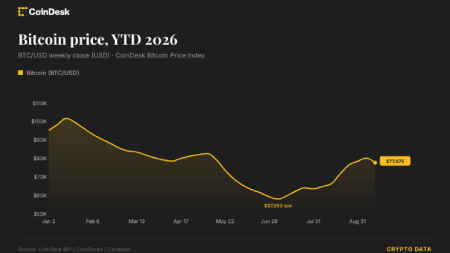
While Strategy chose to stand still, another Bitcoin treasury company stepped forward with fresh buying. Strive, which has been quietly accumulating bitcoin as part of its corporate treasury strategy, added another 469 BTC to its holdings during the same weekly period. According to Strive CEO Matt Cole, who posted the update on X, the company acquired the latest batch of Bitcoin at an average price of $77,954. That purchase brought Strive’s total holdings to 25,000 BTC, a clear sign that the institutional appetite for Bitcoin remains far from extinguished. What makes Strive’s move particularly interesting is that it came during a week when one of the largest Bitcoin holders on the planet elected to do nothing. That divergence in behavior illustrates a broader reality: Bitcoin treasury management is not a one-size-fits-all playbook. Some companies are still in the accumulation phase, aggressively stacking coins at whatever price the market offers. Others, like Strategy, are shifting toward a phase in which balance sheet optimization and capital efficiency take center stage. Strive’s purchase also reinforces the idea that institutional demand is not tied to any single leader or personality. The company is building interest at its own pace, using treasury operations as a way to gain exposure to Bitcoin while continuing to run a business independent of crypto market cycles. The steadily growing total of 25,000 BTC places Strive among the more visible corporate Bitcoin holders in the space, and each new purchase adds to a narrative of ongoing, distributed adoption. Investors watching the space are no longer focused solely on one company’s weekly update; they are tracking a whole ecosystem of firms with different strategies, different timelines, and different reasons for holding Bitcoin.
KULR Exits the Bitcoin Treasury Game After Selling Remaining Remaining Coins
In sharp contrast, KULR Technology, a NYSE-listed company that had once made Bitcoin a significant component of its treasury holdings, has now sold off its entire remaining reserve. According to an 8-K filing with the U.S. Securities and Exchange Commission, the company sold approximately 764 Bitcoin through open-market transactions between August 20 and September 11, 2026. The sales were conducted at an average price of $76,633 per Bitcoin, generating around $58.6 million in gross revenue. In the filing, KULR described the transactions as part of “ongoing treasury management activities,” a phrase that covers a great deal of ground but reveals very little about the reasoning behind the decision. What is now clear, however, is that as of September 11, the company’s Bitcoin holdings have dropped to zero. That marks a definitive break with its previous corporate Bitcoin strategy. KULR had once positioned itself as a forward-looking company ready to adopt Bitcoin as a reserve asset, but the latest move signals a full retreat, at least for now. There are many reasons a company might choose to liquidate its Bitcoin holdings: cash flow needs, a shift in strategic priorities, changing shareholder expectations, or simply a more cautious approach to market volatility. Whatever the motivation, the exit is a useful reminder that the corporate Bitcoin treasury movement is not monolithic. For every company that goes all-in on Bitcoin, there will be others that try the approach and eventually step away. KULR’s decision also adds a layer of realism to a market that sometimes gets swept up in the excitement of headline purchases. It shows that digital asset exposure is a choice, and it is a choice that must be made not just once, but continuously, as market conditions evolve.
A More Mature Corporate Bitcoin Ecosystem Takes Shape
Taken together, the stories of Strategy, Strive, and KULR paint a more nuanced picture of the corporate Bitcoin treasury sector than the one often presented by social media and news headlines. This is no longer a market dominated by simple accumulation stories or dramatic sell-offs. Instead, it is evolving into a more complicated financial landscape where individual companies make very different decisions based on their own financial priorities, risk tolerances, and strategic objectives. Strategy may have paused its Bitcoin purchases, but it did so while strengthening its preferred share structure and preserving a multi-year dollar runway. That is not the behavior of a company losing faith in Bitcoin; it is the behavior of a company learning how to live with Bitcoin at a very large scale. Strive, by contrast, used the opportunity to keep buying, and its growing stack of 25,000 BTC shows that the desire to accumulate Bitcoin has not disappeared just because one major player decided to take a week off. KULR, meanwhile, is demonstrating that exit remains an option, and that the freedom to walk away from digital assets is just as much a part of treasury management as the freedom to buy them. The net result is a more decentralized and more resilient ecosystem, one where companies no longer feel the need to copy a single template. In that sense, the latest weekly update might not have delivered the eye-catching numbers that some were hoping for, but it provided something just as valuable: a window into a maturing institutional market. As always, anyone watching this space should remember that no single week tells the whole story, and this article is not investment advice. It is simply a snapshot of a fascinating moment in the ongoing evolution of corporate Bitcoin ownership.