





Bitcoin Outshines Gold and Stocks as Correlation Shifts Point to a New Market Reality
A Defining Month for Digital Assets
There is a moment in every market cycle when the usual labels stop fitting. For Bitcoin, that moment may be arriving right now. The cryptocurrency has emerged as the standout performer among major asset classes at a time when global markets are otherwise wrestling with renewed uncertainty. According to CoinDesk data, Bitcoin’s price has surged roughly 26% over the course of the month, reaching levels near $79,200. That figure puts the digital asset well ahead of gold, which has delivered a still-respectable 13.8% gain, and it easily surpasses the gains posted by the Nasdaq 100 and the S&P 500, which have risen just 4.8% and 3.2%, respectively. The scale of that outperformance is not merely a statistical curiosity. It is a signal. At a moment when equities are hovering near record highs and investors are being forced to reassess everything from interest rate expectations to fiscal sustainability, Bitcoin is not just participating in the rally — it is leading it. What makes this even more striking is that Bitcoin is doing so with a degree of maturity that suggests something deeper than a speculative spike. The market’s attention has shifted from short-term momentum to long-term positioning, and the data increasingly suggests that large and sophisticated investors are treating Bitcoin as a serious macro asset.
Hard Assets Reclaim Momentum
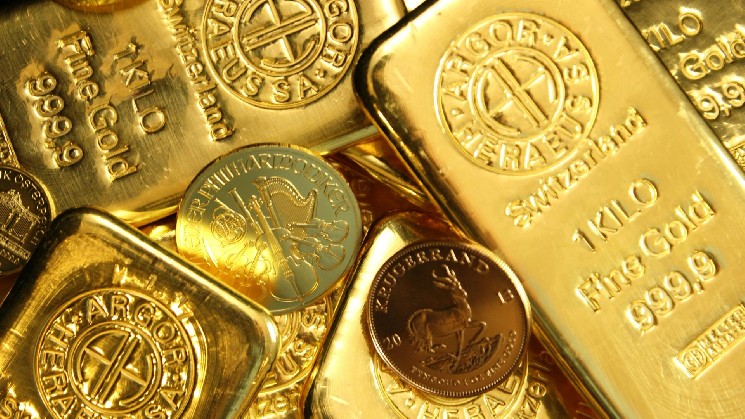
For much of the early part of 2026, Bitcoin and gold found themselves in an unusual position. Both hard assets lagged the equity market, which seemed to move higher on momentum alone. Stocks, energized by enthusiasm around artificial intelligence, resilient corporate earnings, and an improving growth outlook, kept setting records. The narrative at the time was simple: risk appetite was healthy, liquidity was available, and there was little reason to seek shelter. Hard assets, by contrast, appeared trapped in a sideways pattern, waiting for a catalyst that would change the narrative. That catalyst has now arrived. This month, the tables have turned. While stocks remain at historically elevated levels, they are no longer the headline act. Gold has accelerated at a striking pace, climbing 13.8% and reminding investors why history has treated it as the ultimate store of value. Bitcoin, however, has gone further. Its 26% monthly surge has turned it into the clear leader of this new phase of the market cycle. The fact that both major hard assets are now outpacing equities is telling. It suggests that investors are increasingly concerned about the durability of paper returns and are looking for assets that cannot be devalued by the stroke of a government pen. This is not just about chasing performance. It is about preparation for a world in which traditional reserve currencies face mounting pressure, debt levels continue to climb, and central banks are forced into uncomfortable choices.
The Data Behind the Shift
The price action is attention-grabbing on its own, but the underlying correlations tell an even more compelling story. TradingView data shows that Bitcoin’s 30-day correlation with gold has climbed to +0.81, a reading that indicates a strong and growing tendency for the two assets to move in tandem. In plain terms, when gold rises, Bitcoin now tends to rise alongside it. That is a meaningful break from the past, when Bitcoin was often treated as an entirely separate asset class with little connection to the traditional financial system. At the same time, Bitcoin’s relationship with the U.S. Dollar Index has deepened to -0.86, a sign that it is consistently moving in the opposite direction of the greenback. When the dollar weakens, Bitcoin tends to strengthen, and with the DXY under pressure this month, that negative correlation has become a major driver of performance. Perhaps just as important, Bitcoin’s link with the Nasdaq has weakened. For years, analysts grouped Bitcoin with technology stocks, arguing that it functioned as a high-beta play on the same risk-on sentiment that pushed equities higher. That connection now appears to be loosening. Taken together, these three data points paint a clear picture: Bitcoin is no longer behaving like a growth stock. It is behaving like a macro asset — one that is increasingly aligned with gold, increasingly opposed to the dollar, and gradually decoupling from equity markets. For investors who have questioned whether Bitcoin can evolve beyond its reputation as a speculative novelty, this is the kind of evidence that demands attention.
A Store of Value in an Age of Fiscal Stress
The reason these correlation shifts matter is that they align with a much broader narrative about the global financial system. Governments across the developed world continue to run large deficits, borrowing on a scale that would have been unthinkable a generation ago. Central banks, meanwhile, are frequently forced to step in when debt issuance becomes too heavy or when economic growth begins to wobble. That combination — loose fiscal policy and accommodative monetary policy — has historically been one of the most reliable drivers of gold demand. When paper currencies are devalued, assets with limited supply tend to appreciate. Gold has played that role for centuries. Bitcoin, with its fixed supply capped at 21 million coins, has increasingly been described as a modern version of the same trade. The key difference is that Bitcoin’s scarcity is enforced by code rather than by geology, which gives it a distinct appeal for a generation of investors that has grown up in an era of aggressive money printing. The rising correlation with gold suggests that market participants are beginning to view Bitcoin through this lens. They are not buying the digital asset purely for short-term capital gains, although those gains are certainly welcome. They are buying it as insurance — as a decentralized, transportable, and verifiable store of value that cannot be diluted by a sudden change in government policy. The negative correlation with the dollar strengthens that argument. In a world where fiat currencies face mounting pressure from debt and political gridlock, an asset that historically appreciates when the dollar falls becomes an increasingly attractive means of protection. That is exactly what Bitcoin is proving to be in the current cycle.
Portfolio Implications for a New Landscape
For institutional investors and asset allocators, the implications of this shift are difficult to overstate. The traditional view of Bitcoin as an isolated, hyper-volatile asset with no place in a serious portfolio has been eroding for years, but the recent data accelerates that change in a meaningful way. A positive correlation with gold and a negative correlation with the dollar mean that Bitcoin can now serve a function that no single traditional asset currently fulfills. It offers the inflation-hedge properties of a hard asset, but with the liquidity, transportability, and technological efficiency of a modern financial instrument. Portfolio managers who once dismissed Bitcoin as too risky for clients are now faced with a more complex question: if the asset is moving in tandem with gold and in opposition to the dollar, what is the cost of leaving it out of a diversified strategy? The weakening correlation with the Nasdaq is equally important. For years, one of the main criticisms of Bitcoin was that it offered little diversification benefit because it tended to crash alongside technology stocks whenever risk appetite faded. That argument has lost considerable force. If Bitcoin continues to distance itself from equity markets while maintaining its correlation with gold, it could become a powerful building block for portfolios designed to weather a wide range of economic scenarios. That is precisely the kind of role that investors have traditionally reserved for gold, Treasury bonds, and other defensive assets. Bitcoin is not yet a replacement for any of those — its volatility remains far higher than most traditional hedges — but it is increasingly functioning as a complement to them.
The Road Ahead
Of course, the future is never guaranteed, and correlations have a way of shifting when the market least expects it. Bitcoin has experienced dramatic rallies before, only to see its relationship with other asset classes evolve as the market matures. There are also risks that could disrupt the current trajectory. Regulation remains a wildcard, and a sudden change in policy or enforcement could alter investor sentiment in a matter of days. The macro environment, too, is subject to change. If inflation cools more quickly than expected or if the dollar regains its strength, some of the forces that have pushed Bitcoin higher this month could fade just as quickly. That is why analysts emphasize caution, even as they acknowledge the remarkable shift in market behavior. The data, however, is telling a compelling story. Bitcoin is outperforming gold, stocks, and every other major asset class at a time when its correlation with gold is soaring and its relationship with the dollar is increasingly negative. That combination of price strength and correlation shift points to a market that is maturing, not one that is simply riding a wave of speculation. Whether this proves to be a lasting change or a temporary repricing will depend on a host of factors, from fiscal policy to technological adoption to the next inevitable cycle of market sentiment. But for now, the evidence suggests that Bitcoin has crossed an important threshold. It is no longer just a cryptocurrency. It is becoming something closer to the standard that its most enthusiastic proponents always claimed it could be: a modern safe-have asset, a credible store of value, and a hedge against the fiscal and monetary recklessness of a world that has grown too comfortable with debt. The coming months will reveal whether that narrative can survive the test of volatility. For the moment, though, Bitcoin has not just outperformed the market — it has reshaped the way the market thinks.