






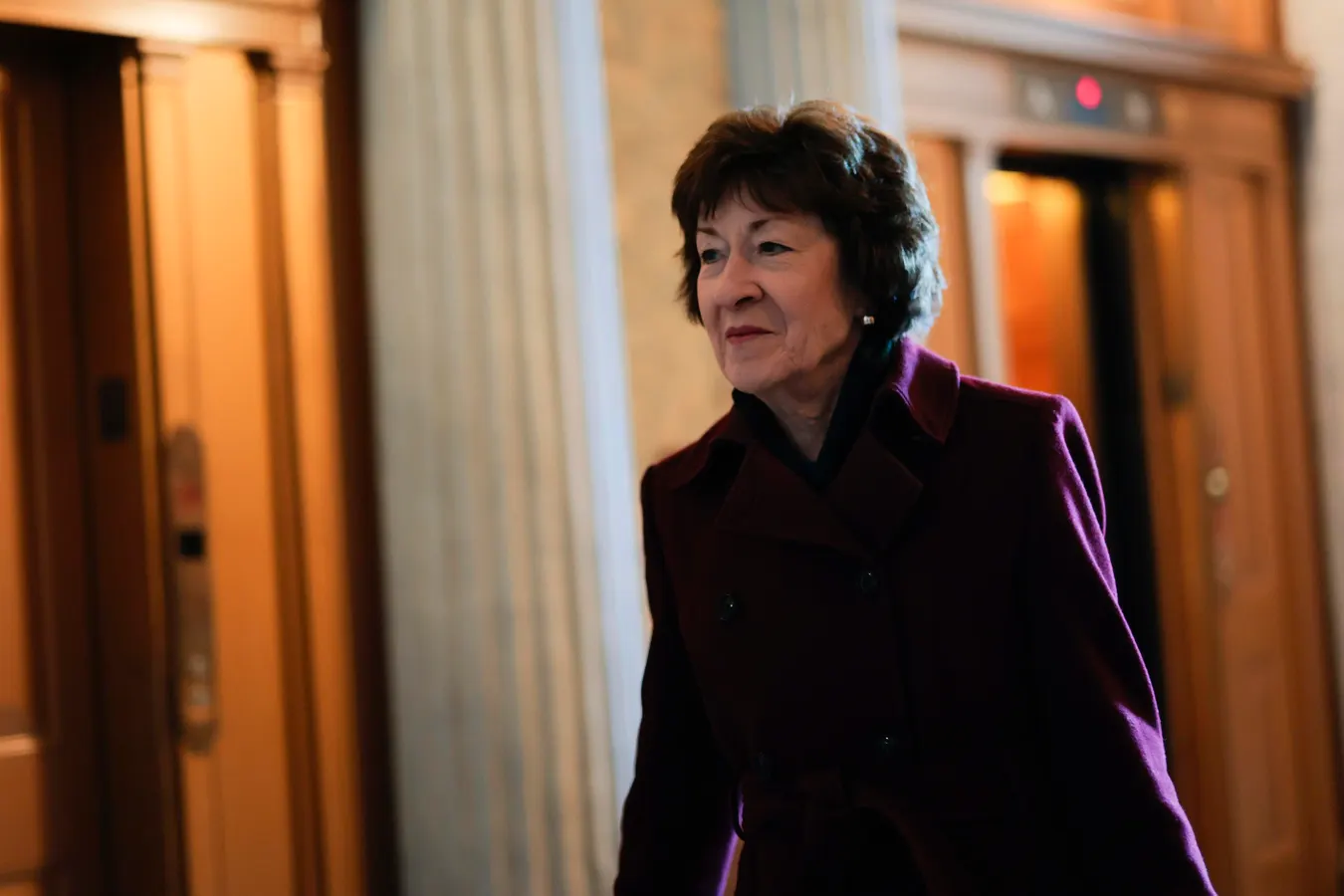
For nearly three decades, Senator Susan Collins has maintained a formidable political presence in Maine by championing a increasingly rare brand of moderate, cooperative Republicanism. As the party’s sole surviving senator in New England, she faces a unique electoral landscape. Maine has consistently leaned Democratic in presidential elections since 1992, making her political survival a testament to her bipartisan appeal. However, her latest reelection journey has been thrown into sudden unpredictability. Her Democratic challenger, Graham Platner, recently faced calls from his own party to withdraw following a sexual assault accusation reported by POLITICO—a claim Platner denies. While Platner contemplates his path forward before the upcoming withdrawal deadline, Collins’ campaign apparatus remains exceptionally prepared for whatever political battle lies ahead.
This structural resilience is heavily fueled by an unprecedented influx of elite financial backing. Federal campaign filings reveal that at least 111 billionaires and their spouses have poured nearly $10 million into various political action committees and direct campaign funds to preserve Collins’ Senate seat. Leading the charge is the pro-Collins super PAC, Pine Tree Results, which has already raised over $16 million. By contrast, Platner’s embattled campaign has attracted minimal billionaire support, totaling only a few thousand dollars from five wealthy contributors. With months remaining before voters head to the polls, this massive capital disparity underscores the high stakes national interest in keeping this centrist conservative in office.
At the pinnacle of Collins’ financial network is Ken Griffin, the founder and CEO of hedge fund giant Citadel, who contributed a staggering $2.5 million directly to Pine Tree Results. Griffin, whose net worth is estimated at $49.8 billion, is a prolific donor to conservative initiatives, though he remains an independent voice who has openly criticized standard party-line policies like sweeping trade tariffs. Closely following Griffin is Blackstone founder Stephen Schwarzman, who, along with his spouse Christine, directed over $2 million toward Collins’ reelection efforts. Schwarzman’s massive contribution to Pine Tree Results, bolstered by his $39.3 billion private equity fortune, highlights the financial sector’s deep commitment to preserving Collins’ business-friendly, predictable presence in Washington.
The financial coalition assembled to defend Collins spans a diverse array of industries, looking past traditional party-line divisions. Jim Davis, the owner of New Balance, contributed $1.019 million, marking one of the largest national political donations in his history. Paul Singer, the founder of Elliott Management and an advocate for LGBT inclusivity within the GOP, contributed just over $1 million, while Florida-based food distribution moguls Jude and Chris Reyes combined to donate $1.03 million. These substantial contributions are further complemented by a $507,000 donation from cable television pioneer John Malone. Malone publicly defended his donation by praising Collins as a rare, essential centrist who is fighting to preserve the political middle in a deeply polarized nation.
Beyond these multi-million-dollar contributions, a broad spectrum of high-profile wealth continues to prop up Collins’ organization. Moore Capital founder Louis Bacon contributed over $500,000, aligning his history of GOP donations with his personal passion for environmental conservation. Michael Smith of Freeport LNG added $107,000, and Palantir CEO Alex Karp—traditionally a supporter of Democratic and progressive causes—contributed $100,000, signaling a growing cross-party appreciation for Collins’ moderate policy positions. Additionally, prominent standard-bearers of American industry, including hedge fund manager Stanley Druckenmiller, sports franchise owner Robert Kraft, tech icons Marc Andreessen and Sean Parker, and major philanthropists like Melinda Gates and Alice Walton have all chipped in to bolster her campaign’s defenses.
Ultimately, the immense scale of this financial mobilization illustrates the symbolic and practical value of Susan Collins’ seat in a closely divided Senate. To her ultra-wealthy supporters, she represents more than just a vote; she is a stabilizing, pragmatic bridge in an era defined by hyper-partisan gridlock. As the Democratic party in Maine scrambles to resolve its nominee crisis before the rapidly approaching mid-summer deadlines, Collins sits on a robust war chest designed to withstand any political storm. Whether this extraordinary reservoir of billionaire backing will resonate positively with Maine’s independent-minded electorate remains the defining question of the upcoming election.