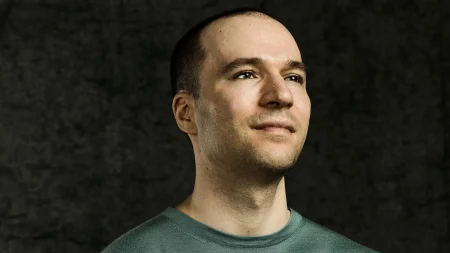




Billionaire Leon Black Should Face Contempt For Not Testifying About Epstein, House Committee Rules
There is a certain kind of power that lets a man walk away from questions. For more than a year, Leon Black, the billionaire co-founder of Apollo Global Management, has tried to do exactly that. The House Judiciary Committee has now made its position unmistakable: Leon Black should face contempt of Congress for refusing to testify about his long and troubling association with convicted sex trafficker Jeffrey Epstein. The committee’s ruling is not a criminal conviction, and it is not a finding that Black is guilty of any crime related to Epstein. What it is, however, is a formal, forceful statement that no one, no matter how wealthy, can simply ignore a lawful subpoena because the questions are inconvenient, awkward, or painful. The committee tried to get Black to sit for a deposition. It asked for his testimony under oath. It demanded documents that could fill in the gaps of one of the most disturbing chapters in recent American history. Black refused. He did not show up. He did not answer the questions that prosecutors, victims, and the public have been asking for years. And so the committee did the only thing it could do: it voted to send his case to the Department of Justice for possible prosecution. That is what contempt of Congress means in practical terms. It is the legal system’s way of saying that the truth is not optional. It is also the latest, and perhaps most powerful, reminder that the wealthy and connected cannot always buy themselves a way out of accountability.
At the center of this moment is a relationship that many people have wanted to ignore for a long time. Leon Black is one of the most successful financiers of his generation. He built Apollo Global Management into a private equity giant, managing hundreds of billions of dollars and shaping the careers of countless politicians, executives, and philanthropists. But his name became permanently entangled with Jeffrey Epstein after Epstein’s 2019 arrest on federal charges of sex trafficking minors. Epstein’s arrest tore open a web of connections that stretched from New York townhouses to private islands to the highest corridors of power. Black was one of the most prominent figures pulled into that web. He acknowledged that he had known Epstein for years, that he had flown on Epstein’s private plane, and that he had paid Epstein more than $150 million for what he described as tax, estate planning, and philanthropic advice. That number stunned even seasoned observers. Black said he deeply regretted having any relationship with Epstein, insisted that he had no knowledge of Epstein’s crimes, and tried to move on with his life. But the public record did not let him move on. Epstein was a convicted sex offender, a man who had already plead guilty in 2008 to soliciting a minor. That fact was not a secret. It was a matter of public record. And yet powerful men like Black continued to spend time with Epstein, continue to do business with him, continue to treat him like a member of the elite. The Senate and House committees investigating Epstein wanted to know why. They wanted to know what Black saw, what he heard, and what he knew. And they wanted Leon Black to say it under oath.
That is where the investigation turned into a showdown. The House Judiciary Committee, which has been looking into how Epstein and his network operated and whether federal law enforcement went easy on him, issued a subpoena to Black for documents and testimony. The committee made clear that it was not treating Black as a target of the investigation but as a witness with unique knowledge of Epstein’s inner circle. The subpoena asked for communications between Black and Epstein, financial records involving Epstein and his various entities, and details about Black’s interactions with other Epstein associates. It was a broad request, but not an unreasonable one. Congress has the power to investigate matters that affect the public interest, and there is almost nothing more clearly in the public interest than understanding how a convicted pedophile managed to move freely through the highest levels of American finance and government. Black’s lawyers responded with legal objections. They argued that the subpoena was overbroad, that the committee was on a fishing expedition, and that Black had no obligation to testify because the committee had not demonstrated a legitimate legislative purpose. They offered to negotiate. They produced some documents. But they drew a hard line at the deposition. Black refused to appear, saying in legal filings that his health made travel difficult and that the committee was trying to humiliate him. The committee was not persuaded. It noted that Black had continued to run a multi-billion-dollar investment firm during part of the period in question and had appeared at public events, which suggested his health was not as fragile as his attorneys claimed. More importantly, the committee argued, Black cannot be the judge of his own subpoena. That is precisely why contempt exists. A person does not get to decide which questions he wants to answer.
The committee’s contempt ruling is a serious step with real legal consequences. Contempt of Congress is a crime, punishable by a fine and up to one year in federal prison. But the process is not automatic. The Judiciary Committee’s vote is essentially a recommendation to the full House of Representatives. If the full House approves the contempt resolution, the matter is referred to the U.S. Attorney’s Office for the District of Columbia, which must decide whether to convene a grand jury and seek an indictment. That is a decision that carries a great deal of discretion. In recent years, the Justice Department has sometimes declined to prosecute contempt referrals from Congress, arguing that such matters are better handled through civil processes or that the subpoenas in question were politically motivated. That prospect creates a strange and uncomfortable reality: a legislative body can vote to hold someone in contempt, and the executive branch can quietly decide to do nothing. But the contempt ruling matters even if Black never sees a courtroom. It is a public declaration that his silence is unacceptable. It puts his name next to a long history of witnesses who believed they were above the law, from mobsters to crooked executives to politicians who thought they could outlast the spotlight. And it creates a record. It sends a message to other powerful figures who may be sitting on information about Epstein and his network: you may be rich, you may be connected, and you may have the best lawyers in America, but you cannot simply make the truth disappear by refusing to open your mouth.
The human dimension of this story is what makes the legal maneuvering feel so urgent. Jeffrey Epstein’s victims were not anonymous names to be litigated in court filings. They were teenage girls and young women, many of them vulnerable, many of them abused, many of them ignored when they told their stories. They spent years trying to make the world see what Epstein was doing. They were dismissed, mocked, and threatened. And when Epstein finally faced justice, he died in a Manhattan jail cell before he could be forced to explain the full scope of his crimes. The men around him, the men who flew on his plane, who visited his mansion, who gave him money and access, have largely been able to walk away. They have issued statements of regret. They have donated to charity. They have quietly faded back into their lives of comfort and respect. Leon Black has been one of the most determined of those men to avoid answering questions. Behind every legal argument, every delay, every objection, there is a simple but powerful question: What is he afraid of? If Black truly had nothing to hide, if he genuinely had no knowledge of Epstein’s abuse, then the most rational response would be to testify, to answer every question, and to put the matter to rest. Instead, he has chosen to fight the subpoena with every tool that money can buy. That choice does not prove guilt. But it raises serious concerns about what his testimony would reveal. It gives survivors another reason to believe that the system still protects the powerful at the expense of the powerless. It tells victims that even now, years after Epstein’s death, the men who enabled him are still trying to hide behind their wealth.
The road ahead is far from certain. The full House vote will be the next test, and that vote will depend on political calculations as much as legal principles. The Justice Department will then face the difficult decision of whether to pursue an indictment. Some will argue that this is all just political theater, a Republican committee trying to embarrass a Democratic donor. Others will argue that Black has already suffered enough, that his reputation has been destroyed in the court of public opinion, and that further punishment is unnecessary. But those arguments miss the larger point. This is not about politics. It is not about revenge. It is about the fundamental idea that no citizen is above the law. If a billionaire can refuse to testify before Congress about his relationship with a convicted sex trafficker, then the subpoena power is meaningless. If a man can hide behind a legal team because he does not like the questions being asked, then the rule of law has been replaced by the rule of privilege. The House Judiciary Committee has done its part by ruling that Leon Black should face contempt. Now the rest of the system must decide whether it has the courage to follow through. The truth about Jeffrey Epstein’s network is not fully known. The victims deserve better. The public deserves better. And until Leon Black is forced to sit under oath and explain what he knew, when he knew it, and what he did with that knowledge, the silence will remain a wound in the national conscience. The committee’s contempt ruling is a step toward closing that wound. But only the full weight of the law, and the will to enforce it, can finally make the powerful answer for what they saw.