



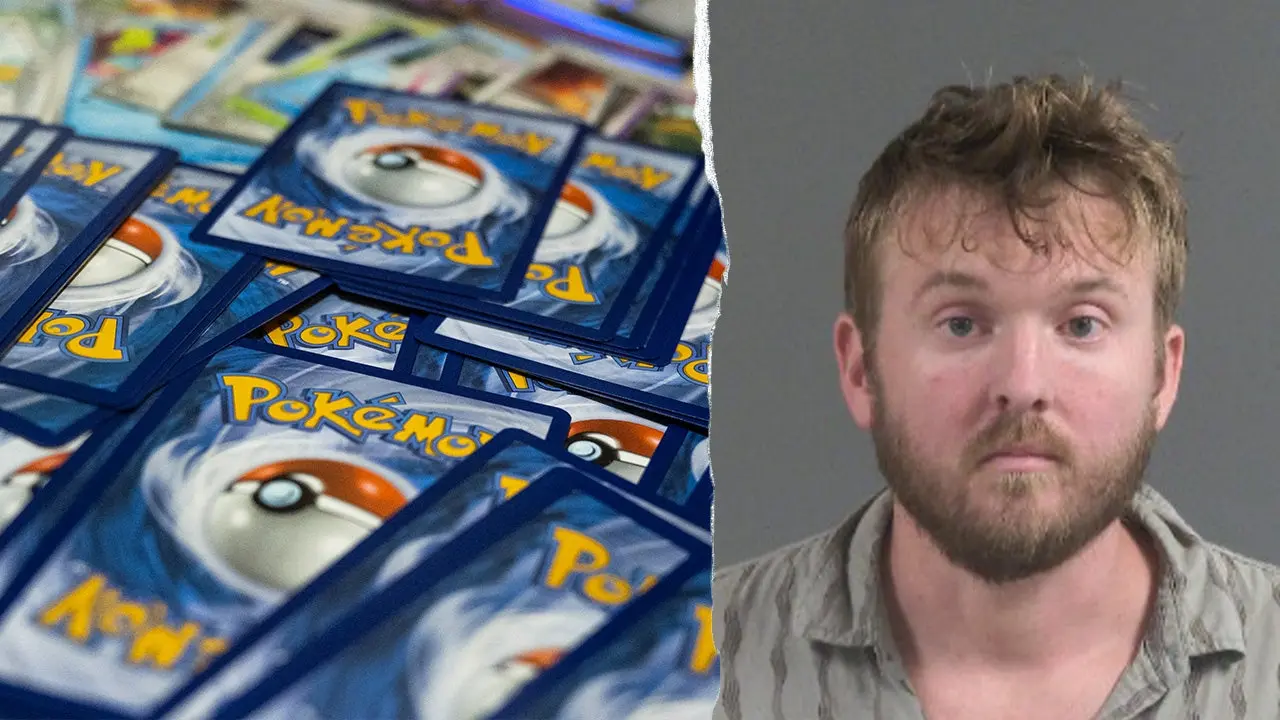
It was just after 2:30 in the morning when a Charleston police cruiser pulled into a Target parking lot. The store was dark, the aisles empty, but outside, a small crowd of dedicated shoppers still lingered under the glow of the streetlights. They were waiting for something—cards, specifically, a fresh release of Pokémon trading cards that had drawn collectors from all over. But as the officers stepped out of their vehicle, they didn’t see just another group of eager fans. They saw a tiny figure curled up on the ground, wrapped in a blanket with a pillow under her head. She was six years old, asleep in line. According to Charleston Police Department, the girl had been there for hours, holding a spot in a queue that was supposed to be about patience, excitement, and maybe a little bit of possession—but certainly not about a child serving as a placeholder. By the time the morning ended, her father, 35-year-old John-Michael Dooley, was in handcuffs, facing a charge of unlawful conduct toward a child, and the story had become a cautionary tale about how far fandom can push someone past common sense.
The details, as laid out by investigators, paint a bewildering sequence of decisions. The girl had originally come to the Target with her father sometime earlier in the night, joining a crowd that had gathered overnight for the release of a new Pokémon trading card set. At some point after 1 a.m., Dooley gave his daughter a pillow and a blanket. Then he left. He didn’t take her inside, didn’t call a relative, didn’t leave her with someone he trusted. He simply walked away, apparently heading home, and left a sleeping six-year-old in the middle of a parking area as a human placeholder for his place in line. Around an hour passed, and concerned customers who had noticed the girl began to worry. They called police, reporting an unattended child at the Target location. When officers arrived and began asking questions, the scene almost explained itself—one look at the sleeping girl, and the adults nearby seemed relieved that someone had finally acted. Witnesses quickly identified Dooley when he eventually came back to the store, likely expecting to resume his spot as if nothing had happened. Instead, he was taken into custody. During questioning, he reportedly admitted exactly what he had done: that he had left his daughter there to hold his place in line while he went home. There was no attempt to argue that he had a babysitter waiting just around the corner, no story about an emergency errand. It was, according to police, simply about the cards.
What makes the incident all the more surreal is the object at the center of it. The Pokémon trading card game has been a cultural powerhouse for decades, evolving from a children’s pastime into a massive global market where the stakes—and prices—can be astonishingly high. The release Dooley was allegedly waiting for was part of the Mega Evolution—Delta Reign expansion, one of the latest sets in a franchise that continues to dominate shelves and feeds an endless cycle of collector frenzy. While a standard booster pack usually costs around five dollars, rare cards from certain sets have sold for thousands of dollars on the secondary market. That combination of accessibility and potential windfall has transformed the hobby into something far more intense than a casual hobby. People camp outside stores overnight, coordinate release-day strategies, and sometimes treat a new set release like a holy event. But even in that world, there are rules—unwritten and otherwise—about what is acceptable. A six-year-old girl should never be part of the calculus. The fact that she was left asleep on the ground, trusting her father to come back, is a reminder that the passion for collecting can become a blinding obsession if it isn’t checked by basic responsibility.
The immediate aftermath, at least, was handled with seriousness by law enforcement and child protection services. Police confirmed that the girl was not physically harmed. She was, however, placed into the custody of the South Carolina Department of Social Services, a procedural step that underscores how concerning the situation was. Dooley was charged with unlawful conduct toward a child, a criminal offense that in South Carolina can encompass a range of behaviors that endanger or negatively impact a minor. After his arrest, he was booked at the Al Cannon Detention Center and later released, according to online jail records. The court process will now determine what consequences he faces, but the stakes are already significant—not just for him, but for the family dynamic. The fact that child welfare authorities became involved means this is not simply a story about a bad dad making a boneheaded mistake. It’s a case about a parent who failed to protect his child, even if the child did not come to actual harm. In a better version of the night, Dooley might have bought the cards at a reasonable hour, or asked another adult to monitor his daughter while he popped home, or simply accepted that missing a release was better than leaving a kindergartner unattended in a parking lot. None of that happened, and now a family is navigating the consequences of that poor judgment in the brightest possible spotlight.
There is also something deeply human, and deeply troubling, about the choices leading up to that early-morning phone call. It’s easy to imagine the excitement Dooley felt when he learned about the new set, the anticipation of joining a community of fellow collectors under the moonlight, the thrill of being part of a small, devoted group willing to wait hours for a shot at a rare pull. That kind of enthusiasm is not inherently bad. Fans of Pokémon come in all ages, from children who adore Pikachu and Eevee to adults who see the cards as investments, art, or simply a connection to their own childhoods. The problem is when that enthusiasm stops making sense. Leaving a child outside a retail store at 2:30 a.m. to reserve a spot in line is not a sign of dedication; it’s a sign of severely compromised judgment. The other customers who noticed the girl saw what Dooley apparently did not: a little child, alone in the dark, vulnerable. They did the right thing by calling police, and their concern speaks volumes about how this moment looked from the outside. It wasn’t a sweet story about a dad and daughter sharing a hobby. It was a red flag, and the witnesses knew it.
In the wake of the arrest, the story has been shared widely, and the reactions span a range from disbelief to mockery to genuine sadness. Some jokes about Pokémon cards are inevitable, but underneath the humor is a more serious conversation about parenting, priorities, and the strange lengths people will go for material goods. It is a reminder that no card, no collectible, and no retail hype is worth risking a child’s safety. It is also a reminder that even well-meaning parents can make terrible choices in the heat of a moment, especially when they get caught up in a culture of urgency and scarcity. The Pokémon Company and retailers have often tried to manage the chaos around releases, but they cannot control the decisions of individual adults who arrive early and act imprudently. For Dooley, the consequences are only beginning. He has a court date looming, a criminal record potentially hanging over him, and a relationship with his daughter that may have been scarred by the night’s events. The child, thankfully, is unharmed, but she will likely always remember the strange, cold night she spent asleep outside a Target while her father went home for warmth and comfort. One can only hope that this experience becomes the kind of wake-up call that leads to real reflection—that Dooley realizes how close he came to a devastating outcome and adjusts his priorities accordingly. In the end, the story is less about Pokémon than it is about the small, quiet promises parents make to their children, the ones about always keeping them safe. That promise was broken in a Charleston parking lot. But it doesn’t have to be broken forever.