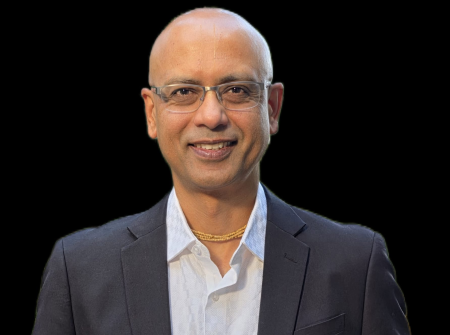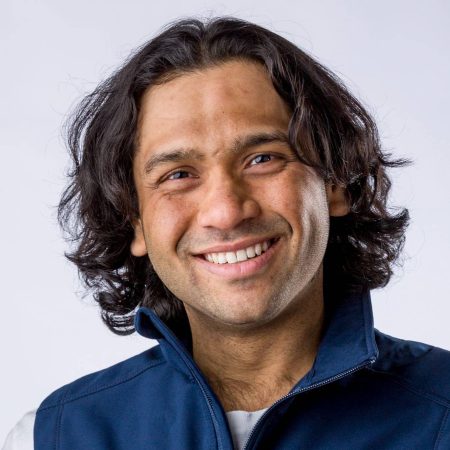


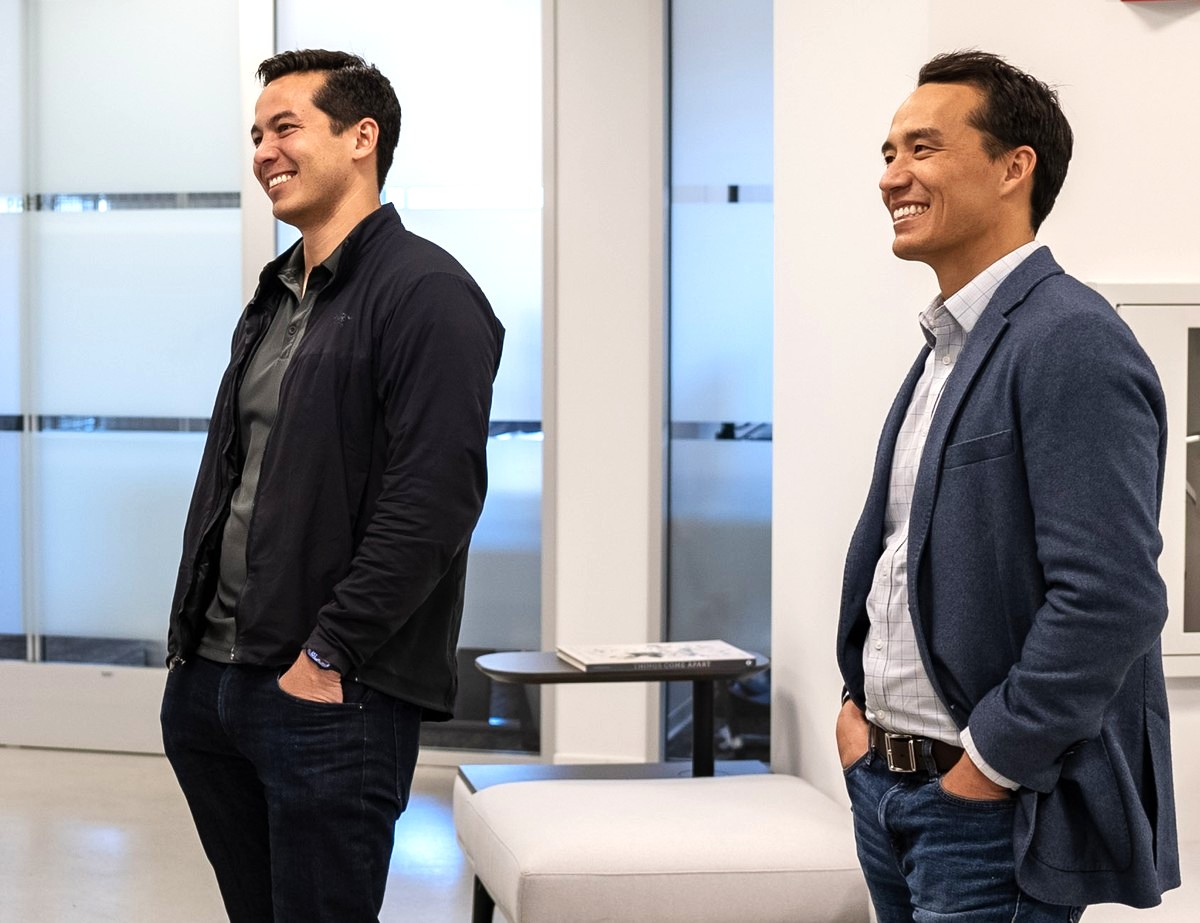
As a boy growing up on Mercer Island, Brandon Tseng wasn’t thinking about billion-dollar defense contracts or autonomous fighter jets. He was thinking about his paper route. Every day after school, and on weekends too, he’d ride his bike or walk his neighborhood circuit, tossing copies of The Seattle Times and the Mercer Island Reporter onto driveways and porches. It was a classic Pacific Northwest childhood—summers swimming in Lake Washington, playing water polo for the local team, and the smell of salmon cooking at home after his father, Carlos Tseng, drove back from his job as CEO of Seattle’s Foss Maritime, often stopping at Pike Place Market on the way. Decades later, Brandon and his older brother Ryan have come full circle. The two co-founded Shield AI in 2015, a San Diego-based defense technology company that has grown into a $28.8 billion powerhouse. And now, with an ambitious plan to manufacture its AI-piloted X-BAT fighter jet south of Seattle and a stunning deal to buy Kirkland-based radar maker Echodyne for up to $5.3 billion, the Tseng brothers are bringing their company—and their personal story—back to the place that shaped them. “It’s always felt like home,” Brandon said. “It’s great to be back here.”
The scale of Shield AI’s ambitions in the Pacific Northwest is hard to overstate. The company has already committed to a 420,000-square-foot facility in Des Moines, Washington, but Brandon says that’s just the opening chapter. “That will really just be the beginning,” he told GeekWire in an interview shortly after the Echodyne announcement. Shield projects it will employ about 4,000 people in the Seattle area by the early 2030s, and when you factor in suppliers and indirect jobs, the X-BAT program alone could support around 8,000 positions across the region. The company expects to need “well north of a million square feet” in the area before long. Why Seattle? For Brandon, the answer is simple: the region’s extraordinary density of engineering and manufacturing talent. He points to Boeing, Microsoft, and Amazon as anchors that have created a deep and diverse labor pool—people who know how to build complex hardware, write sophisticated software, and manage massive industrial programs. That talent base, combined with the region’s history of innovation and its quality of life, made the Pacific Northwest the obvious choice. “I believe we will become one of the largest, or at least the fastest-growing employer in this region over the next several years,” he said, with the quiet confidence of someone who has spent his life betting on difficult things and winning.
The Echodyne acquisition is a cornerstone of Shield’s broader strategy. Brandon describes the future of defense technology as requiring systems that can “sense, think, and act.” Shield’s Hivemind autonomy software handles the thinking; its V-BAT drone and X-BAT jet handle the acting. Echodyne, he says, becomes “the cornerstone of the sensing piece.” The two companies’ paths first crossed in 2016, when both were tiny startups in the Department of Homeland Security’s Silicon Valley Innovation Program. Nearly a decade later, as Echodyne began exploring a sale, the teams reconnected. The deal came together over several months, culminating in all-hands meetings on the day it was announced. It’s an unusual transaction—one venture-backed startup buying another, funded in part by a new $2.5 billion raise that includes $1 billion at Shield’s current $28.8 billion valuation, more than double its March worth. Echodyne brings about 400 employees, a new $40 million radar factory in Woodinville, and a beloved product called EchoShield, designed to protect U.S. and allied troops from incoming drones. No layoffs are planned. Eben Frankenberg, Echodyne’s co-founder and CEO, will stay in charge, reporting to Shield CEO Gary Steele. The combined company will have roughly 2,700 employees. “They’ve been on a tear growth-wise, and we don’t want to get in their way,” Brandon said. “We don’t want to slow them down. We just want to supercharge them.”
The X-BAT, however, is the bet that could define Shield’s future—and its Pacific Northwest expansion hinges on it. The aircraft hasn’t flown yet. Shield just unveiled its first full-scale prototype this month and shipped it to Kansas for flight testing, with first flight targeted by the end of the year. Low-rate production is slated to start in Des Moines in mid-2027, with the first locally built jet expected in early 2028. The Pentagon and Shield have together committed $400 million to development, but no production orders have been announced. Still, there are hints of momentum. Ryan Tseng, speaking at the International Fighter Conference in Munich, said European orders and partnerships are coming, though he wouldn’t give details. “Watch this space,” he said. Asked about the aggressive schedule, Brandon acknowledged the difficulty but pointed to the team that built the prototype in about a year. “There was no quit in them,” he said. A Naval Academy graduate and former Navy SEAL who deployed twice to Afghanistan, Brandon compares Shield’s pace to his military experience: small, mission-driven groups with the right tools and resources can “do things that people didn’t think were possible.” He’s confident, even as he admits, “It’s hard as hell.” That blend of humility and audacity seems to define the company’s culture—and its founders.
The Tseng brothers’ Seattle roots run deep, and their return feels personal. They grew up on Mercer Island with their sister, who graduated from the University of Washington. Ryan, an electrical engineer who previously founded wireless charging company WiPower (acquired by Qualcomm), graduated from Mercer Island High School. Their father led Foss Maritime from 1996 to 2001, and the family ate salmon nearly every other day, thanks to his habit of stopping at Pike Place Market on the way home. The family moved to Florida in 2001, and none of the Tsengs live in the area anymore. But Brandon still has friends from middle school and high school on the island, and he makes a point to visit whenever he’s in town. The Washington connection extends beyond the brothers. Shield’s CEO since May 2025, Gary Steele, grew up in Yakima and graduated from Washington State University. Brandon calls the company’s expansion “a fun homecoming” for all three of them. He’s based in Washington, D.C., for now, but expects to spend more and more time in the Seattle area as Shield grows. The company’s first factory in Des Moines is just a short drive from the places where he and Ryan learned to swim, played sports, and dreamed about what they might do with their lives.
There’s something fitting about a former paperboy returning to the region to help build a defense technology empire. Brandon delivered The Seattle Times seven days a week from age 10 to 14, and he credits that early job with teaching him the value of hard work. It wasn’t glamorous—afternoons and weekends, rain or shine, making sure every customer got their paper—but it instilled a discipline that carried him through the Naval Academy, two combat deployments as a SEAL, and the grueling work of building a startup from scratch. Now, as Shield AI prepares to put down deep roots in the Pacific Northwest, that sense of grit and determination is exactly what the company will need. The challenges ahead are immense: getting the X-BAT to fly, ramping up production on an unforgiving timeline, integrating Echodyne’s radar technology, and competing in a fast-moving defense market. But Brandon seems undeterred. He sees the region’s talent, the company’s momentum, and the mission itself—protecting service members with smarter, more autonomous systems—as reasons to believe. “I’m confident,” he said. And if his journey from a Mercer Island paper route to the helm of a $28.8 billion company is any indication, counting him out would be a mistake. For the Seattle area, the Tseng brothers’ homecoming could mean thousands of jobs, a new manufacturing ecosystem, and a starring role in the future of defense technology. For Brandon, it’s simpler than that. It’s a chance to build something extraordinary in the place that taught him how to work, how to swim, and how to come home again.