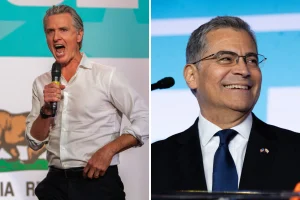


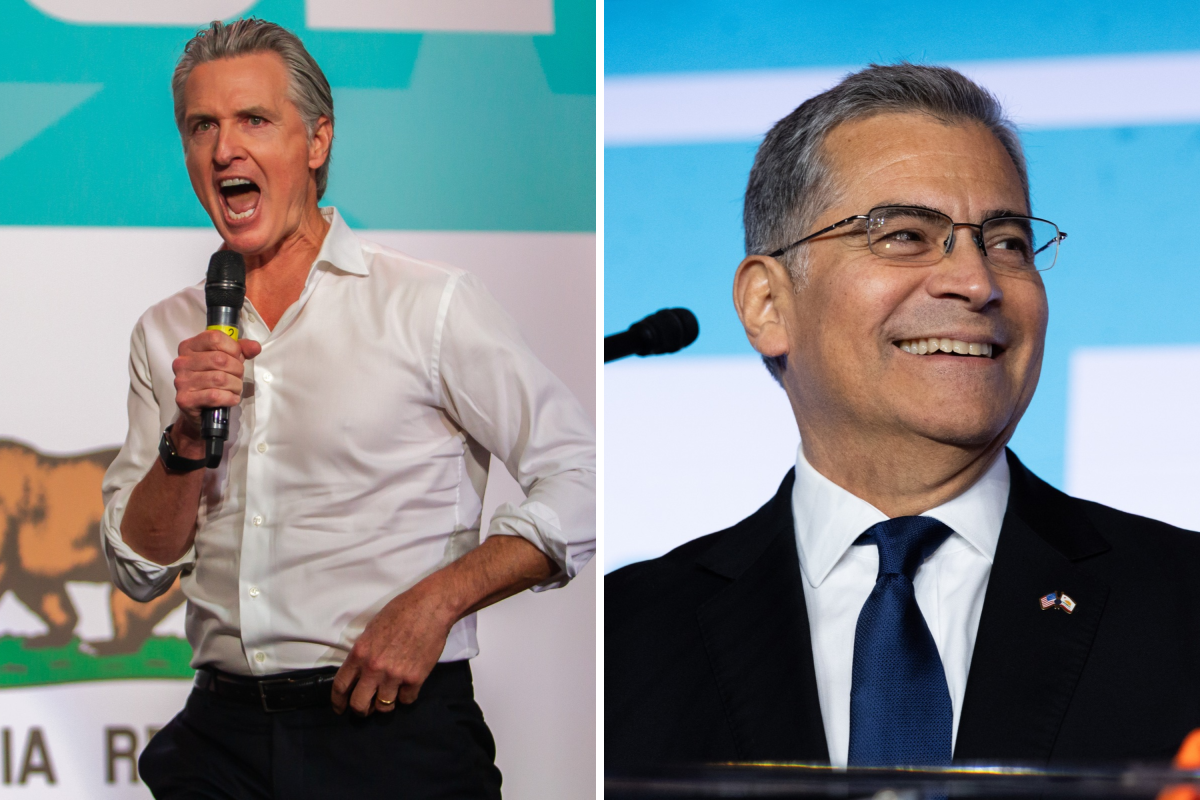
California is standing at a moral crossroads, and the decision just made by Governor Gavin Newsom is one that will echo far beyond the walls of its prisons. On November 5, Newsom announced his intention to use his executive power to convert the death sentences of all 548 people currently on California’s death row to life imprisonment without the possibility of parole. This is not a pardon, and it is not an act of forgiveness in the way we often imagine. No one will walk free because of it. No one will become eligible for early release. Their convictions remain intact, their restitution orders remain in place, and the families of victims will not have to relive the trauma of a trial. What changes is the ultimate punishment: the state will no longer put these individuals to death. In an open letter explaining his reasoning, Newsom wrote, “I firmly believe that state-sanctioned killing is incompatible with California’s values, undermines the foundations of our legal system, and diminishes each of us.” Those words carry weight, especially in a state that has not executed anyone since January 2006, even though capital punishment remains written into its laws. Newsom’s move is the latest chapter in a long, painful, and deeply human debate about what justice truly means when the state holds the power of life and death.
To understand why this moment matters so much, it helps to look at what Newsom’s order actually does—and what it does not do. For years, California’s death row has been a kind of limbo, filled with people who were sentenced to die but who have largely died of old age, illness, or suicide instead. The state’s last execution took place nearly two decades ago, and in 2019 Newsom imposed a moratorium on executions, halting any future use of the death penalty while he remained in office. But a moratorium is temporary; it depends on who sits in the governor’s chair. By commuting the sentences of every condemned prisoner, Newsom is attempting to make his opposition to capital punishment more permanent, at least for the people currently awaiting death. The practical effect is that death row will be emptied, and these 548 individuals will be moved into the general prison population or other facilities, where they will serve out their natural lives behind bars. For the families of victims, this may feel like a betrayal, a sense that the justice they were promised has been taken away. For those who oppose the death penalty, it is a long-overdue recognition that killing in the name of justice only deepens the cycle of violence. For the condemned themselves, it is a strange and complicated mercy: they will not be executed, but they will never be free. The decision forces us to ask uncomfortable questions about what punishment is for. Is it about retribution, about making the punishment fit the crime? Is it about protecting society, which life imprisonment without parole already does? Or is it about something deeper, a belief that every human life, even one stained by terrible acts, still holds a dignity that the state should not extinguish?
Now the spotlight turns to the man who will soon succeed Newsom, Xavier Becerra, and the question of what he believes about the death penalty is no longer just a matter of political trivia. Becerra’s story is itself a testament to the American dream. Born in Sacramento on January 26, 1958, to working-class parents, he grew up in a family that valued hard work and education. He attended Stanford University and Stanford Law School, then went to work for the California Department of Justice. From there, he served in the State Assembly and then spent twelve terms in the U.S. House of Representatives, becoming a familiar and respected figure in Democratic politics. In 2017, he became California’s attorney general, the first Latino to hold that office, and in 2021 he left to serve as U.S. Secretary of Health and Human Services under President Joe Biden. Throughout his career, Becerra has been seen as a careful, thoughtful public servant, someone who weighs the law and its consequences. But on the issue of capital punishment, his record is more complicated than Newsom’s. In March 2017, shortly after becoming attorney general, Becerra made a decision that still stands out: he announced that his office would continue seeking the death penalty against Scott DeKraai, a man who had admitted to killing eight people and attempting to kill a ninth during a horrifying shooting at a hair salon in Seal Beach. At the time, Becerra said, “After weighing the evidence, considering the law and the responsibilities of my office, I have concluded that the appropriate course of action is to seek the death penalty in this case.” That statement reveals a man who does not treat capital punishment as an abstract evil, but as a tool to be used in the most extreme circumstances, a tool that he believed was justified in a case of unimaginable violence. It is a position that many Californians understand, even if they oppose the death penalty in general. And it stands in sharp contrast to Newsom’s sweeping moral condemnation of state-sanctioned killing.
What makes this moment even more delicate is that the people of California have not actually decided to abolish the death penalty, at least not through the ballot box. In 2012, voters rejected Proposition 34, which would have replaced the death penalty with life imprisonment without the possibility of parole, by a margin of roughly 52 percent to 48 percent. Four years later, they were asked again. Proposition 62, which proposed abolishing the death penalty and converting existing death sentences to life without parole, was also defeated. These results suggest that while Californians may be uneasy about executions, many are not ready to give up the option entirely. National polling tells a similar story of deep ambivalence. A 2026 Pew Research Center survey found that 66 percent of American adults favored the death penalty for people convicted of murder, while only 32 percent opposed it. But at the same time, 59 percent said they did not believe the death penalty deters serious crime. In other words, Americans support capital punishment not because they think it prevents future murders, but because they feel it is the just punishment for the worst crimes. This is not a simple issue of right versus wrong; it is a tangle of fear, anger, grief, morality, and faith. And the debate has become even more urgent after a botched execution in Tennessee on September 30, when Christa Pike survived after receiving two injections of the execution drug pentobarbital. The image of a condemned person struggling through a flawed execution is enough to make anyone question whether the state can carry out this punishment without cruelty. Just a week later, on October 7, Texas executed Jamaal Howard using the same drug, despite his lawyers’ pleas for a delay based on the Tennessee case. These events are not abstract policy debates. They are real moments of human suffering, and they force us to confront the uncomfortable reality that the death penalty, no matter how carefully designed, is carried out by fallible human beings.
For Becerra, the political question is now impossible to ignore. Newsom’s action will, once the necessary legal steps are completed, remove death sentences from all 548 condemned prisoners in California. But it does not abolish the death penalty from California law. The statute remains on the books, waiting for a future governor to use it or not. That means Becerra could inherit a California where death row has effectively been emptied, but where the death penalty itself is still legal. He will have to decide what to do with that inheritance. Will he continue Newsom’s moratorium? Will he allow executions to resume if cases arise? Will he use his own power to commute sentences in the future, or will he defer to the will of voters who have twice rejected abolition? These are not easy questions, and Becerra’s past actions suggest he will approach them with the caution of a lawyer rather than the zeal of an activist. His decision to seek the death penalty in the DeKraai case shows that he is willing to apply the law as it exists, even when it conflicts with his personal feelings or the feelings of his political allies. But it also shows that he understands the weight of such decisions, that he knows a death sentence is not just a legal formality but a matter of life and death for real people. The families of victims will be watching him. So will the families of the condemned. So will the millions of Californians who have never had to face such a choice but who nevertheless have strong feelings about what justice demands.
In the end, this is not just a story about policy or politics. It is a story about how a society chooses to respond to the darkest parts of human nature. Newsom’s decision is a statement of values, a belief that the state should not be in the business of killing, even those who have killed. Becerra’s record is a reminder that justice is often messy, that the law sometimes demands things we wish it did not, and that leaders must carry the weight of decisions that have no perfect answer. The people of California have spoken at the ballot box, but they have spoken with divided hearts, supporting the death penalty in theory while expressing doubt about its power to make anyone safer. The botched execution in Tennessee and the execution in Texas that followed are grim reminders that the death penalty is not an abstraction; it is a procedure performed on a living human being, with all the potential for error and horror that entails. As California moves forward, with an emptied death row and a new governor about to take office, the debate will continue. It will continue in living rooms and courtrooms, in churches and legislative chambers, in the hearts of victims’ families and in the hearts of those who believe no one is beyond redemption. The question is not simply whether the death penalty works or whether it is constitutional. The question is whether we, as a people, can find a way to honor the suffering of victims without adding more suffering to the world. Newsom has made his answer clear. Becerra will have to make his own. And the rest of us, whether we like it or not, are part of that conversation, because the way a society treats the most broken and the most violent among us says something about who we are. It is a hard truth, but it is one we cannot escape.