

For most of the world, Greece is a summer story—a sun-soaked reverie of whitewashed villages, sapphire seas, and ferries cutting through the Aegean toward islands with names that sound like poetry. It is the place you escape to for a July wedding, a honeymoon in late August, or a luminous week of tavernas and beach towels. But Olga Kefalogianni, Greece’s tourism minister, is tired of that singular vision. Standing at the World Travel Market in London, surrounded by the buzz of travel professionals and country pitches, she made a quiet but ambitious declaration: Greece is not a seasonal fling. It is a year-round companion. “We are now focused on year-round tourism,” she told Euronews Travel, explaining that the goal is not merely to pack more people into the already crowded summer months, but to spread the benefits of travel across the entire calendar. She hopes this approach will “benefit local communities” and “give the opportunity for travellers to get to know Greece a little bit more.” It is an invitation to go beyond the familiar islands, to discover the mainland, the mountainous regions, and the lesser-known gems that don’t make the postcards. “Experience the authenticity,” she urged. There is a tenderness in that phrase—a reminder that Greece’s real treasure isn’t just its famous coastline, but the quieter, older, more grounded places where life moves to a different rhythm.
This is not a small shift in marketing; it is a redefinition of what success means for Greek tourism. The country is on track to continue its run of record years in 2026, and by any conventional measure, that would be cause for simple celebration. But Kefalogianni is careful to frame the achievement in more human terms. For her, success in tourism is not just about the number of arrivals or the revenue they bring. It is about “the value that it creates for the local economies.” This is a crucial distinction. When tourism is measured only in volume, it can turn into a flood that washes over coastal towns, leaving crowded beaches in summer and empty streets in winter. But when it is measured by the warmth and resilience it brings to communities, it becomes something far more sustainable. That is why the Greek tourist board is focusing more than ever on agrotourism, wellness and spa offerings, gastronomic tourism, and wine tourism. These are not just buzzwords; they are lifelines for rural families, small producers, and villagers who have been waiting for the outside world to discover what they have always known. Imagine an olive farmer hosting a harvest workshop in November, a stone-built spa in the mountains welcoming guests after a day of walking, a grandmother’s kitchen turning into a cooking class for travellers craving something real. That is the Greece Kefalogianni is trying to open up—a country where tourism feeds the land it touches, rather than simply consuming it.
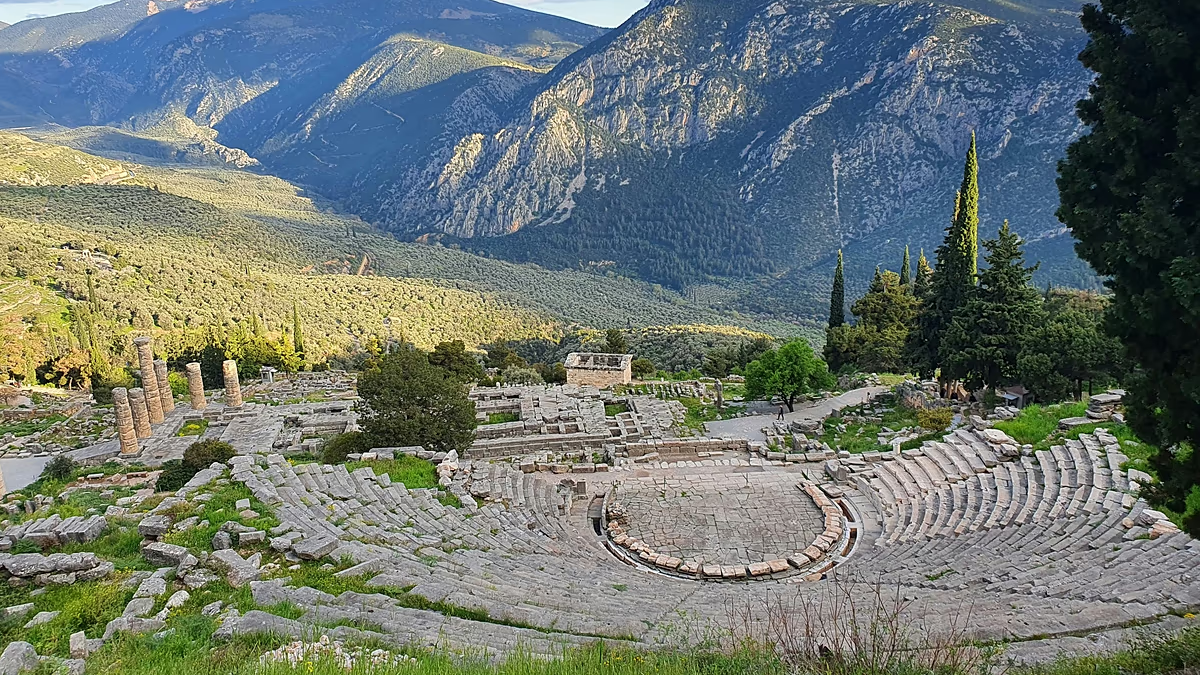
Part of that vision lies in reminding travellers that Greece is not just an archipelago of beaches. “Greece is associated with its beautiful islands, the beaches that are really amazing with the crystal waters,” the minister acknowledged. But then she added a vital, often-overlooked truth: “It is also a very mountainous country.” Indeed, more than half of Greece is mountainous, and in those high places, travellers can find a completely different world. Mount Olympus, the mythical home of the gods, rises with jagged, cloud-wrapped peaks that have drawn hikers and dreamers for centuries. Mount Smolikas, the second-highest peak in the country, offers less crowded trails and a raw, untamed beauty. But Kefalogianni’s words are not just about landscapes; they are about people. She described the welcome that awaits travellers in these mountain areas: “You’re being welcomed by the locals who really are very hospitable and warm.” There is something deeply human in this image—a shepherd offering directions, a woman bringing bread and cheese to a table, a wood-fire crackling in a stone fireplace. These are the encounters that turn a trip into a memory, and they happen in every season. “The target for us is of course to have year-round tourism, not just seasonal activity,” she said. It is a commitment to keeping the lights on in villages that would otherwise fade into silence when the last summer visitor leaves. To spend a winter evening in a Greek mountain town, listening to rain on the rooftops and sharing stories with locals, is to understand why this vision matters.
For those who prefer to taste their travels, Greek wine is set to become a major part of the year-round story. By 2027, wine tourism is expected to be big business, and the country is readying itself with remarkable enthusiasm. There are hundreds of wineries across Greece, many of them open to visitors, tucked into hillsides and valleys, from the famous vineyards of Santorini to the lesser-known corners of the Peloponnese and northern Greece. To help travellers find these treasures, the tourist board has launched a wine tourism-focused microsite, winetourismgreece.com, designed to guide visitors through the best bottles and vineyards in the region they are exploring. It is a wonderful tool for anyone who has ever stood in a wine shop, overwhelmed by unfamiliar labels, wishing they had a local friend to explain the difference between an Assyrtiko and a Xinomavro. Alongside this, the relaunched VisitGreece.gr has begun using artificial intelligence to offer customised itineraries for those who are unsure how to plan their own trip. The idea is to make exploration easier and more personal, as if the website were a knowledgeable host whispering suggestions in your ear: “If you like mountains, try this village. If you love food, don’t miss this market.” For travellers, this removes a layer of anxiety and adds a layer of delight. It is also a symbol of how a country with millennia of history can embrace the future gracefully, using technology to lead people toward older, deeper experiences.
Of course, not every traveller wants to hike a mountain or plan a wine route, and that is perfectly fine. If you don’t know where to start when visiting Greece outside the summer months, Kefalogianni has a simple suggestion: head to the capital. Athens, she said, “gives travellers a year-round experience.” The city has often been treated by visitors as a quick stop before they board a ferry, a place to see the Acropolis and move on. But that is changing, particularly among younger generations who see Athens “not just for its cultural offering” but also as a “vibrant, very cosmopolitan and very modern city, with all sorts of events from concerts to sports.” There is a pulse to Athens in the off-season that can be missing in the heat and crowds of July. Imagine walking through the narrow streets of Plaka in the cool autumn air, smelling roasted chestnuts from a street vendor, hearing live music drifting out of a tiny bar, or cheering at a basketball game in a stadium full of passionate fans. The city hums with creativity, street art, and evening energy, and it welcomes visitors in every month of the year. If Athens is not enough, Kefalogianni points to Thessaloniki, the country’s second-largest city, a place known for its food scene, its waterfront, and its lively student atmosphere. Together, these cities show that Greece is more than a summer playground—it is a year-round civilisation, alive in every season.
In the end, the minister’s message is less about statistics and more about a way of seeing. Greece has long been the world’s summer love affair, but it is ready to be something deeper: a winter refuge, an autumn harvest, a spring awakening. The country’s beauty does not disappear when the beach umbrellas are folded away; it simply changes shape. Lakes and forests reflect the grey-gold light of November; mountain villages glow with the warmth of stoves and shared meals; vineyards turn crimson and amber before the pruning knife comes; cities grow intimate and electric. “If in doubt,” the message seems to say, “go online and see what Greece can provide as a year-round destination, away from beachfront tavernas and the warm weather of the summer season.” The tourist board is ready to help, with websites, customised itineraries, and an open catalogue of experiences waiting to be discovered. But the real invitation is simpler than any digital tool. It is an invitation to slow down, to listen to the local stories, to taste the wine made by hands that have worked the same land for generations, and to let a country that has always known how to host visitors become something even more valuable—a place to belong, even just for a weekend in February. That is the Greece Kefalogianni wants you to meet. It is not a postcard; it is a homecoming.