



On a quiet November morning, California Governor Gavin Newsom set in motion a decision that would forever alter the lives of hundreds of condemned prisoners—and would reopen old wounds for families who have waited years, sometimes decades, for a sense of final justice. With a single executive action on Nov. 5, Newsom announced he was commuting the death sentences of 548 inmates to life in prison without the possibility of parole. In an open letter, he acknowledged that the decision would anger people and deepen the grief of victims’ families, but he framed it as a moral and ethical necessity. “I have decided to commute every death sentence,” he wrote. “I will therefore issue the same commutation to every condemned person—life without the possibility of parole, the most severe punishment I can lawfully impose and the state of California can ethically enforce.” The announcement does not automatically remove every inmate from death row, though. State law requires the California Supreme Court’s approval for commutations involving inmates with numerous felony convictions, a category that includes hundreds of those currently on death row. That legal nuance means the final outcome remains somewhat uncertain, but the governor’s intent is unmistakable: he wants to clear death row and end capital punishment in California for good. For many, the news is a painful twist in a long-running saga of crime and punishment; for others, it is a long-overdue acknowledgment that the state should not take human life. But behind the policy debate are real people—both the condemned and the lives they shattered.
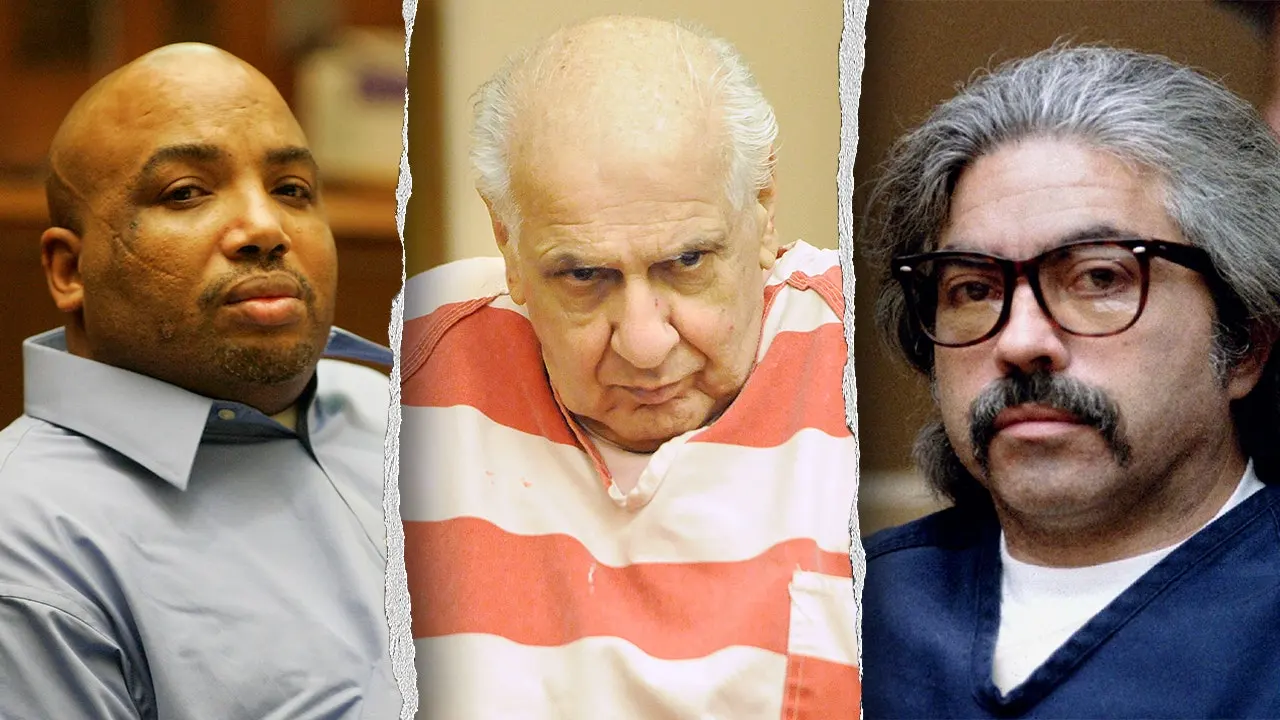
The names on California’s death row read like a grim atlas of American violence, and the men and women included in Newsom’s commutation are some of the most infamous killers in modern history. Among them is Richard Allen Davis, whose 1993 abduction and murder of 12-year-old Polly Ann Klaas transformed him into a symbol of parental terror. Davis broke into a Petaluma home during a sleepover, kidnapped Polly in front of her friends, strangled her, and left her body in a remote area of Cloverdale. Her father, Marc Klaas, spent three decades searching for missing children through the nonprofit KlassKids Foundation, turning unimaginable loss into a mission of protection for others. Then there is Joseph Naso, the so-called “Alphabet Killer,” who preyed on women between 1977 and 1994, selecting victims whose first and last names began with the same letters. He was sentenced to death in 2013 for at least four murders in Contra Costa, Marin, and Yuba counties. And there is Cary Stayner, known as the Yosemite Serial Killer, a handyman at Cedar Lodge near Yosemite National Park who murdered four people in 1999, including 42-year-old Carole Sund, her 15-year-old daughter Juli, and 16-year-old family friend Silvina Pelosso. Months later, he beheaded 26-year-old nature guide Joie Armstrong. Stayner, already serving life for Armstrong’s murder, received a death sentence for the other killings in 2002. His case was made even more haunting by the fact that he was the older brother of Steven Stayner, a boy who had escaped a 1972 kidnapping years earlier—an ironic twist that made his descent into murder all the more disturbing.
The list continues with Chester Turner, the “Southside Slayer,” who raped and murdered low-income women in South Los Angeles between 1987 and 1998, often dumping their bodies in dark alleys and vacant lots. Turner was arrested in 2003 after a DNA database linked him to the victims, and he was sentenced to death in 2007 for killing ten women, with another death sentence added in 2014 for four additional murders. Then there is Christopher Cheary, whose crimes are almost too horrific to understand: in 2011, while babysitting his girlfriend’s 3-year-old daughter Sophia Acosta and her sister, he murdered, raped, and tortured the child. Medical staff later testified about internal injuries and signs of sexual torture, and Cheary was sentenced to death in 2017. Another name is Randy Kraft, the “Scorecard Killer,” who between 1971 and 1983 raped, tortured, and killed at least 16 hitchhikers and young men across Southern California, though authorities believe he may have murdered more than 60 victims. His nickname came from a coded scorecard found in his vehicle listing victims and locations. His spree ended in 1983 when California Highway Patrol officers pulled him over and found the body of Marine Terry Lee Gambrel in the front passenger seat. Kraft was sentenced to death in 1989. These are not abstract statistics; they are stories of real people who inflicted unbearable suffering, and their presence on death row has always served, for many, as a form of communal assurance that the worst of us would never walk free again.
The human toll becomes even more visceral with cases like that of Isauro Aguirre, who, along with his girlfriend Pearl Fernandez, killed 8-year-old Gabriel Fernandez in 2013 after torturing him for eight months in a Palmdale home. Gabriel was deprived of food, beaten, forced to eat cat feces, and locked alone in a cabinet with a sock shoved in his mouth. The details of the case sparked outrage across the country and became the subject of a Netflix documentary, a painful reminder of how child abuse can hide in plain sight. Aguirre was sentenced to death in 2018; Fernandez received life without parole. Then there is Charles Ng, who, with accomplice Leonard Lake, abducted, tortured, and murdered at least 11 people at a remote cabin in Calaveras County known as “The Castle” between 1983 and 1985. Lake died by suicide during a police standoff in 1985, while Ng fled to Canada and was eventually extradited and sentenced to death in 1989. David Carpenter, the “Trailside Killer,” raped and murdered at least seven hikers in Marin County and Santa Cruz in the early 1980s, receiving death sentences in 1984 and 1988. And Cherie Rhoades, the former leader of a small Northern California Indian tribe, fatally shot four people and tried to kill two more at a tribal meeting in 2014 over her eviction; she was sentenced to death in 2017. These cases evoke a spectrum of horror—some driven by depraved sexual violence, others by domestic cruelty, and still others by the collision of power and grievance in a tiny community.
For the families of victims, Newsom’s commutation order feels less like a policy decision and more like a betrayal. Many have spent decades attending parole hearings, fighting appeals, and reliving the worst moments of their lives in courtrooms. To them, the death sentence was not merely a punishment; it was a final chapter, a marker that society had judged the crime to be as grave as any in human experience. Life without parole may sound like a severe punishment, but for families who have watched killers receive endless legal reprieves, it can feel like an open-ended continuation of their trauma. They now face the prospect that the men and women who murdered their loved ones may live out their natural lives in prison, with access to medical care, meals, and even television, while their loved ones lie in graves. Newsom’s letter attempted to justify the decision on ethical grounds, arguing that life without parole is the most severe punishment the state can lawfully impose and ethically enforce. But that framing does little to soothe the grief of a parent who buried a child, or a spouse who lost their partner to a stranger’s rage. The governor’s office did not respond to requests for comment, but California prosecutors have already begun to revolt, with figures like Michael Ruiz leading the charge against what they see as an executive overreach that disregards the will of voters who have repeatedly affirmed the death penalty in the state.
What does it mean to humanize a policy like this? It means remembering that behind every legal name and court citation are faces, families, and communities forever changed by violence. It also means acknowledging the moral weight of the decision itself, the uncomfortable reality that a government holds the power to execute its own citizens and the equally uncomfortable reality that it can choose to stay that hand. Newsom’s commutation does not erase the crimes; it does not bring back Polly Klaas, or Gabriel Fernandez, or the dozens of other victims whose lives were stolen in California’s darkest chapters. What it does is shift the state’s role from one of final judgment to one of permanent containment. For supporters, this is a step away from a brutal, irreversible punishment and toward a more just and ethical system. For opponents, it is an insult to the memories of the innocent and a failure of the state to deliver the ultimate accountability that juries and judges promised. The true human story here is one of irreconcilable grief and principle, a collision between the need for closure and the conviction that no human being should be sent to his or her death by the state. As the California Supreme Court weighs the legal complexities ahead, and as families confront a future that looks different than they expected, one thing remains certain: the debate over life, death, and justice in California is far from over.