

In the quiet, rugged expanse of western Colorado, where the land drops away into ancient stone and the sky stretches endlessly overhead, a search for one missing soul unfolded against the backdrop of autumn’s fading light. The story begins not with a dramatic call for help, but with a stillness: an abandoned vehicle parked near mile marker 10 along the South Rim of Black Canyon of the Gunnison National Park. It was there, on the evening of October 27, that Montrose County sheriff’s deputies first received a report that something was wrong. The vehicle belonged to John N. Countryman, a 57-year-old man from Denver, and its presence in such a remote and breathtakingly vertical place hinted at a day trip gone terribly awry. Nearby, at a point known as Devil’s Lookout—one of the park’s most dramatic and perilous overlooks—personal belongings were discovered, deepening the sense that a hiker had stepped too close to the edge or taken a path that led to tragedy. For the deputies and the many people who would soon join the search, this was the beginning of a painstaking and heartbreaking effort to find a man whose final moments would remain shrouded in mystery.
As night began to settle over the canyon, the urgency of the situation became impossible to ignore. The sheriff’s office called in its drone team, a quiet technology in a land of immense silence, hoping that aerial eyes could peer into the shadows below. But the Black Canyon is not a forgiving place. Its walls plunge more than two thousand feet in some areas, and the inner canyon is so steep, so tightly wound, that sunlight reaches the bottom only briefly each day. Trails cling to the rim, and the drop-offs are sudden and unforgiving. Even with a drone, the search was limited by diminishing daylight, and the team was forced to call off their efforts as dusk swallowed the canyon in a deep, cold blanket of darkness. There is a particular kind of anguish that comes with waiting through the night in such circumstances—not knowing whether the person is injured, struggling for warmth, or already gone. For the friends and family of John Countryman, that night must have felt endless, filled with the heavy weight of uncertainty and the faint hope that morning would bring answers rather than sorrow.
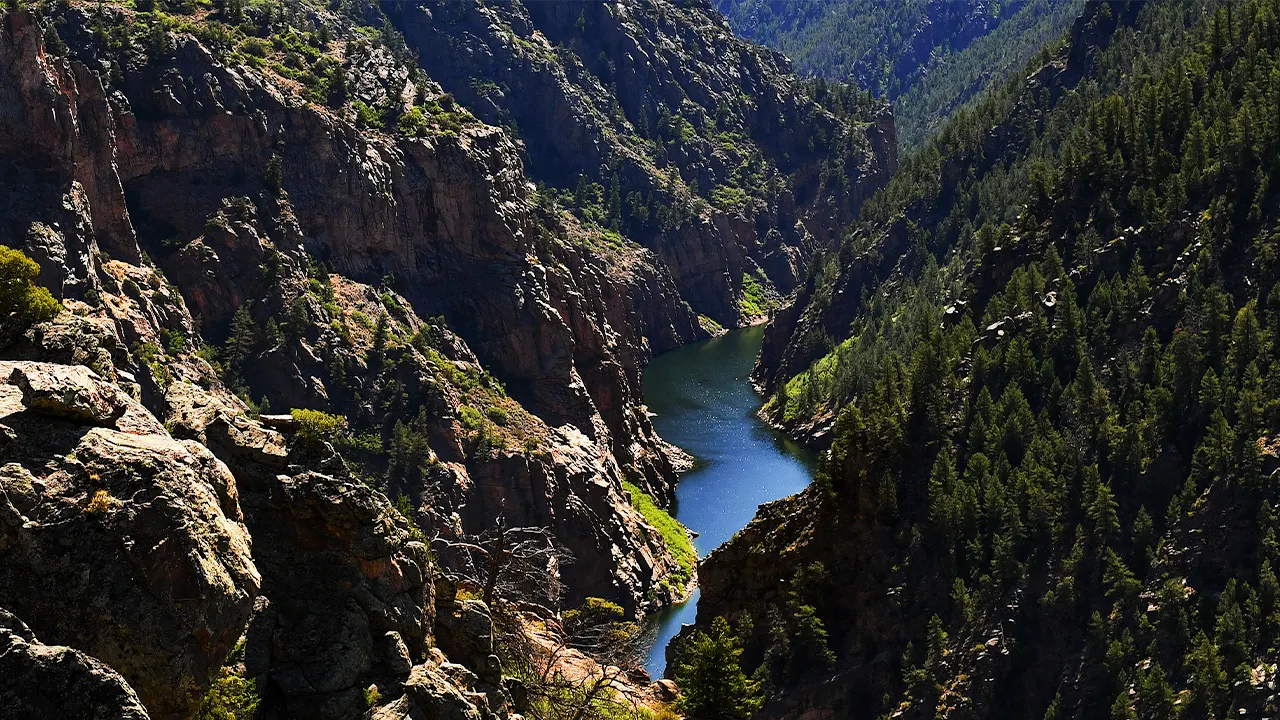
Morning arrived, as it always does, with a faint glow over the canyon’s edge. At approximately 6:30 a.m., the drone team was back in the air, scanning the jagged terrain below with methodical care. What they found was the confirmation that no one had wanted to hear: human remains were visible on the canyon floor, lying in the cold, shadowed depths where the Gunnison River has carved its relentless path over millions of years. The discovery transformed the search into a recovery mission. Two days later, Countryman’s body was carefully brought up from the canyon floor and transferred to the Montrose County Coroner’s Office. The operation was neither quick nor easy—the terrain that made his fall possible also made recovery a challenge for the trained professionals involved. For them, the work was not just about retrieving a body, but about restoring a person to his family, allowing them to mourn and to honor a life that had been tragically interrupted. Though the clues were sparse and the circumstances tragic, the thoroughness of the response underscored the deep commitment of Colorado’s search and rescue teams, who often risk their own safety to bring closure to grieving families.
As of this writing, the cause and manner of John Countryman’s death remain under investigation. It is a phrase that leaves many questions unanswered: Was it a misstep, a sudden medical emergency, or a deliberate act? Did he experience fear in his final moments, or was there peace in the immense beauty surrounding him? These are questions that may never be fully resolved, and for those who loved him, the ambiguity can be as painful as the loss itself. What is known is that Countryman was found in one of the most striking and unforgiving landscapes in the United States. The Black Canyon of the Gunnison National Park is a place that draws visitors with its raw grandeur, its sheer cliffs and dark, narrow gorges that seem to hold the secrets of the earth itself. But it is also a place that demands respect, with its steep drop-offs, loose rocks, and remote areas where a single wrong turn can have devastating consequences. The investigation will continue, with officials examining all the evidence, from the abandoned vehicle to the belongings near Devil’s Lookout, to piece together the final chapter of a life that ended far too soon.
The Black Canyon of the Gunnison is not like other national parks. It does not offer the gentle trails of a forest meadow or the wide, welcoming vistas of a prairie. Instead, it confronts visitors with the raw power of geology—a narrow, dramatic gorge carved by the Gunnison River over the course of nearly two million years. The walls are so steep that they seem to fall away into the depths, and in some places, the canyon is so close and so deep that it appears almost surreal, as if the ground has simply opened up to reveal the heart of the mountain. Many of the trails along the South Rim run parallel to those plunging drop-offs, offering awe-inspiring views but leaving little room for error. Access to the inner canyon is extremely limited and requires technical climbing skills and permits, meaning that even experienced hikers can find themselves in over their heads. For search and rescue teams, the canyon presents a formidable challenge: every recovery requires careful planning, specialized equipment, and an intimate knowledge of the terrain. It is a place where nature’s beauty and nature’s danger are inseparable, and it serves as a sobering reminder that even the most prepared outdoor enthusiasts can fall victim to its cliffs.
In the wake of the tragedy, the Montrose County Sheriff’s Office shared the news on social media, not as a sensational story, but as a quiet acknowledgment of a loss that rippled through a community. The post identified John Countryman, offered details of the search, and thanked the drone team and other responders for their work. There was no pretense of a happy ending—only the somber duty of informing the public and honoring a man who had come to the canyon and never returned. For anyone who has ever stood at the edge of a great natural wonder, there is a certain humility in this story. It reminds us that we are all, in the end, small before the forces of the earth. But it also reminds us of the human connections that bind us together: the deputies who worked past nightfall, the drone operators who scanned the shadows at dawn, the recovery team who descended into the cold depths to bring John Countryman home. His name now joins the long, quiet history of those who have been drawn to the Black Canyon’s edge—not as a statistic, but as a person, a member of a family, and a soul whose final journey will never be fully known, but whose memory will endure in the hearts of those who loved him.