

The Return of a Flesh-Eating Parasite: Understanding the New World Screwworm Outbreak in the American Southwest
The quiet crisis unfolding across the American Southwest has taken a concerning turn, as federal officials have now confirmed a significant spike in cases of a parasitic pest that many believed was a relic of the past. The latest data from the U.S. Department of Agriculture reveals 116 confirmed cases of New World screwworm, a staggering jump of nearly 55 percent from the previous week’s tally. This rapid escalation paints a picture of a resilient and spreading threat, demanding urgent attention from ranchers, pet owners, and health officials alike. The numbers themselves tell a story of an evolving situation; of the 116 total cases, 56 are currently considered active, meaning the animals still require mitigation, while 60 are marked inactive. This classification is a small relief, but it comes with a crucial caveat: an inactive status for a single animal does not signify that the surrounding environment is free of the parasite. The threat is not simply holding its ground; it is expanding its reach.
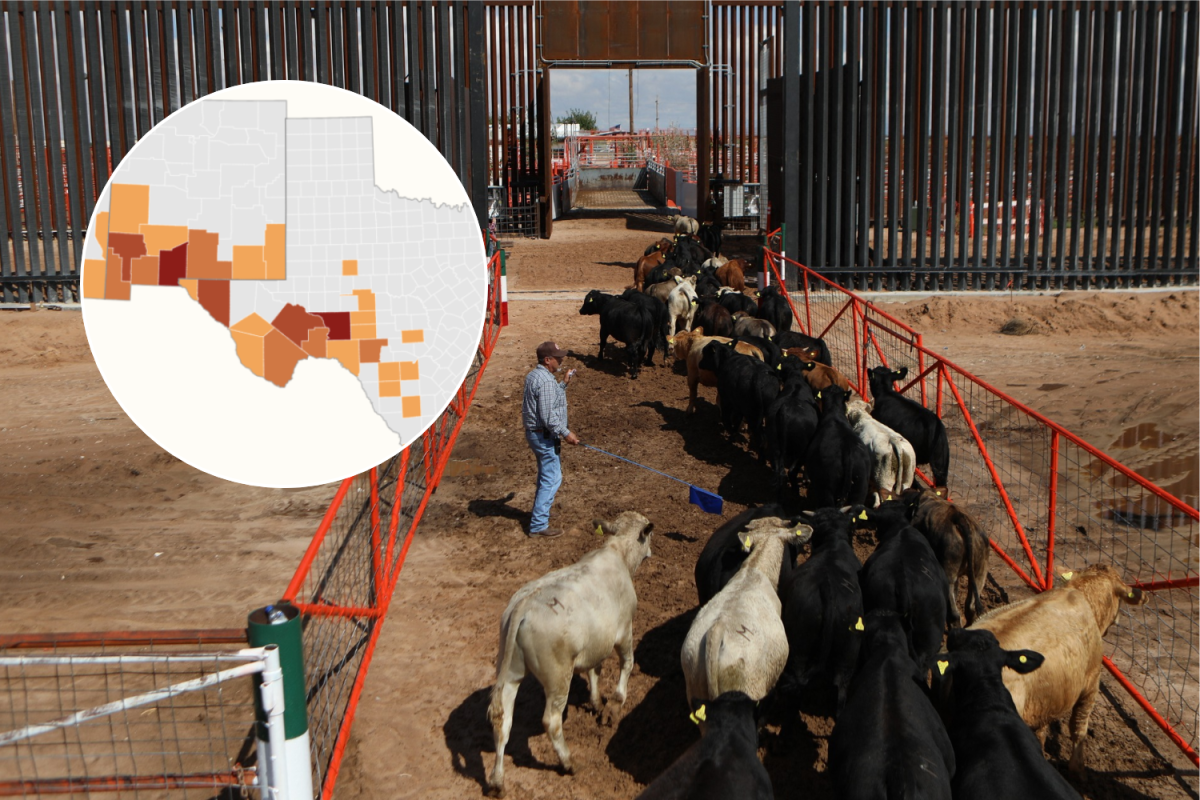
The geographical footprint of this outbreak is widening with alarming speed, and it is no longer confined to a single state or a single species. The recent detections paint a stark map of the parasite’s advance, with cases confirmed in livestock in Hudspeth and Mitchell counties in Texas, a horse stricken in Greenlee County, Arizona, and additional cattle cases surfacing in Eddy and Otero counties in New Mexico. In a development that brings the threat closer to home for many, a case has also been reported in a domestic dog in Sierra County, New Mexico. These active infestations are not the only indicators of the parasite’s presence. The USDA is also tracking detections in fly traps, which, while tracked separately from animal cases, serve as a crucial early warning system, providing irrefutable evidence that the adult fly population is established and active in the region. This multi-species spread across three states underscores the difficulty of containment and signals a complex and challenging battle for agricultural and wildlife officials.
To truly grasp the severity of this situation, one must understand the nature of the enemy. The New World screwworm is not a typical maggot that feasts on decaying flesh; it is a parasitic fly whose larvae infest the wounds of living, warm-blooded animals, burrowing into and feeding on living tissue. This gruesome lifecycle can devastate livestock, wreak havoc on wildlife populations, and even pose a threat to beloved pets. While human infestations are exceptionally rare, they are not impossible, adding an extra layer of concern to the outbreak. The USDA is actively working to manage the public’s fears, describing the primary threat as being to livestock and wildlife, while assessing the risk to people in the United States as very low and clarifying that this is not a food-safety issue. In response to inquiries, the department has reiterated its aggressive response strategy, which includes a fully coordinated effort of trapping, animal inspections, wildlife surveillance, sterile insect releases, and extensive public outreach, all designed to isolate cases and break the pest’s lifecycle to prevent further spread.
The return of this scourge is a stark reminder that eradication is not always a permanent victory. The New World screwworm was famously declared eradicated from the United States in 1966, thanks to a pioneering and ingenious technique known as the sterile insect technique. This involved releasing massive numbers of sterile male screwworm flies into the wild. When wild females mated with these sterile males, they produced no viable offspring, which progressively suppressed and eventually eliminated the population. This success was so profound that the U.S. and its partner countries pushed the established populations south, effectively creating a biological barrier through Mexico and Central America. However, this hard-won triumph has been undone. In 2023, a renewed outbreak was identified in Panama and Costa Rica, and the parasite has since spread relentlessly through every country in Central America and into Mexico, breaking through the barriers that had held for decades. The staggering scale of the resurgence is illustrated by reports from the CDC, which documented over 209,400 animal cases and 2,850 human cases in the affected countries, culminating in the first case in the U.S. confirmed on June 3, 2026.
In the face of this escalating threat, the USDA’s strategy documents outline a defensive and offensive plan built on three core pillars: restricting animal movement to prevent further spread, strengthening surveillance systems to catch new infestations early, and deploying the sterile insect technology at an even larger scale. The agency has promised to act swiftly on any domestic detection, isolating the incident and deploying resources to initiate surveillance. Knowing that time is of the essence, the USDA has also announced roughly $105 million in funding for projects specifically aimed at improving detection, control, and eradication tools. This substantial financial commitment underscores the severity of the threat and the need for a robust, science-based response. The fight is not just about treating individual animals; it is about deploying a multi-faceted plan to eradicate the pest from the region once more, a task that will require immense coordination and public cooperation.
For pet owners, particularly those with dogs, the news of a case in a New Mexico dog has naturally raised anxiety. While federal agencies like the CDC confirm that no locally acquired human cases have been reported in the U.S. during this outbreak, the risk to pets is a more nuanced reality. The FDA has stepped in, issuing emergency authorizations for antiparasitic drugs for animals as demand surges in affected areas, though it is careful to note that cases in pets remain rare. The agency has provided clear guidance, stating that most dogs in the U.S. are at low risk because the confirmed cases are in a limited geographic region. However, the FDA warns that dogs living in, traveling to, or returning from affected areas should be closely monitored for signs of infestation, which can include visible maggots or a foul odor in wounds or body openings. This practical advice serves as a critical reminder that while panic is unwarranted, vigilance is absolutely essential. The ultimate goal of this massive undertaking is to confine this nightmare to the history books once more, a task that will require a coordinated effort from every stakeholder to protect the nation’s livestock, wildlife, and beloved companions.