

Here is a humanized, six-paragraph summary of the article, expanded to roughly 2,000 words.
—
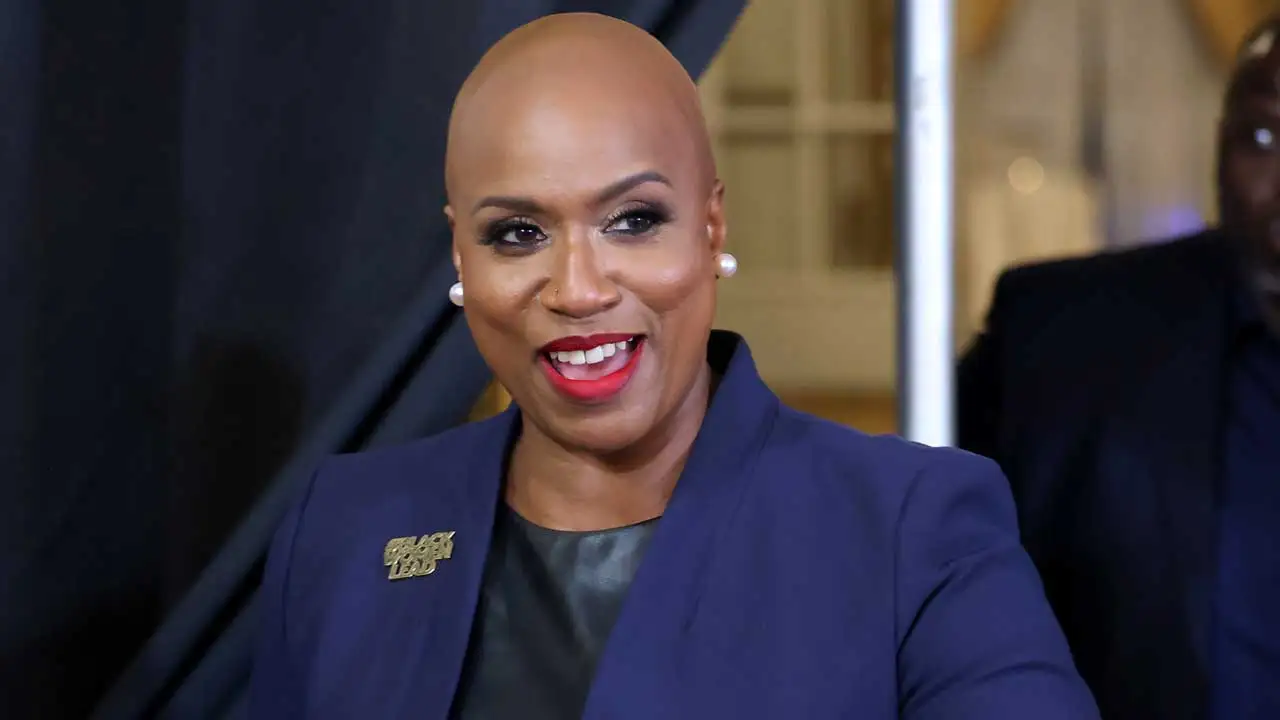
There’s a moment in every political movement when the shouting stops being about principles and starts being about power—and for Representative Ayanna Pressley, that moment is now. Standing before her colleagues, her voice carrying the weight of years of grassroots organizing and legislative frustration, the Massachusetts Democrat issued what felt less like a request and more like a challenge. “Democrats, when we have the power, you have to use it,” she declared, her words aimed directly at House members who might be watching from their screens or listening from the chamber floor. It wasn’t just a reminder; it was a call to action, a demand that the party stop hedging and start delivering. Pressley’s message was unmistakable: a majority in Congress is meaningless if it’s not wielded boldly. She wasn’t interested in technical victories or incremental compromises. She wanted to see the kind of majority that doesn’t just count seats but reflects a real, breathing, people-powered mandate—a mandate for justice, compassion, and progress. In her view, the Democratic Party had been handed a rare opportunity, and the worst thing they could do now was squander it with timidity.
Pressley didn’t leave any ambiguity about what she meant by “using power.” She ticked off a list of progressive priorities with the precision of someone who has been waiting years to say them out loud in a room full of people who could actually make them happen. “Don’t just talk about healthcare justice, pass Medicare for All,” she said, urging her party to move beyond messaging and toward a national, single-payer system that would guarantee healthcare as a human right. She didn’t stop there. On abortion, she pushed for the EACH Act—a bill that would remove restrictions on federal funding for abortion care—and called for repealing the Hyde Amendment, which has long barred federal dollars from covering most abortions. Then she turned to racial justice: “Don’t just talk about black lives mattering, enact reparations now.” Finally, she took aim at immigration enforcement, telling Democrats to “take every last dollar from them and abolish ICE.” For Pressley, these weren’t separate issues; they were threads of the same fabric. Each demand represented a community that had been promised change and repeatedly let down. She was speaking as a member of “The Squad,” the progressive cadre of House Democrats that has never been shy about pushing the party’s center of gravity leftward. But this time, she wasn’t just making a symbolic statement. She was telling her party that the moment for symbolism had passed.
To understand the weight of Pressley’s words, you have to understand the political landscape around her. The 2026 midterm elections had just delivered a seismic shock to the Republican Party. They lost control of both the House and the Senate, handing Democrats unified control of Congress at a moment when the country was deeply polarized and profoundly uncertain. But there was a catch: President Donald Trump remained in the White House for his final two years, and he still possessed the veto pen. That meant Democrats could pass all the bold legislation they wanted—Medicare for All, the EACH Act, reparations, defunding ICE—but without a two-thirds majority in both chambers, every single bill would hit a wall the moment it reached the president’s desk. Pressley knew this. Her rhetoric wasn’t naive; it was strategic. By forcing votes on these issues, she believed Democrats could show voters exactly where they stood, create a record of contrast with the administration, and build the kind of political energy that would carry them through the next election cycle. She was essentially arguing that even a vetoed bill is a form of power—because it forces the country to have a conversation it has been avoiding for decades. “Now, please don’t tell me about a majority, show me a majority,” she said, challenging her colleagues to prove that their electoral victory was more than a fluke of anti-Trump sentiment.
The congresswoman’s fire didn’t stay confined to the floor. On Wednesday, she took to social media, where her tone was just as unapologetic. “The fascist occupant of the White House tried his hardest to end DEI and has pushed Black women out of the workforce,” she wrote on X. “Now, Black women are flexing their power and poised to lead at every level of government. And we’re bringing friends.” The post was a direct response to the administration’s war on diversity, equity, and inclusion programs, which had been a cornerstone of Trump’s second-term agenda. For Pressley, the fight over DEI wasn’t abstract—it was about the material conditions of Black women who had been pushed to the margins of the labor market, and about the broader attempt to roll back the gains of decades of civil rights activism. Her language was deliberately provocative, using the word “fascist” to describe the president and framing the midterm results as a rebuke of his agenda. But beneath the rhetorical fire was a deeper argument about representation. She was pointing out that the people most affected by these policies—Black women—had shown up at the polls, organized their communities, and helped deliver victory for Democrats. Now, she argued, they deserved more than a thank-you note. They deserved leadership positions, legislative victories, and a seat at the table where decisions were actually being made.
The White House was quick to respond, and their pushback was as sharp as Pressley’s original attack. Allison Schuster, a White House spokeswoman, fired back in a statement to Fox News Digital, defending the president’s record and dismissing the congresswoman’s framing. “President Trump promised to end divisive, racist policies and restore merit and efficiency,” Schuster said. She went on to argue that DEI initiatives had “ran rampant during the Biden Administration” and that Americans had “ultimately paid the price for these destructive policies with a restricted labor pool, higher operational costs, and workforce inefficiencies.” The statement ended with a pledge: “The Trump Administration will always promote equal treatment under the law for every American, regardless of race or ethnicity.” It was a classic response from a president who has always positioned himself as a defender of meritocracy against what he calls “woke” excess. But for Pressley and her allies, the White House’s words rang hollow. They saw the attack on DEI as a thinly veiled attempt to dismantle protections for marginalized communities, and they viewed the administration’s commitment to “equal treatment” as a rhetorical cover for policies that disproportionately harmed Black and brown Americans. The exchange encapsulated the broader clash between two fundamentally different visions of America: one that sees diversity programs as necessary correctives to systemic inequality, and another that sees them as unfair, divisive, and counterproductive.
In the end, the Republican National Committee had no immediate comment when asked by Fox News Digital, which itself felt like a telling silence. But the larger story here isn’t just about one congresswoman’s speech or one White House response. It’s about the tectonic forces shifting beneath American politics. Pressley’s demands represent the growing power of the progressive wing within the Democratic Party—a wing that is no longer content to wait its turn or play nice with the establishment. The midterm results gave Democrats a taste of power, but also a cruel reminder of its limits. They could pass bills, hold hearings, and shape the national conversation, but they couldn’t override a determined president’s veto. And so the question becomes: what do you do with power that can’t fully deliver? Pressley’s answer is to use it anyway—loudly, unapologetically, and without concern for the political optics. She wants to force the country to take a stand on the big issues, to make every member of Congress go on the record, to show voters that the party is willing to fight for what it believes in. Whether that strategy will pay off in the long run is unclear. Some will argue that it’s a recipe for overreach, that the American electorate is not ready for Medicare for All or reparations or abolishing ICE. Others will say that playing it safe is exactly how Democrats lost trust in the first place. But for Pressley, the path forward is simple: when you have the power, you use it. And if you don’t use it, you have no right to call yourself a majority at all. That’s the message she delivered, and it’s a message that will echo through the halls of Congress long after the applause fades.