

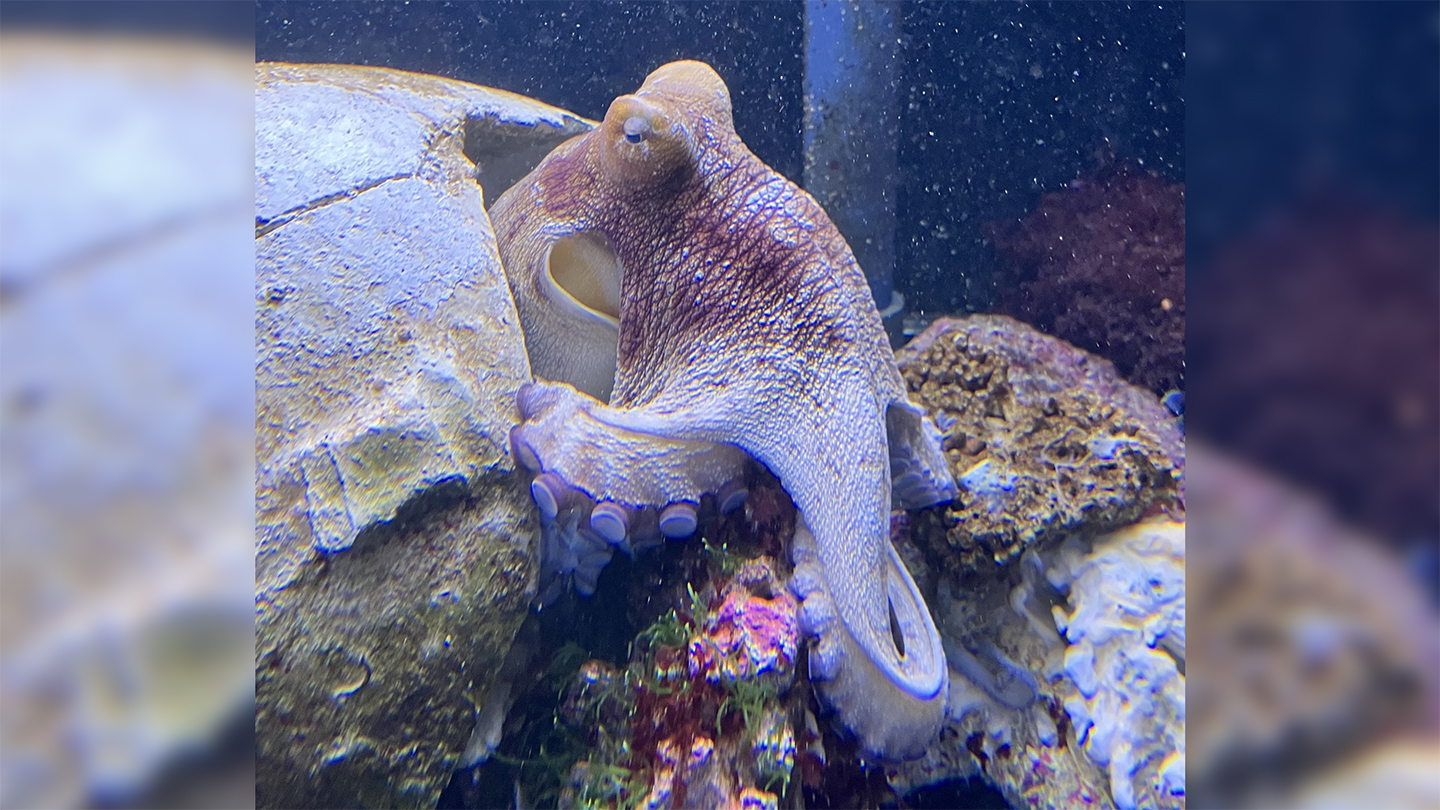
Few creatures in the animal kingdom stir our imagination quite like the octopus. With their eight sinuous arms, large curious eyes, and an intelligence that seems to belong to another world, they have long been cast as the escape artists of the sea. One of the most famous was Inky, an octopus who made headlines after slipping out of New Zealand’s National Aquarium, sliding across the floor, and disappearing into a drain that led to the ocean. Such stories feel almost unbelievable, yet they are part of a broader truth: octopuses are masters of the vanishing act. Their bodies are almost entirely soft and muscular, capable of remarkable shape-shifting, and this allows them to slip through impossibly narrow openings that would trap any stiff-bodied animal. But while their escapes are legendary, the precise strategies behind them have rarely been studied in a careful, systematic way. As Robyn Crook, an evolutionary biologist at San Francisco State University, notes, this behavior is one of the most characteristic things about octopuses in popular awareness, yet researchers have not really examined the tactics these animals use. Now, however, a team of scientists has taken on the challenge, and their findings reveal that an octopus’s getaway is not a random, desperate wriggle but a surprisingly well-organized, step-by-step performance. The results, reported in the Journal of Experimental Biology, show that these creatures approach their prison breaks with a kind of quiet, deliberate genius, adjusting their tactics depending on the size of the hole they need to escape through.
The research, led by Michael Kuba, a biologist at the University of Naples Federico II in Italy, and Wenci Xin, a robotics researcher at the National University of Singapore, focused on two octopus species: the common octopus, Octopus vulgaris, and the Mayan octopus, Octopus maya. Both are known for their ability to squeeze through tight spots, but the scientists wanted to understand the mechanics behind those getaways. To do this, they first needed a way to measure just how much an octopus can compress itself. They settled on a simple but clever indicator: the distance between the animal’s eyes. That gap, it turns out, reflects the size of the most rigid structure in an octopus’s body, a ring of cartilage that protects its brain. While an octopus can squish most of its body dramatically, this cartilaginous piece cannot shrink much beyond its natural dimensions. So the researchers built clear acrylic boxes with circular openings that were either slightly smaller or slightly larger than that eye-to-eye measurement. Then they gently placed the octopuses inside and waited, watching with cameras as the animals confronted their tiny exits. It must have been a strange experience for those octopuses, perhaps a little like being packed into a jar with a window to freedom that was almost, but not quite, wide enough. Yet instead of panicking, they simply got to work. The researchers observed not just whether they escaped, but how they moved, which arms they used first, how they positioned their bodies, and how long each step took. That level of detail allowed them to turn what looks like a magical feat into a sequence of observable, repeatable behaviors. It is one thing to say an octopus can squeeze through a hole; it is another to see the same animal calmly size up the opening and execute a plan with the focus of a dancer or a gymnast. The comparative approach also revealed that the two species used different strategies, a clue that escape behavior is not a single fixed trick but a flexible toolkit shaped by each species’ way of life.
For the common octopus, escaping through a hole that was slightly larger than the distance between its eyes turned out to be a remarkably efficient, almost elegant operation. The entire process took only a few seconds and unfolded in three fluid steps. First, the octopus reached out with one or two arms, inserting them through the opening as if testing the water. Then, once those arms had a grip on the outside world, it threaded a few more of its long, flexible limbs through, gradually extending its reach beyond the box. Finally, in a bold, decisive move, the octopus used the arms already outside as anchors to push against the acrylic surface, and with a single coordinated pull, it drew its head and the rest of its body through the hole. The motion was smooth, almost like water pouring down a drain. But when the hole was narrower, smaller than the octopus’s most rigid body parts, the common octopus added an extra step to its routine. Rather than risking a jam, it first pushed all of its arms through the opening, gathering its soft, flexible limbs on the outside, leaving only its head and its bulbous mantle inside the box. Then, with its arms as leverage, it squished its head through, followed by the large, rounded mantle, the soft mass of the body that contains most of its organs. It was, in effect, a four-step sequence, a more cautious yet still swift method that allowed the animal to conquer a tighter challenge. The distinction between these two strategies is important because it shows that the octopus is not merely relying on its softness; it is actively tailoring its movements to the physical constraints of the space. The coordination required to do this over and over, without hesitation, suggests a deep, intuitive understanding of its own body and the geometry of the world around it. This is not simple reflex. It is something closer to embodied knowledge, the kind of awareness that comes from living a life where every crack and crevice might hide food or danger.
The common octopus may be a speedy escape artist, but not every octopus reacts to confinement in the same way. The Mayan octopus, the researchers found, behaved with far more caution. When presented with the wider opening, Mayan octopuses were willing to attempt an escape. But when they encountered the narrower hole, the one that would require them to squeeze through a space smaller than their rigid brain cartilage, they often did not even try. Instead, they tended to ignore the opening altogether, as if deciding that the challenge was not worth the effort or the risk. It was a striking difference, and the researchers believe it may be rooted in the species’ biology and ecological history. The common octopus lives in varied habitats where nooks, crannies, and crevices are part of daily life, perfect hiding places for both hunting and avoiding predators. The Mayan octopus, by contrast, is at home in sandy and rocky environments, where it can slip under a rock or disappear into a burrow without having to worm its way through a narrow, enclosed channel. In such an environment, the ability to compress through a small hole is less essential, and so the Mayan octopus may have never developed the same boldness or drive to force itself through tight spaces. This behavioral difference is a reminder that even within the same family of extraordinary creatures, evolution shapes each species in its own way. Caution, too, can be a survival strategy. For the Mayan octopus, knowing when not to push through may be just as valuable as knowing how. The findings also suggest that the fine details of an octopus’s body, the toughness of its skin, the flexibility of its mantle, the strength of its grip, may all influence how different species respond to confinement. What is a test of patience or courage for one octopus may be a simple matter of anatomy for another, and the two cannot be separated.
Beyond the simple wonder of watching an octopus slip through a tiny crack, this research has practical implications that reach far beyond the ocean. The team behind the study hopes that the escape tactics of these animals will inspire a new generation of soft robots, machines designed to morph their shapes and squeeze through spaces that would be impossible for rigid, traditional robots. Wenci Xin, the robotics researcher involved in the study, is especially excited by this possibility. This incredible capability, she says, could enable robots to overcome environmental limitations and enter spaces that are difficult to reach. Imagine rescue robots sliding through debris after an earthquake, search devices navigating collapsed buildings, or medical tools worming through tight spaces inside the human body. The principles behind an octopus’s escape could be translated into synthetic materials and clever actuators that allow a robot to extend its arms, anchor itself, and then pull the rest of its body through a narrow gap. Yet, as Robyn Crook points out, there is still much to learn. The current study focused on circular holes, but in the real world, openings come in all sorts of shapes, such as narrow slits and long tubes, and an octopus might use entirely different tactics for those. By studying how these animals adapt to different kinds of openings, engineers could unlock even more designs and possibilities. Many robots designed for tight spaces today are snake-shaped, relying on a long, slender body rather than a soft, compressible one. But the octopus demonstrates that there is another way: a compact, flexible body with multiple gripping arms can achieve remarkable feats of penetration. The more we study these eight-armed contortionists, the more they reveal about how intelligence, softness, and behavior can combine to reimagine what a machine might be capable of doing.
At the heart of this research is a deeper truth about octopuses and the way we see them. The ability to escape is not just a famous party trick; it is a matter of life and death. In the wild, octopuses use their shape-shifting powers to slip into hidden cracks in search of food and to flee from hungry predators. Every successful squeeze is an act of survival, honed by millions of years of evolution. There is also something profoundly humanizing about watching an octopus carefully work its way through a small opening. It is not merely a reflex; it is problem-solving, a quiet evaluation of a challenge, followed by a decisive and coordinated response. The octopus seems to know its own body in a way that we can only marvel at, a creature that is at once alien and strangely familiar. It reminds us that intelligence takes many forms, and that the softest, most flexible minds in nature are often the most capable of finding a way out. As scientists continue to study these animals, both in the lab and in the ocean, they are likely to uncover even more astonishing abilities, new tricks, new strategies, and new insights into the nature of flexibility itself. The escape artist of the sea may not consciously intend to teach us anything, but it is teaching us nevertheless: that there is always a way through, even when the opening seems impossibly small, and that sometimes the best way to move forward is to be willing to change shape.