

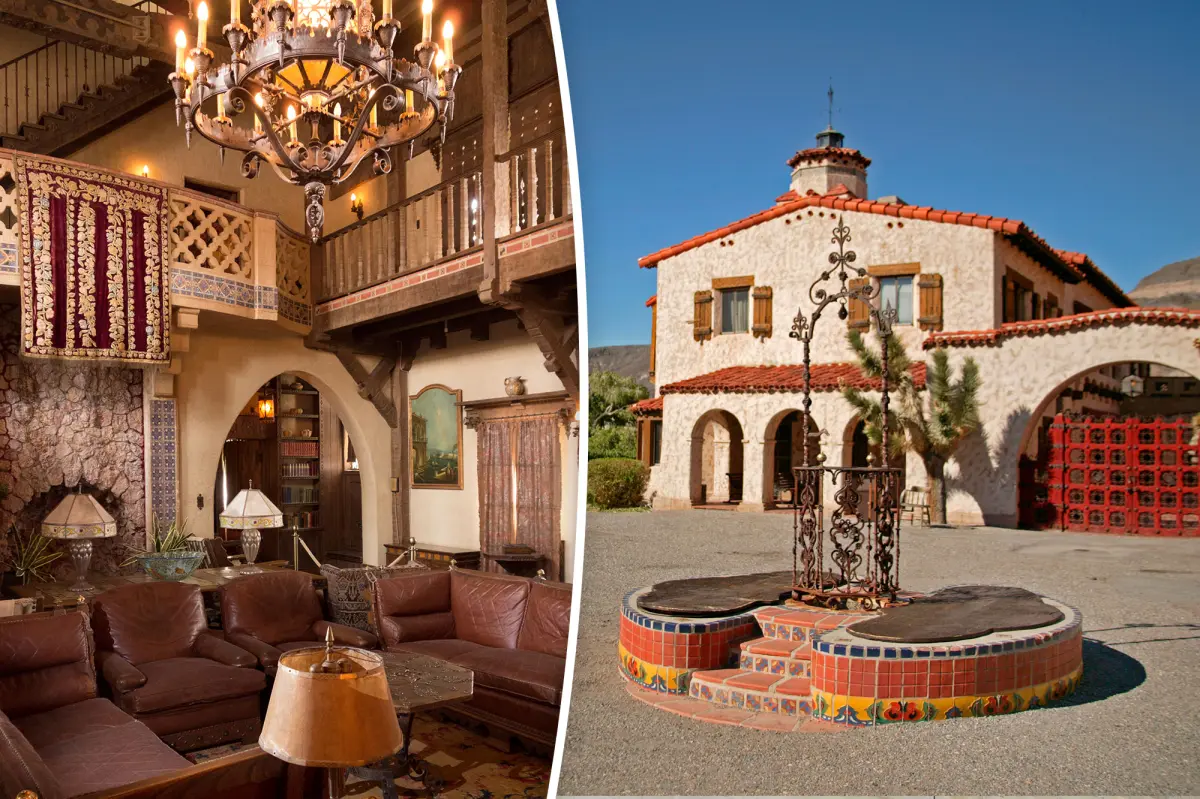
Nestled within the stark, breathtaking expanse of Death Valley National Park lies a peculiar paradox: a lavish Mediterranean-style villa, silent and shuttered, hemorrhaging millions of taxpayer dollars each year. This is Scotty’s Castle, a historic estate that has been closed to the public for nearly a decade, yet continues to accrue staggering costs simply to preserve the ghost of its former glory. The numbers are jarring, with an estimated $350,000 spent annually just to store and maintain its collection of over 12,400 priceless artifacts. For many, this seems like an exorbitant price for a building no one can visit. But for the dedicated historians, conservators, and stewards tasked with its preservation, this is not a story of fiscal waste, but one of profound devotion, a battle against time, nature, and bureaucratic inertia to protect a piece of the American story from being lost forever.
The opulent estate, built between 1922 and 1931, was never meant to be a museum. It was conceived as a whimsical, luxurious desert retreat for Chicago millionaire Albert Mussey Johnson and his wife, Bessie, a testament to the wealth and eccentricity of the Jazz Age. The property, however, carries a mischievous secret, one woven into its very name. It was named after Walter Scott, a charismatic conman and prospector who captivated the public with tall tales of his own gold mines. Scott, a close friend of Johnson, was the estate’s flamboyant host and master of ceremonies, entertaining the elite with lavish parties and claiming the castle was his own, built on the fortune of his fabled mines. It was a delightful fiction, a performance that added to the estate’s mystique and cemented its place in the lore of the American West. For decades, the castle stood as a vibrant beacon of hospitality and intrigue, attracting tourists and celebrities alike who were eager to witness the wonder of a European-style chateau rising from the desert floor.
That era of lively revelry came to an abrupt and destructive end on a single day in October 2015. A catastrophic flash flood, like a malevolent force from the surrounding mountains, tore through the property with terrifying speed. The deluge overwhelmed the desert terrain, sending a torrent of mud, rock, and water surging through the castle and its outbuildings. The damage was catastrophic: electrical systems were ruined, walls were cracked, and the idyllic grounds were buried under layers of silt and debris. In the chaos, the castle’s treasured collection—its historic furnishings, antique musical instruments, and personal effects of its colorful inhabitants—was placed in protective custody, whisked away to a climate-controlled storage facility to prevent further ruin. What was intended as a temporary measure, however, became a long and complex saga of limbo, as the estate faced a second disaster in 2021 when a fire broke out in one of its outbuildings, further complicating restoration efforts and delaying the promise of a triumphant reopening.
The true cost of this prolonged closing is staggering. According to a recent analysis, the combined expenses for storing and preserving the castle’s vast collection have ballooned to nearly $5 million over the past few years. The bulk of this money goes toward paying rent for the climate-controlled warehouse in a different city where the artifacts are kept safe, while a smaller portion funds the meticulous work of conservators who fight against the inevitable decay of time. Alison Leard, the founder and director of Pacific Coast Conservation, the firm entrusted with the collection, understands the public’s concern about the high price tag. She is keenly aware that on paper, it seems like a fortune spent on a closed attraction. Yet, she insists with unwavering conviction that this is not a case of financial miscalculation. The cost is justified by the rigorous standards required to protect history. “It’s not a case of overestimating what it costs to care for this collection — it really does cost that much to do the work to the standard we need to,” she explained, a hint of weariness in her voice. Her ultimate desire is simple and resolute: “I look forward to the day when we can send it home.”
Beyond the dollars and cents, there is a profound human cost to this story. The restoration has been stalled by a perfect storm of funding shortages, staffing vacancies, and the labyrinthine complexity of federal historic preservation laws, which mandate that every beam, banister, and hinge be restored to its original condition. The process is painstakingly slow and incredibly expensive. To make matters more difficult, the landscape of the National Park Service is changing. Recently, a leaked list of projects deemed “low priority” by the new administration included the maintenance of the castle’s famous pipe organ, sending a shiver of anxiety through preservationist circles. Simultaneously, staffing cuts at the agency are placing an immense burden on the remaining employees. As David Blacker of the Death Valley Natural History Association pointed out, the park’s chief of interpretation is now also the curator, a role that is a career in itself. This structural pressure means that the few people who are dedicated to the castle’s revival are overburdened, struggling to keep the flame of its legacy alive even as they face an uphill battle against institutional and political headwinds.
But the story is not one of despair, but of stubborn, enduring hope. The doors to the castle are not completely sealed. Visitors are invited to participate in a unique, behind-the-scenes experience with weekend tours that run until April 17th. These tours are not a polished walkthrough of a finished exhibit, but a raw, fascinating glimpse into the ongoing restoration efforts. They offer a narrative of resilience, showcasing the extraordinary work being done to salvage a treasure from the wreckage of natural disaster. Excavation and construction on the castle’s infrastructure are slated to resume next year, a significant first step toward a brighter future. The National Park Service has provisionally set a target date of November 2028 for the public to return, a moment that will mark the culmination of over a decade of relentless dedication and waiting.
Scotty’s Castle is more than just a beautiful building; it is a physical repository of memories, a symbol of human ambition in an unforgiving landscape, and a reminder that history is a living, breathing entity that requires constant care and sacrifice. While the millions of dollars and the years of closure raise difficult questions about resource allocation, they also shine a light on the profound value we place on our shared heritage. The effort to resurrect the castle is not merely about restoring plaster and wood; it is about restoring a connection to a past filled with eccentric characters and grand dreams. It is a story of people, both past and present, and their collective refusal to let a vibrant chapter of the American saga fade quietly into the desert dust. Until that day arrives, the castle and its collection remain in a state of suspended animation, a silent sentinel awaiting the moment its halls can once again echo with the stories, laughter, and wonder of its golden age.