


It was a landmark moment for Seattle’s technology community. In a deal valued at up to $5.3 billion, defense technology company Shield AI agreed to acquire Echodyne, a Kirkland, Washington-based startup that has become a global leader in compact radar systems designed to detect and track drones. The transaction, announced with considerable fanfare, marks one of the most significant exits in the region’s startup history, a testament to the patience and vision of the founders, investors, and engineers who built Echodyne from a concept into a profitable, world-class manufacturer. For a region more often associated with software and cloud computing, the acquisition underscored a powerful new narrative: the Pacific Northwest is now a major player in the world of defense and aerospace hardware, where cutting-edge physics and artificial intelligence converge to address the most pressing security challenges of our time.
Echodyne’s journey began not in a typical startup garage, but within the hallowed halls of Intellectual Ventures, the Bellevue-based invention laboratory known for incubating radical ideas. In 2014, the company spun out with a $15 million initial round of funding from a prestigious group that included Microsoft co-founder Bill Gates and Madrona Venture Group. For over a decade, the company toiled in the complex field of metamaterial-based radar, a technology that promised to replace the bulky, expensive, and mechanically-gimbaled radar systems of the past with lightweight, solid-state panels that could be manufactured at scale. The gamble was substantial, and the company raised roughly $200 million over its lifetime, with investors like Madrona providing not only capital but also strategic guidance from the very beginning. When Madrona first invested, the company was valued at a modest $24 million pre-money, a figure that made the eventual $5.3 billion acquisition a staggering 100-fold return on that early faith.
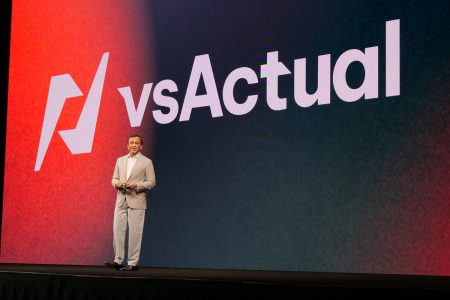
The technology that propelled Echodyne to this remarkable milestone is now deployed in hundreds of counter-drone and security systems across more than 40 countries. Its radar panels are integral to remote weapon stations, high-energy lasers, and microwave weapons, providing the crucial “eyes” that guide interceptors toward incoming aerial threats. Beyond the battlefield, the same technology is used to protect civilian infrastructure, with stadiums and airports relying on Echodyne’s sensors to spot rogue drones that could disrupt operations or endanger the public. This dual-use capability was a key factor in the acquisition, according to Shield AI CEO Gary Steele. He noted that while Shield AI has been a pioneering force in military autonomy with its Hivemind software and V-BAT drone, Echodyne represents its first foray into hardware with broad civilian applications. “Think about public safety — whether it’s the Super Bowl or FIFA, just literally every single thing is going to need protection from drones,” Steele told Bloomberg, framing the acquisition as a leap into a future where drone detection is as universal as fire safety.
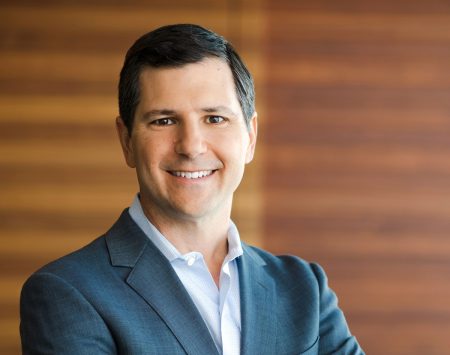
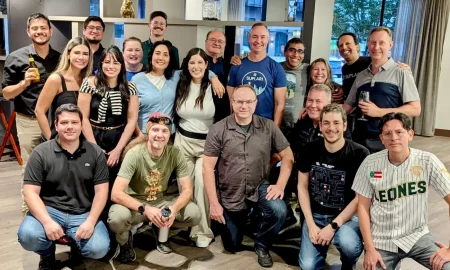
The acquisition is a deeply personal triumph for Eben Frankenberg, Echodyne’s co-founder and CEO, who will remain at the helm, reporting directly to Steele. A native of North Carolina, Frankenberg was described by his college roommate, Smartsheet co-founder Brent Frei, as having a “unique knack for getting brilliant people to believe in a vision, even when there’s plenty of skepticism around them.” Frei and Frankenberg met as freshmen at Dartmouth College, and their friendship became the bedrock of a professional network that has had an outsized impact on the Seattle tech scene. Frei founded Onyx Software in 1994, building it with a group of Dartmouth friends that included Frankenberg, as well as Mark Mader, who later co-founded Smartsheet, and Rob Eleveld, who sold his company Ekata to Mastercard for over $800 million. This “Onyx family tree” is, as Madrona managing director Matt McIlwain put it, a “great example of how the innovation ecosystem and flywheel gets built over decades in a community like Seattle.” Frankenberg’s success is the latest and most spectacular validation of this network’s ethos of long-term, relationship-driven innovation.
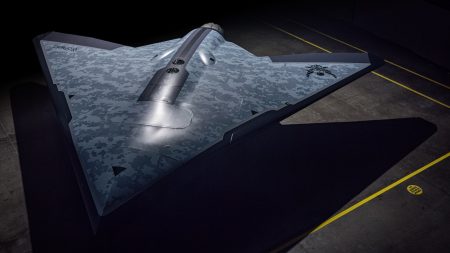
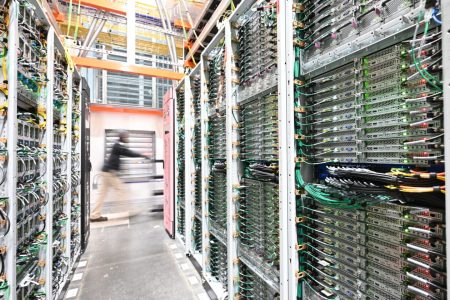
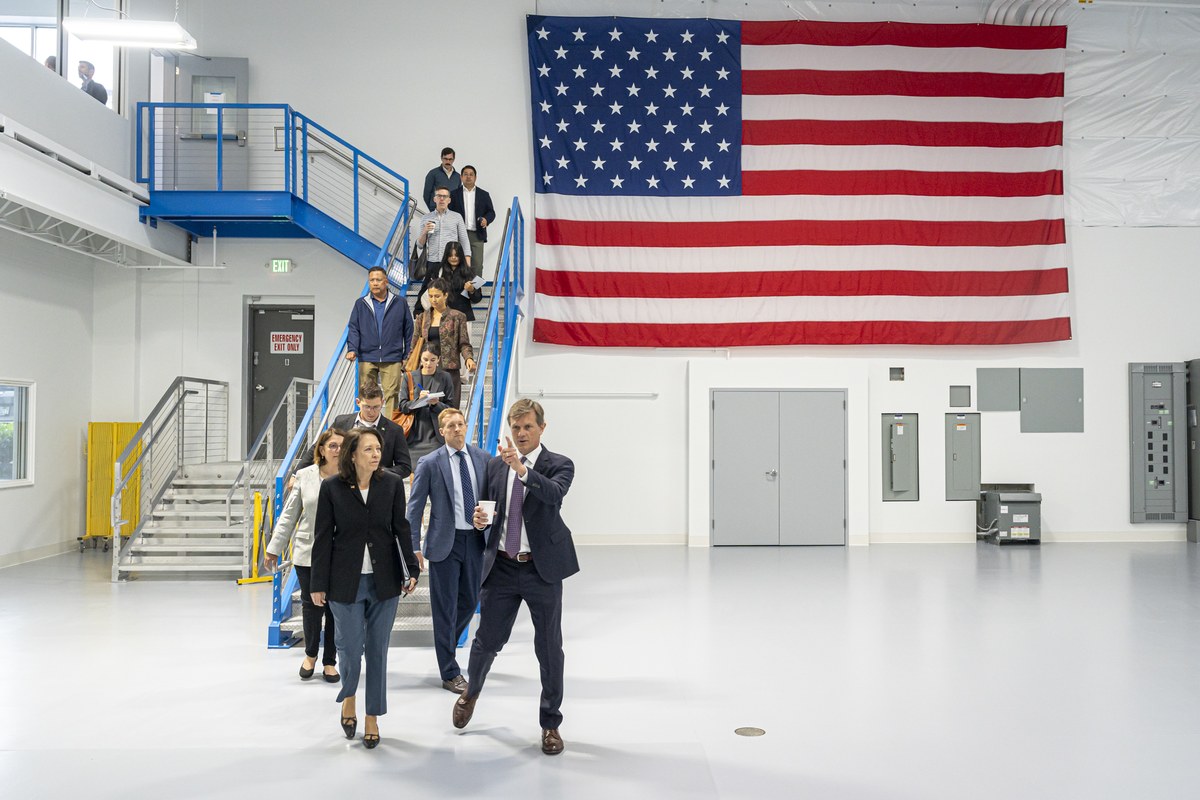
For the employees and the local economy, the deal signals continuity and growth. Echodyne, which boasts about 400 employees, up from 260 when it opened its state-of-the-art, $40 million manufacturing facility in Woodinville this past July, will see no layoffs. Echodyne staff will not be required to relocate, and the combined company will have a workforce of approximately 2,700. Frankenberg will remain responsible for Echodyne’s product lines, manufacturing, and customer relationships. Furthermore, the acquisition is expected to accelerate Shield AI’s already significant footprint in the Seattle region. The company has previously announced plans to build its AI-piloted X-BAT fighter jet in Des Moines, Washington, with projections to employ about 4,000 people in the area by the early 2030s and support roughly 8,000 total jobs, including at suppliers. The Echoдyne acquisition dovetails perfectly with this strategy, creating a powerful aerospace and defense cluster in the Puget Sound region that combines autonomous flight, advanced manufacturing, and sophisticated sensor technology.
From a financial and strategic perspective, the deal is a clear signal of the booming defense tech market. To fund the acquisition, Shield AI is raising $2.5 billion, including $1 billion in new funding that values the company at a staggering $28.8 billion—more than double its valuation from just months earlier. The acquisition, expected to close in early 2027 pending regulatory approvals, will see Shield AI pay $4.8 billion at closing, with an additional $500 million available if Echodyne hits specific performance targets. This structure rewards the Echodyne team for its continued excellence and aligns both companies around a shared vision of growth. As part of the transaction, Madrona and other Echodyne investors will become significant shareholders in Shield AI, further cementing the ties between the venture community and the defense sector. The five-time acquisition is Shield AI’s largest to date, dwarfing its previous purchases of companies like Heron Systems, Martin UAV, Sentient Vision Systems, and Aechelon Technology.
Ultimately, this acquisition is more than just a massive financial transaction; it is a validation of a new technological era and a hub of talent. The partnership between Shield AI and Echodyne represents a fusion of the two most critical components of modern defense: the brain and the senses. Shield AI provides the autonomous “brain” that can pilot aircraft and make split-second decisions, while Echodyne provides the high-resolution “senses” that allow systems to perceive the world around them in real-time. Together, they are poised to dominate the market for counter-drone systems and autonomous air combat. For the Seattle area, the deal solidifies its position as a premier “defense tech hub,” a concept that seemed improbable just a few years ago. It demonstrates that the region’s legendary innovation ecosystem can pivot and thrive in hardware and deep-tech ventures, creating high-paying manufacturing jobs and solving complex, real-world problems. As Tim Porter of Madrona noted, “Seattle as a defense tech hub is real,” and with this historic acquisition, it has just become a whole lot more formidable.