

Hundreds of Bangladesh Garment Factories Shut Down as Workers Rally for Higher Wages
DHAKA, Bangladesh — A sudden silence fell over Bangladesh’s industrial heartland this week, as hundreds of garment factories locked their gates and workers took to the streets in one of the largest coordinated demonstrations for higher pay the nation has seen in recent memory. The protests, which began as scattered walkouts on the outskirts of Dhaka, quickly grew into a mass mobilization that stretched from the industrial belt of Gazipur and Narayanganj to manufacturing towns along the country’s central shipping routes. By midweek, the familiar sound of sewing machines had vanished from entire neighborhoods, replaced by chanted demands for a living wage and the thud of police barricades being dragged into place. This was not a remote labor dispute. Bangladesh is the world’s second-largest exporter of clothing, a position that places it at the very center of the global apparel industry. The country produces shirts for high-street brands, denim for premium labels and uniforms for corporate suppliers, shipping billions of dollars in goods across continents each year. When its factories are forced to close, the damage reaches far beyond Dhaka’s city limits, hitting warehouses in saturated markets and boardrooms debating next season’s order. But for the more than four million workers who form the backbone of the sector, the crisis is personal. They have watched food prices rise, rents climb and the purchasing power of their wages decline. They have waited years for adjustments that never seemed to match the growing cost of living. This week, after months of negotiation with the government’s wage board failed to produce an acceptable offer, they decided to stop working. The result has been one of the biggest factory shutdowns in Bangladesh’s recent history, and the world is now paying attention in a way that goes far beyond charity campaigns or fashion week speeches.
An Industry That Holds the Nation’s Economy Together
To understand why a wage argument can close hundreds of factories, one has to grasp the sheer scale of Bangladesh’s readymade garment sector. It accounts for more than 80 percent of the country’s total export earnings and roughly 10 percent of its GDP. It is the engine that powered Bangladesh through the global economic shocks of the past two decades and lifted the country to middle-income status. More than 4,000 factories produce everything from basic T-shirts to tailored outerwear, much of it destined for stores in Europe and North America. In any normal year, Bangladesh ships around $40 billion or more in apparel, making it the second-largest clothing exporter in the world after China. But the industry’s staggering output depends on an equally staggering workforce. An estimated four million men and women are directly employed in the sector, and most of them are young women who migrated from rural areas in search of a better life. They came to Dhaka, Chattogram and other industrial hubs because garment work, despite its hardships, offered a regular paycheck and a path out of poverty. For many, those dreams have met the hard edge of reality. The minimum wage has not kept pace with inflation, and the cost of staple goods such as rice, oil and housing has risen sharply. Workers say that their monthly earnings, including overtime, are often swallowed up before the end of the month, leaving little for children’s school fees, medical expenses or basic savings. This quiet desperation has been building for years, and the current protests are the result of that pressure finally being released. The garment industry has given Bangladesh a place in the global economy, but its greatest achievement in the eyes of many observers is its resilience. Yet resilience has a cost. Labor rights activists have pointed out that factory owners have repeatedly asked workers to sacrifice for the good of the sector, while brands continue to demand lower prices and faster turnaround times. Women workers often work through the night at peak order periods, and some report harassment, verbal abuse and pressure to meet unrealistic quotas. In recent months, as the country struggles with high inflation and a squeeze on foreign exchange reserves, the burden on ordinary households has become unbearable. The protests, then, are not just about wages—they are about the kind of future Bangladesh wants to build.
A Wage Dispute Reaches Breaking Point
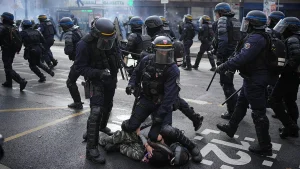
At the center of the unrest is a bitter fight over numbers: how much a worker should earn for a day’s labor. The existing minimum wage for garment workers, set in 2018, stands at 8,000 taka per month—less than $75 at current exchange rates. Labor unions have argued that this sum is absurdly low, particularly in a country where housing, fuel and food prices have all climbed steeply. They have demanded a new minimum of 23,000 taka, a little over $200 per month, with some leaders insisting that even that amount is barely enough to support a family. The government’s wage board, which includes employers, union representatives and state officials, proposed a figure that fell far short of that target. The unions rejected it, and negotiations collapsed. For workers, the official offer felt like an insult, especially as they could see that their industry remained lucrative for manufacturers, exporters and global brands. For factory owners, the demand was too high, threatening their profit margins and their ability to compete with lower-cost producers elsewhere in Asia. As the deadlock dragged on, union leaders began calling for strikes. What started as short demonstrations at individual factories soon grew into a concerted action. Workers marched along highways, gathered outside major factory gates and blocked roads, demanding the government intervene. Police responded with tear gas and water cannons at some locations, and several people were reported injured. The violence, or the threat of it, prompted many factory owners to shut down production entirely rather than risk damage to machinery or further unrest. By the end of the week, hundreds of factories had suspended operations, leaving thousands of workers without work and millions of dollars in orders delayed. Both sides now say they are open to dialogue, but the trust gap is wide.
Global Brands and the Frail Engine of Fast Fashion
The images from Bangladesh’s streets are being watched closely by an international retail industry that has come to depend on the country’s ability to produce clothing cheaply, quickly and continuously. Bangladesh is a key sourcing destination for many of the world’s best-known fashion brands, and any sustained disruption threatens to create supply chain delays just as retailers are planning for the next season. The industry has been through this before. In 2013, the Rana Plaza building collapse killed more than 1,100 people and exposed the deadly realities hidden in the production of low-cost clothing. In the aftermath, Western brands signed agreements on building safety, introduced fire inspections and helped fund structural improvements in factories. But wages were never resolved. Campaign groups and trade unions argue that safety standards are meaningless if workers cannot afford food or shelter. This week’s protests have reignited the debate over the so-called living wage, a concept that many brands have publicly supported but few have actually implemented across their supply chains. The challenge is that higher wages mean higher prices, and in an industry where brands compete on margins, passing those costs to consumers is not easy. Some companies have responded by promising to strengthen their due diligence and to consult unions in their supply chains. Others have gone quiet, perhaps hoping the crisis resolves before it starts to hurt their quarterly earnings. But the pressure is growing. Consumers are more aware than ever of where their clothes are made, and campaigns targeting garment workers’ rights have gained momentum on social media. For global fashion brands, the situation in Bangladesh is no longer just a procurement challenge—it has become an ethical test.
The Human Toll Behind the Fabric
Behind these discussions are the lives of ordinary workers, whose stories rarely make it into trade reports or corporate audits. Consider the woman who leaves her rented room at dawn, walks through flooded streets to reach a factory that will pay her less than the cost of a bus ticket to her home village. She works a ten-hour shift, lifting heavy bundles of fabric, operating machines that require constant focus, and returns in the evening too exhausted to do anything more than cook rice and sleep. She has been doing this for years, and every year the gap between her salary and her needs grows wider. Her story is not exceptional; it is common. Workers in this week’s protests told local reporters that their wages are spent almost entirely on food, rent and children’s education. They said they have no money left for medicine, for emergencies, or for saving against a future when their hands can no longer keep pace with the machines. Some spoke of supervisors who shouted at them and deducted pay for minor mistakes. Others talked about the fear that comes with speaking up—the worry that a union card or a place on a protest line could get them fired and blacklisted. The weather in Bangladesh has been especially brutal this year, with extreme heat and heavy rainfall making life more difficult for those living in crowded industrial neighborhoods. Yet the anger on the streets is less about any single crisis than about the accumulation of broken promises. Workers believe the country’s garment sector has grown wealthy on their labor, and they want their share. The movement has become a demand not just for 23,000 taka a month, but for dignity and recognition. That is why this week’s demonstrations have drawn such broad support. Even workers in factories that are not directly involved have refused to cross picket lines. Local businesses, from tea sellers to rickshaw drivers, have expressed sympathy for the strikers, aware that the garment trade sustains the entire neighborhood. The authorities, however, have shown little patience, and the government’s message has been cautious: it has promised to consider workers’ demands but has also stressed the need to maintain production and order in the economy.
What Comes Next for Bangladesh’s Garment Sector
As the dust begins to settle, the key question is what happens now. The government has said it will restart negotiations and has urged workers to return to their jobs while discussions continue. Union leaders have agreed to participate, but they have made clear that the talks must lead to a concrete outcome, not just another loop of committees and guidelines. Factory owners, for their part, are eager to restart production, but they are also worried about the long-term damage to Bangladesh’s reputation as a reliable supplier. International buyers will be asking whether the country can provide both competitive prices and social stability. The answer may determine whether Bangladesh retains its position as a garment giant or begins to see orders shift to Ethiopia, India or Vietnam. There are no easy answers. Raising wages could increase production costs and cause some brands to move elsewhere; refusing to raise them could trigger further protests and bring more negative publicity. Some industry insiders argue that Bangladesh needs a new social contract—one that treats workers as partners rather than disposable labor. This would mean transparent wage-setting mechanisms, stronger labor unions and more inclusive growth. It would also mean that international brands accept that a sustainable supply chain is worth paying for. The world has changed a great deal since Bangladesh first became a sourcing destination for Western fashion. The cheap-clothing era may be reaching its natural limit, and this week’s factory closures are a sign that the industry’s old model is no longer viable. Whether that leads to constructive reform or continued crisis depends on whether the people with the power to change the system are willing to act. For the workers who filled the streets, the fight is far from over. They have shown they are organized, patient and no longer willing to accept a life of sacrifice without return. As the factories reopen, one by one, the silence will be replaced by the familiar hum of machines. But the echo of the protests will remain—a reminder that Bangladesh’s garment industry cannot function, and will not be allowed to function, without respecting the hands that make it run.