



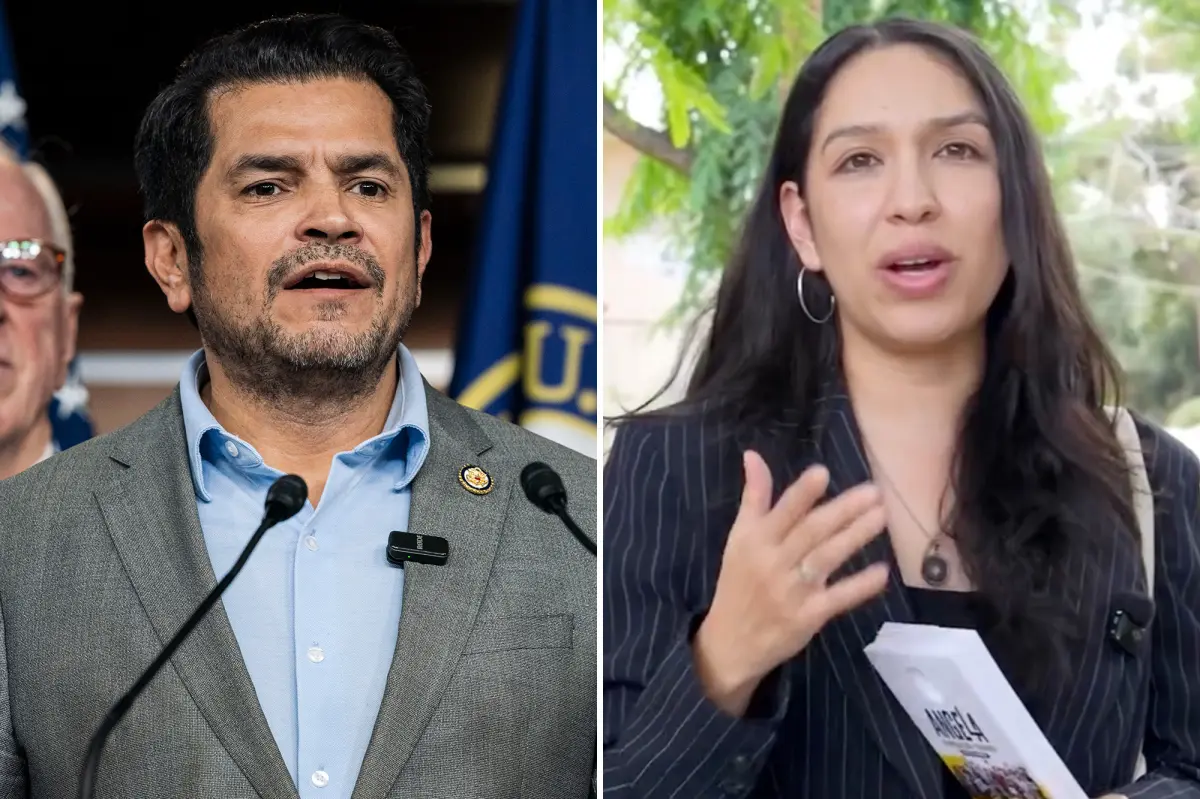
The result landed like a small earthquake in the blue bedrock of California’s 34th Congressional District. Angela Gonzales-Torres, a democratic socialist and first-time candidate who grew up in Highland Park, unseated Rep. Jimmy Gomez, ending a nearly decade-long hold on a seat that many had assumed belonged to the political establishment until a House Ethics Committee investigation into sexual misconduct allegations changed everything. With 73 percent of ballots counted, Gonzales-Torres claimed 58.7 percent of the vote to Gomez’s 41.3 percent, according to the Associated Press. The race was all-Democratic, a two-way runoff in one of the state’s bluest districts, yet it became a fierce moral reckoning rather than a quiet coronation. For Gonzales-Torres, the victory carried deep personal weight. She describes herself as the daughter of a deportee, raised by a single mother, and her path from neighborhood council president to Metro’s Public Safety Advisory Committee to Congress is not the usual ladder to Washington. It is the story of a woman who grew up in the neighborhoods she now represents, who watched her community struggle with environmental pollution, family separation, and wages that never seemed to rise enough, and who decided to run not because her name was known, but because her neighbors’ needs were not being met. Her victory was not just a rejection of one man; it was an insistence that a district this diverse and this working-class deserves a representative who does not have to be reminded where she comes from.
The man Gonzales-Torres defeated had spent close to a decade in Washington, first winning the seat in a 2017 special election to replace Xavier Becerra, who had left to become California’s attorney general. Gomez was a former labor organizer and a product of the state Assembly, a progressive who co-sponsored the College for All Act and spoke out fiercely against Trump administration immigration enforcement. He had been endorsed by figures like Sen. Adam Schiff. He also chaired the Congressional Dads Caucus, a role that made him a visible symbol of family and fatherhood. He is married and has one child. That backdrop made the accusations against him particularly jarring. In August, the House Ethics Committee confirmed it was investigating whether he “may have engaged in sexual misconduct,” including inappropriate sexual contact with a House staffer. CNN first revealed the probe in June and later reported that investigators had uncovered additional allegations. The inquiry followed a report that Gomez was seen in 2023 kissing a younger congressional aide who did not work for him. Gomez has acknowledged “personal mistakes” outside his marriage, mistakes he said hurt his family. But he has maintained that any relationship was consensual and that he broke no House rules, and he promised to cooperate with the committee. There was a painful irony in his own words. In April, he stepped down as chair of Rep. Eric Swalwell’s gubernatorial campaign and said Swalwell should leave the race “so there can be full accountability” amid allegations against him. Now the call for accountability was aimed back at him. Voters in the 34th did not wait for a formal verdict; the public trust had already been broken. For many residents, the issue was not simply what Gomez did, but what his campaign represented: a politics of comfort, of defending institutions, of expecting loyalty because of a D next to a name.
The primary offered an early warning. In June, six candidates competed for the two runoff spots in California’s top-two system. Gomez finished first with about 46 percent of the vote, but Gonzales-Torres took 30.7 percent, and Republican Calvin Lee came in third with about 13.7 percent. That left a general election in which both candidates were Democrats and the real contest was over the soul of the district. Gonzales-Torres, the former president of the Historic Highland Park Neighborhood Council and a member of Metro’s Public Safety Advisory Committee, was backed by DSA-LA and Justice Democrats. She pledged to refuse corporate and super PAC money, a commitment that shaped the pace and style of her campaign. There were no big-dollar donors deciding her strategy. There were instead neighbors, volunteers, and a network of organizers who treated the race like an urgent community project. Her long-shot bid looked less like a traditional campaign and more like an organizing drive. She knocked on doors in Boyle Heights, East Los Angeles, Eagle Rock, and Glassell Park, listening to stories of evictions, relatives in detention, asthma and lead contamination, and everyday exhaustion. Her own biography made those conversations feel less like a candidate courting votes and more like a neighbor returning home. The daughter of a deportee, raised by a single mother, she understood the anxiety of families navigating a broken immigration system. Growing up in Highland Park, she had lived with the realities of the district: the lack of affordable health care, the fear of law enforcement, the struggle to make ends meet in one of the most expensive states in the country. She did not present herself as a savior. She presented herself as proof that people who look like the district and share its struggles could be more than just statistics at the ballot box.
Her platform was built from those lived experiences. She ran on finishing the lead cleanup from the shuttered Exide battery plant, a toxic legacy that has haunted East Los Angeles for years and remains a raw wound for local families who fear for their children’s health. She called for universal legal representation in immigration court, knowing that in a district with a large immigrant population, due process is often a luxury reserved for those who can afford it. She supported a $25 minimum wage, a number that sounded radical in Washington but practical in a city where housing costs have outpaced paychecks for decades. And she drew one of the sharpest dividing lines in the race on Israel and Gaza. Gonzales-Torres said she ran in part out of frustration with Gomez’s refusal to support the Block the Bombs Act, legislation that would restrict U.S. weapons transfers. For her, the issue was not abstract foreign policy. It was about the value of a single life and the way taxpayer money is spent in her community’s name. The district, home to roughly 755,000 people, is about 65 percent Latino, and its neighborhoods include some of the most culturally rich and economically strained parts of Los Angeles. Residents carried the memory of the pandemic’s toll, the fragility of essential work, and the sense that Washington was too distant to understand their daily lives. Gonzales-Torres gave voice to that distance. She spoke not in poll-tested language but in the language of someone who had been on the other side of power. Her campaign declined corporate money, which allowed her to take positions that were not filtered through donor lists. That independence, more than any single policy, was the message voters rewarded.
Gomez, for his part, was not a straw man. He had a record that, in many ways, matched the district’s progressive instincts. A member of the House Ways and Means Committee, he had spent years working on health care, labor, and tax policy. He sat on committees where the details of ordinary people’s economic lives are written into law. He was an early and vocal opponent of the Trump administration’s immigration enforcement agenda. He endorsed the College for All Act, which would make public colleges and universities tuition-free. Endorsements from establishment figures like Adam Schiff were meant to reassure voters that he was a proven fighter who could deliver change. And in a less turbulent year, that might have been enough. But the 34th had changed, and so had the political weather. The district’s electorate is young, Latino, and increasingly skeptical of institutional power. The affordability crisis has become a constant companion. Trust in Congress is low, and trust in incumbents accused of misconduct is even lower. Gomez’s willingness to cooperate with the Ethics Committee and his acknowledgment of personal mistakes could not overcome the fact that his private behavior had become public. More importantly, the voters who turned out for Gonzales-Torres did not merely want to punish him; they wanted a different kind of representation. They wanted a representative who would not have to be briefed on the neighborhood’s struggles because she had lived them. The demographic reality was stark. With a population that is predominantly Latino, a district that includes Boyle Heights, East Los Angeles, Highland Park, Eagle Rock, and Glassell Park, and a political culture shaped by immigrant stories, the seat was never going to be a lifetime appointment for someone who had drifted away from the fabric of the community. Gomez had won the seat in the emotional aftermath of 2017, but this year voters were less interested in his original promise and more concerned with what he had actually delivered.
What happened in California’s 34th Congressional District is a small earthquake with aftershocks beyond Los Angeles. It demonstrates that allegations of personal misconduct can still cost an incumbent a seat, even in a district where the incumbent’s party registration matches the overwhelming majority of voters. It also shows that the democratic socialist wing of the party is no longer a fringe idea confined to a few urban centers. Gonzales-Torres carried the endorsement of DSA-LA and Justice Democrats and rejected corporate PAC money, and she won. Not because she outspent her opponent, but because she out-organized him, and because her message felt truer to the experiences of the people who sent her to Washington. The daughter of a deportee, raised by a single mother, will now take an oath to represent a district where many families live in fear of deportation. A woman who served on a public safety advisory committee will bring a different understanding of safety to a Congress that too often treats policing and punishment as the only answers. Her victory is a reminder that politics remains deeply personal. Gomez, the married father who chaired the Dads Caucus and called for accountability in another man’s scandal, found that voters apply standards to their representatives that cannot be waived by committee chairs or progressive credentials. The nearly decade-long hold on the seat was broken not by a conventional challenger, but by an organizer who ran as an outsider and never compromised the fact. For the residents of the 34th, many of whom have spent years feeling overlooked by an institution a continent away, the election sent a simple message: You were seen. When the ballots were counted, the margin was decisive. It was an expression of hope, a demand for repair, and a warning to every incumbent who assumes the relationship between a district and its representative is permanent. In the end, the seat belonged not to the name that had held it, but to the community that needed it. And Angela Gonzales-Torres, once a girl in Highland Park who watched her mother work too hard and never stop believing in something better, is going to Washington to finish the work.