



There is perhaps no fear more primal than losing a beloved pet, and no desperation deeper than the willingness to do anything to bring them home. Scammers know this, and they are now weaponizing that love with chilling precision. Across the world, con artists are using artificial intelligence to turn ordinary missing-pet posts into cruel, high-tech ransom schemes. They do not have to steal the animal; they only steal the owner’s trust and hope. With a few publicly shared photos and free AI tools, they create fake images of the pet in distress—on an operating table, trapped in a strange yard, or sitting in a shelter—then contact the frantic owner with an urgent, terrifying demand. They insist that money must be sent immediately, often to cover emergency surgery or to prevent euthanasia, and they threaten to kill the pet if the payment does not arrive. This is not an isolated prank. It has become a global epidemic of “cat-scams” and “dog-frauds,” with victims in Florida, California, England, and beyond. The Federal Trade Commission has issued official warnings, local shelters are begging the public to verify, and heartbroken owners are sharing their stories in hopes that others will avoid the same trap. In 2025 alone, AI-assisted scams of every kind were linked to more than $893 million in reported losses across over 20,000 complaints, according to the FBI. But the true cost cannot be measured in money. These scams strike at the very moment when a family is most vulnerable, when missing-pet flyers are crumpled in car doors, when nights are spent staring at park benches and wondering where a loyal friend could be. They turn a community’s kindness into a weapon, and the emotional damage can last far longer than any bank chargeback.
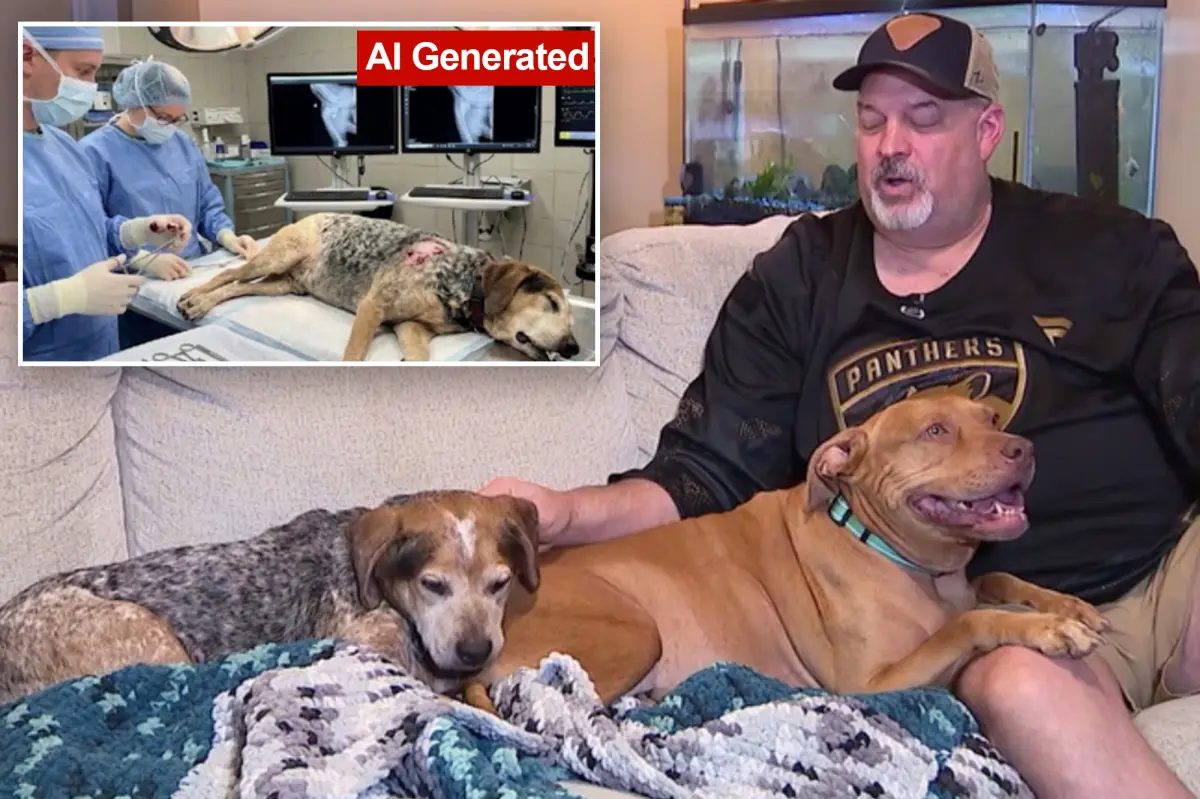
Take the story of Bill Cosens from Florida. In April, his beagle mix Archer escaped from the backyard, triggering the familiar spiral of panic and grief. Cosens did what millions of people do: he posted photos on social media, asked neighbors to keep an eye out, and hoped for good news. Then the phone rang. A woman on the other end delivered what seemed like a miracle and a nightmare at once. She said Archer had been hit by a car and needed a $2,800 operation to survive. To convince him, she sent AI-generated photographs of his beloved dog lying on an operating table, images that had been thoughtfully and cruelly crafted from the very pictures Cosens had shared online. For a moment, the world collapsed. He could not think clearly; all he could see was his dog suffering. But something nagged at him. The address for the veterinary clinic looked wrong, and the woman’s explanation kept shifting. “It starts becoming pretty obvious that we’re being scammed,” he later said, but it took effort to slow down and see the truth. He began checking, searching, and eventually a neighbor found Archer alive and well, wandering not far from home. The dog was fine, no surgery, no injuries, no crisis. But the incident left Cosens shaken. The scammers had used his own photos to invent an emergency, and they nearly convinced him to send thousands of dollars before he caught on. His relief was enormous, but so was his anger. The experience taught him a vital lesson: panic is the scammer’s greatest ally. They create heart-pounding urgency, pushing you to act before you ask questions, before you verify, before you understand that the image in front of you is nothing but a digital lie.
The stories keep coming from every corner of the world. In May, a California dog owner received a message from someone posing as a San Jose animal shelter. The scammer sent a doctored photo of her missing dog and claimed that the animal had been found injured and needed emergency surgery. If she did not send money immediately, the message warned, the dog would be “euthanized.” The woman was beside herself, already imagining the worst. But she made the wise decision to contact the shelter directly. They told her the dog was not there, and the facility later issued a public warning: “Scammers are using public lost pet posts and AI-generated content to create false urgency and pressure people into paying money.” The same cruel trick has crossed the Atlantic. In Wednesbury, England, Cam Chauhan had been mourning her missing cat Creed for nine months when she received a message containing what looked like an “exact picture” of him sitting in a garden. She burst into tears, grabbed her cat carrier, and told her family, “Let’s go get my cat back.” But the person on the other end refused to arrange a meeting. Instead, he demanded that she first send £200, about $269, in the form of an Apple gift card. That request broke the spell. Gift cards are not how real veterinary clinics work. Chauhan realized she was dealing with a scammer, and her hope collapsed into a darker sadness. Her cat is still missing. The image had been so convincing, crafted from the original missing-pet post, that for one glorious moment she believed her long search had ended. Instead, it had been turned into an opportunity for a stranger to profit from her pain.
Then there is Sarah Robinson from Northampton, whose story reveals just how sinister these schemes can become. Her cat Cookie had been missing for two weeks when a man identifying himself as Kherson H contacted her. He claimed he had Cookie, and he sent a digital photograph that looked exactly like her cat. Robinson wanted to believe it was real, but something felt wrong in her gut. The man was vague about where he was and “stumbled on his words.” When she asked for a meeting, he refused and demanded £40,000—nearly $54,000—to return her cat. When she pushed back, he threatened to kill Cookie. Robinson did not pay, but the emotional impact was devastating. “It’s horrible, because you know it’s not real but you’re terrified it might be,” she said. That is the heart of this cruel scam. Pet owners are not fools; they know a ransom demand is bizarre. But the animal is still missing, and the tiny chance that the person on the other end might truly have the pet makes them hesitate. What if it is real? What if saying no means never seeing the cat again? The scammer feeds on that hesitation, using threats and urgency to override rational thinking. Robinson was strong enough to refuse, but the image of her cat in the hands of a cruel stranger will not leave her. She may never know what happened to Cookie, and that uncertainty is its own kind of torture. The criminals hide behind fake names, fake photos, and untraceable payment methods, while the owners are left to deal with nightmares and grief.
These pet ransom scams are merely the latest variation of a booming AI crime wave that has already terrorized people in countless other ways. The same tools and tactics are used in kidnapping schemes involving AI voice clones that mimic a loved one’s panicked voice, in romance scams where fraudsters pose as famous celebrities, in phishing emails that fool even experienced professionals, and in deepfake videos so realistic that truth becomes impossible to grasp. What all of these scams share is not technological brilliance but emotional manipulation. They create false urgency. They demand immediate payment in non-refundable, hard-to-trace forms like gift cards, cryptocurrency, or wire transfers. They isolate the victim and insist that there is no time to call a shelter, no time to ask for a video call, no time to breathe. In the case of missing pets, the scammer does not need to be an expert. They simply monitor lost-pet groups on social media, download photos, run them through free AI software to generate new images, and then contact the owner with a fabricated medical emergency. The photos are often so precise that they are convincing even to people who know the animal best. Sometimes scammers gather additional details from public posts—the pet’s name, breed, age, collar color, and quirks—and weave them into the story. The result is a terrifying hybrid: a familiar face in an impossible situation. People have paid thousands of dollars before they realize that no surgery happened, no shelter exists, and no pet was ever in danger. In some cases, owners have sent money simply because the fear of not paying was worse than the fear of being scammed. The amounts seem small to outsiders, but to a family already stretched emotionally and financially, they are devastating. And when the truth finally comes out, the shame and frustration only add to the original loss.
So how can pet owners protect themselves? The Federal Trade Commission has offered simple and powerful advice: if someone says the only way to pay for your pet’s treatment is with a gift card, a payment app, cryptocurrency, or a wire transfer, you are dealing with a scammer. Legitimate shelters and veterinary clinics do not ask for Apple gift cards. They do not demand ransom for treatment. They will provide a physical address, answer phone calls, and allow you to pick up your animal in person. To verify a person’s claim, ask for proof beyond a still image. Request a video of the pet, especially one that shows a unique trait—a distinctive tail, a scar, a collar, a shy habit. Ask for a video call. Suggest meeting in a public place first to confirm the animal is real. Use questions that only a true finder could answer: What kind of collar does it wear? Does it have a microchip? What color are its eyes? Scammers only have photographs; they cannot answer details that are not visible online. Pawboost, an online lost-pet tracker, recommends exactly these strategies, and they can make all the difference between reuniting with a pet and losing money to a fraud. If you suspect a scam, report it to the FTC at ReportFraud.ftc.gov. But beyond the practical tools, the deeper message is one of resilience. Do not let a scammer steal your hope and replace it with terror. Keep your pet’s well-being at the center of every decision. Trust your instincts, but verify with actions. A real finder will not hesitate to show the animal live, to meet you in a bright public place, to wait while you confirm with the local shelter. A scammer will always push for speed and secrecy. Losing a pet is already one of the most painful experiences a family can endure, and these criminals deserve nothing but contempt. Spread the word, share the warnings, and remember that for every cruel liar hiding behind a screen, there are also neighbors, shelters, and volunteers who truly care and genuinely want to help bring your best friend home. With open eyes, a supported heart, and a willingness to pause before paying, you can outsmart the scam and keep your hope alive.