

Paragraph 1: The Big Picture of Travel in 2026
Travel in 2026 has proven, once again, that the human desire to explore cannot be contained. According to a new report from the online travel agency eDreams ODIGEO, called “Year in Travel 2026,” people across Europe and the United States have spent the year dreaming, searching, and booking with remarkable enthusiasm. The report, which analyzed search and booking data from travellers in Germany, France, Spain, Portugal, Italy, the UK, and the USA, paints a vivid portrait of where we want to go and why. On a global level, the most-booked destinations of 2026 were Barcelona, Madrid, Paris, Palma de Mallorca, and London. These are familiar names, of course, but they still hold a magnetic appeal, especially the Spanish cities, which dominated the upper ranks. Yet when eDreams looked at what people were merely searching for, the list expanded to include Paris, London, Tokyo, New York City, and Bangkok. That difference between searches and bookings tells a story: many of us are dreaming about faraway metropolises, even if we end up booking city breaks closer to home. More striking still are the fastest-growing destinations of the year, which reveal a clear appetite for long-haul travel to the Southern Hemisphere. The top growth destinations were Durban, with bookings up 80%, followed by Melbourne at 57%, Cape Town at 55%, Johannesburg at 50%, and Sydney at 48%. As the report notes, these are “Southern Hemisphere escapes that offer the best of many worlds: vibrant cities, access to stunning beaches and outdoor activities.” There is something deeply human in this pattern — the desire for comfort and familiarity, mixed with the thrill of trying something new. We want the reliable joy of Paris in the spring, but we also want to wake up in a city where the seasons are reversed and the adventures feel fresh. The travel industry, it seems, is responding to both cravings at once.
Paragraph 2: New Hotel Insights and the Rise of Second Cities
This year, eDreams went deeper than ever before by examining hotel booking data for the first time, and the results offer a fascinating new layer of understanding. When travellers choose where to actually sleep, they still gravitate toward European classics. The most popular hotel booking destinations globally in 2026 were Barcelona, Madrid, Paris, Rome, and Amsterdam. These are cities with endless dining options, iconic sights, and the kind of atmosphere that makes a weekend feel like a proper escape. But beneath these familiar names lies a quieter trend: travellers are increasingly looking toward second and even third cities for their hotel stays. Cities like Cagliari in Italy, Dublin in Ireland, and Tirana in Albania have all seen remarkable growth in hotel bookings, at 78%, 76%, and 74% respectively. This is not just about finding cheaper options, although value certainly plays a role. It is about a growing curiosity for places that have their own identity, their own food, their own rhythm, without the overwhelming crowds of the biggest tourist hubs. The report describes this as travellers “balancing European favourites with a growing interest in second and even third-city destinations that offer new cultural experiences.” For British travellers specifically, the hotel data reveals an especially home-loving spirit. A striking 68% of UK bookings are for short breaks of just one or two days, with top hotel destinations being Barcelona, Amsterdam, and Paris. At the same time, Brits are rediscovering their own country, as Manchester and Belfast have seen hotel booking growth of 112% and 56% respectively. There is something heartwarming about this: a staycation can feel just as refreshing as a flight to another country, especially when it means exploring a new neighbourhood, trying a local restaurant, or sleeping in a beautifully designed hotel just a few hours from home. The hotel data reminds us that travel is not only about distance; it is about the quality of the moments we create, even in places we thought we already knew.
Paragraph 3: French and Spanish Travellers and the Staycation Love Affair
Breaking the numbers down by country reveals some wonderfully distinct travel personalities. French travellers, for example, have a clear affection for the Mediterranean and beyond. Their top ten booked destinations for 2026 were Marrakech, Barcelona, Lisbon, Porto, Palma de Mallorca, Djerba, Madrid, Rome, Istanbul, and Nice. This is a beautiful and varied list, fusing European culture, North African charm, and island sunshine. Marrakech taking the top spot is particularly notable, as it shows a strong pull toward the exotic and sensory-rich streets of Morocco. Djerba, the Tunisian island, also stands out as a less obvious choice, yet it clearly appeals to French travellers seeking beaches, history, and a relaxed pace of life. Spanish travellers, on the other hand, are overwhelmingly in love with their own country. Seven out of their top ten most-booked destinations are Spanish: Madrid, Barcelona, Palma de Mallorca, Tenerife, Malaga, Sevilla, and Gran Canaria. Only Paris, Rome, and London managed to break into the Spanish top ten. This staycation trend is hardly surprising when you consider Spain’s enormous diversity. From the wild cliffs of the Canary Islands to the ornate palaces of Sevilla, from the nightlife of Madrid to the Mediterranean beaches of the Balearics, Spain offers a world of variety within its own borders. For a Spanish traveller, a weekend in Tenerife can feel like a trip to another continent, and the data suggests that they have fully embraced this internal wanderlust. There is something beautiful about this love for one’s own homeland, especially in a world where international travel is often seen as the ultimate prize. The Spanish example reminds us that adventure can be found close to home, in the rhythms of a neighbouring city, the taste of a local dish, or the warmth of a familiar landscape seen from a new perspective.
Paragraph 4: Portuguese and Italian Travellers and the Allure of the New
Portuguese travellers offer yet another fascinating snapshot of European travel habits. Their most-booked destination for 2026 is Paris, followed by Barcelona and Madrid, with Rome, Funchal, London, Amsterdam, Ponta Delgada, Geneva, and Zurich rounding out the top ten. There is a lovely balance here between international glamour and a deep appreciation for Portugal’s own islands. The presence of Funchal in Madeira and Ponta Delgada in the Azores shows that Portuguese travellers are just as eager to explore the Atlantic beauty of their own archipelago as they are to stroll along the Champs-Élysées. Italian travellers, meanwhile, are adventurous in a distinctly Mediterranean way. Their top ten for 2026 includes Barcelona, Tirana, Paris, Catania, Madrid, Olbia, Amsterdam, Milan, London, and Ibiza. Tirana’s place in the top three is one of the most striking findings in the entire report. Albania’s capital, once overlooked and underrated, has clearly captured the imagination of Italian travellers, who seem drawn to its mix of colourful architecture, mountain scenery, and affordable prices. It is this spirit of discovery that makes travel so rewarding. While the big cities will always have their place, there is a special joy in arriving in a city that has not yet been overrun by tourists, where the local culture still feels authentic and every corner feels like a secret. Looking ahead to 2027, Italian travellers appear to be broadening their horizons even further. Their top booked destinations for next year are Paris, Madrid, London, Barcelona, Sharm el-Sheikh in Egypt, Amsterdam, New York, Budapest, Rome, and Valencia. This list is a wonderful mix of European city breaks, Red Sea beach holidays, and American glamour. It suggests that Italian travellers are not afraid to plan a bit ahead, and that their appetite for variety will only continue to grow in the coming year.
Paragraph 5: German Travellers and Their Ever-Expanding Horizons
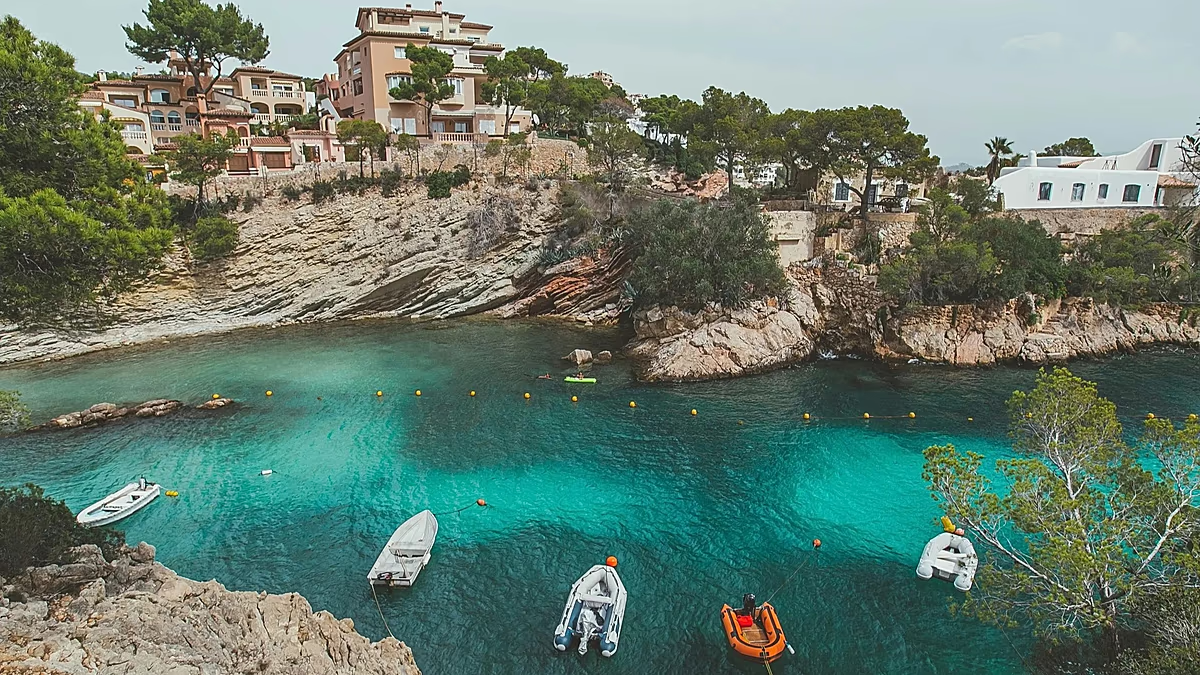
German travellers have long been known for their love of sun and sea, and the 2026 report confirms that this love affair with Spain remains as strong as ever. Their top ten most-booked destinations are led by Palma de Mallorca, Barcelona, and Istanbul, with Madrid in fourth place. London, Vienna, Paris, Lisbon, Athens, and Tirana complete the list. Palma de Mallorca has been a German favourite for decades, and it shows no signs of losing its charm. It is easy to understand why: the island offers crystal-clear water, beautiful coves, and a laid-back atmosphere that appeals to every kind of traveller. Istanbul’s position in the top three is also remarkable, reflecting a deep curiosity for a city where East meets West in the most dramatic and fascinating way. Turkish food, history, and hospitality have a universal appeal, and German travellers seem especially drawn to this cultural crossroads. Tirana’s appearance in the German top ten is another sign that Albania is no longer a hidden secret. It has become a destination in its own right, offering something fresh, exciting, and budget-friendly. For 2027, German travellers are already planning even more ambitious journeys. Their top booked destinations for next year include Bangkok, Palma de Mallorca, London, Barcelona, Gran Canaria, Rome, Vienna, Tenerife, Athens, and Lisbon. The inclusion of Bangkok at the very top of the list is particularly exciting. It suggests that the German desire for far-flung adventures is growing, and that travellers are willing to journey across continents for the sensory overload of Thailand’s bustling capital. Yet, even with this global spirit, the presence of Palma, Gran Canaria, and Tenerife in the top ten shows that the trusty Mediterranean favourites are never far from the German heart. There is something comforting in this pattern: no matter how far we wander, we always keep a special place for the places that made us fall in love with travel in the first place.
Paragraph 6: Perennial Favourites and the Future of Travel
As the report looks toward 2027, several cities remain “perennial favourites” among travellers from all countries. Rome, Barcelona, Paris, London, Madrid, Battery Park in New York, Bangkok, Rio de Janeiro, Amsterdam, and Sevilla all continue to inspire strong interest, with early bookings for 2027 showing a particular enthusiasm for European city breaks. The reasons for these bookings are as diverse as travellers themselves, but cultural immersion, food, and adventure are among the main motivations. People no longer want just to see a place; they want to taste it, walk its streets, understand its rhythms, and take home memories that feel personal and meaningful. Whether it is sharing tapas in Barcelona, watching sunset from the banks of the Seine, or getting lost in the vibrant markets of Bangkok, the most important part of travel is the feeling it gives us. The report’s CEO, Dana Dunne, captured this mood perfectly when he said, “People’s appetite for travel is as strong as ever, and we expect 2027 to be another big year based on the early signs.” These words are a reminder that travel is not just a luxury or a pastime; it is a fundamental human need. We need to see new places, meet new people, and return home with a sense of renewal. The data from 2026 shows that no matter what challenges the world faces, the desire to explore remains unstoppable. We may choose to fly across the globe or drive to a nearby town, we may book a bustling capital or a quiet island, but we will always find a way to move, to discover, and to grow. That is the enduring story of travel, and it is one that will continue to unfold in 2027 and beyond.