

Paragraph 1: A Conviction Shared at Joint Base Andrews
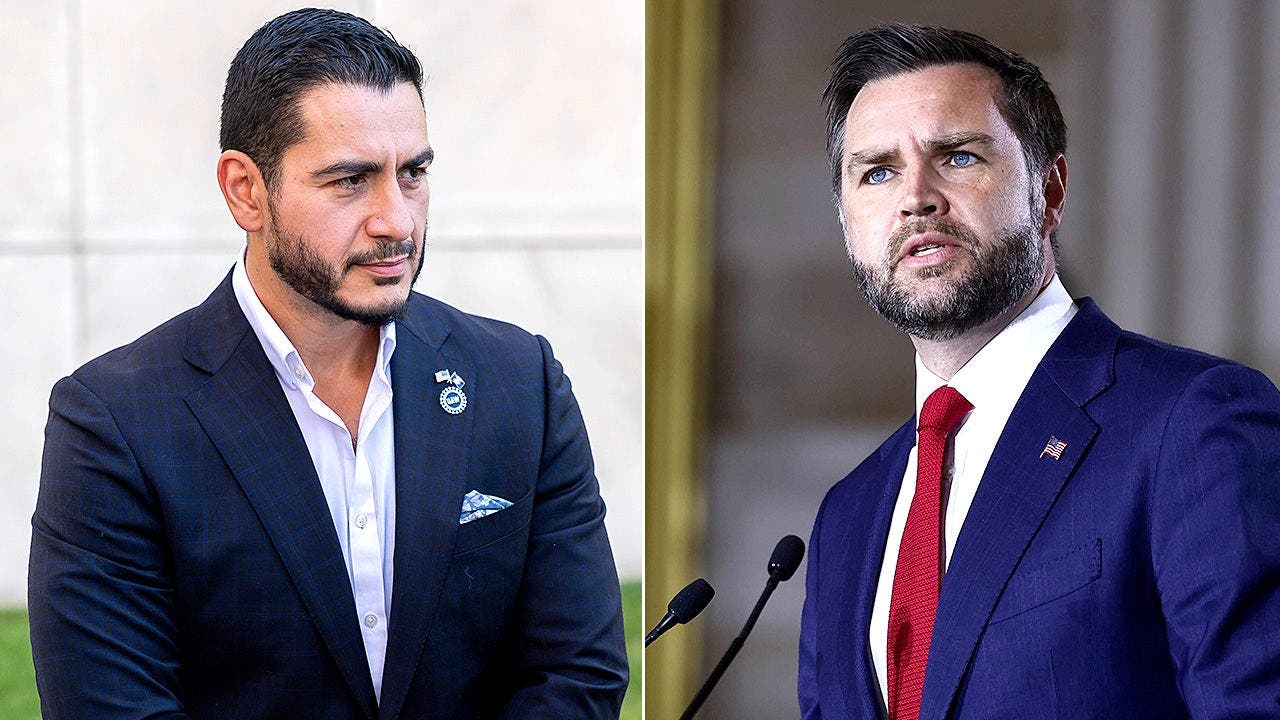
There is a particular kind of quiet intensity that settles over Joint Base Andrews in the final hours before an election, a mixture of exhausted adrenaline and guarded hope. It was there that Vice President JD Vance, fresh from a two-state rally blitz through Ohio and New York, took a moment to speak with reporters about a political earthquake unfolding far from the tarmac in Michigan. The subject was not an executive order or a foreign policy crisis, but a surprising and deeply personal endorsement that had rattled the Democratic Party to its core. Representative Haley Stevens, a Democrat from Michigan, had crossed party lines to endorse Republican Senate nominee Mike Rogers, and Vance did not mince words about what that meant. “I certainly think it helps,” he said, his voice carrying the weariness of a long campaign trail but also a note of genuine optimism. For Vance, the endorsement was more than a simple political transaction; it was a validation of a broader, more inclusive vision of American patriotism. He framed the race in stark but vivid terms, contrasting what he called a “reasonable Democrat” with the Democratic nominee, Abdul El-Sayed. “El-Sayed is a crazy person and Mike Rogers is a patriot,” Vance asserted, adding that Stevens’ decision gives “certain voters who wouldn’t normally vote for a Republican permission” to support Rogers. It was a human moment, too, because Vance spoke not as a party operative but as someone who seemed genuinely relieved that the message of national unity over partisan tribalism was breaking through. The vice president’s words painted a picture of a Michigan electorate weary of extremism and hungry for steady, principled leadership, a state where a Democratic congresswoman could look past party loyalty and see the greater good in a former FBI agent and Army officer. In that moment, the endorsement ceased to be a headline and became a story about conscience, about the courage to say “I don’t belong” in a campaign that had drifted too far into the ideological fringes. Vance’s emphasis on Rogers being a “good guy” felt less like campaign rhetoric and more like a quiet plea for decency in public life.
Paragraph 2: The Bombshell Endorsement and a Democratic Firestorm
To understand the magnitude of Stevens’ endorsement, one must rewind to the moment it happened. On Sunday, just days before voters would head to the polls, Stevens released a statement that landed like a grenade in the center of Michigan Democratic politics. It was not a polite, measured announcement; it was a blunt, almost defiant declaration of independence. “Hey Michigan, as you may have seen, our Democratic nominee for U.S. Senate, Abdul, said that I was no longer welcome in his campaign and that I should stay away,” Stevens said. “And he’s right, and that’s why I am endorsing Mike Rogers for the United States Senate today. I don’t belong in Abdul’s campaign.” The words were personal, sharp, and unsparing. They revealed a deepening rift within the party, one that had been simmering for weeks as El-Sayed’s campaign courted the far-left wing of the Democratic base. Stevens, by contrast, represented a more moderate, pragmatic strain of Midwestern politics, and she had grown increasingly uncomfortable with the direction El-Sayed’s movement was taking. Her defection sent shockwaves through the political landscape, triggering an immediate and vicious backlash from El-Sayed’s left-wing allies. Figures like Mamdani and Hasan Piker, along with a chorus of radical progressive voices, erupted in fury, accusing Stevens of betrayal, of aligning with evil, of abandoning the principles she had sworn to uphold. Yet, for all the anger, the endorsement also had an electrifying effect on the Rogers campaign, injecting a sense of momentum and moral authority into the final stretch. Meanwhile, the controversy paradoxically fueled El-Sayed’s fundraising operation, with his campaign setting a single-day fundraising record as small-dollar donors rushed to defend him against what they saw as an establishment coup. It was a chaotic, emotional, and deeply human spectacle, a reminder that political allegiances are not always fixed and that personal conviction can sometimes override party loyalty. For Stevens, the cost was high—she was losing friends, facing attacks, and stepping into the unknown—but she seemed to accept that cost willingly, believing that her conscience demanded nothing less.
Paragraph 3: The Candidates’ Final Arguments, Written in Their Own Words
As Election Day approached, both Abdul El-Sayed and Mike Rogers took to the pages of Fox News Digital to make their final, unfiltered cases to the people of Michigan. Their opinion pieces revealed two radically different visions for the state and for the country, and both were written with the urgency of men who knew the race could go either way. El-Sayed’s piece was rooted in the language of populist empathy, painting himself as a tireless advocate for the forgotten and the marginalized. “I’m running for Senate because no Michigander deserves to be left behind,” he wrote, noting that his campaign had held over 700 events in more than 120 cities. He spoke of sitting down with Michiganders from all walks of life, people who, in his telling, are “hurting from the Rogers-Trump agenda and are hungry for change.” It was a message designed to resonate with working-class voters, with union families, with those who felt that the economic recovery had not reached their neighborhoods. Rogers, however, met that narrative head-on with a devastating counterattack centered on El-Sayed’s associations. “As a former Army officer and FBI street agent, I would never have imagined that I would be running against someone who associates with terrorist sympathizers,” Rogers wrote, invoking his own distinguished career in service to the country. He pointed directly to El-Sayed’s connection to Hasan Piker, a far-left communist streamer and activist who had invited controversy wherever he went. Rogers alleged that Piker “openly proclaims, ‘America deserved 9/11,’” and that El-Sayed had taken donations from individuals linked to terrorist organizations. It was a blistering, deeply personal attack, and it shifted the conversation from policy platforms to questions of character and judgment. In a state with a proud military heritage and a significant veteran population, Rogers’ words carried weight. He was not just questioning El-Sayed’s politics; he was questioning his fitness to represent Michigan on the national stage, suggesting that a man who would surround himself with radical figures could not be trusted with the nation’s security.
Paragraph 4: The Shadow of Hasan Piker and the Money Trail
At the center of the controversy swirling around El-Sayed’s campaign stood Hasan Piker, a polarizing figure whose influence on the American left has grown enormously in recent years through his massive online following. Piker, a self-described communist sympathizer, had been a recurring thorn in the side of moderate Democrats, and his association with El-Sayed became a flashpoint that Stevens herself did not hesitate to exploit. In the wake of her endorsement of Rogers, Stevens publicly condemned Piker’s extremist views, echoing her earlier statement that he “should be condemned” for his rhetoric. The streamer had made headlines in May when, during a livestream, he directed investigators to Neville Roy Singham, a wealthy financier described as the target of subpoenas issued by the Treasury Department. Piker’s remarks were revealing, as he described Singham’s “operation” in the United States, which includes the openly Marxist ANSWER Coalition and the Party for Socialism and Liberation (PSL). “I think that ultimately the target is probably Singham and his operation from PSL to ANSWER Coalition to CodePink—like anything that he has ever financed,” Piker said, adding that Singham had been a “funding vehicle for a lot of political movements in the country.” A subsequent Fox News Digital investigation uncovered the staggering scale of Singham’s financial influence: $285 million pumped into six organizations, including $22.44 million to the People’s Forum, a hub for communist organizing in New York City; $1.33 million to CodePink; $68.7 million to Justice and Education Fund Inc., a nonprofit that funnels money to anonymous overseas projects; $1.098 million to BreakThrough BT Media; and $16.76 million to Tricontinental Ltd., a pro-communist think tank. The Party for Socialism and Liberation and the ANSWER Coalition share office space at the People’s Forum and share leadership with it, creating a tightly interwoven network of radical activism. For Rogers and his supporters, this was not a tangential issue but a stark warning about the forces behind El-Sayed’s campaign. They painted a picture of a nominee whose political operation was entangled with individuals who harbored deep hostility toward American values and whose money was flowing through shadowy channels. It was a complicated web, but in the final days of the race, it became a central theme, humanizing the stakes as a choice between a patriotic, clear-eyed vision of America and a murky alliance of extremist interests.
Paragraph 5: A Final Rally Blitz Across Ohio and New York
While the battle for Michigan raged, Vice President Vance was engaged in his own marathon effort to energize Republican voters in other critical states. After his remarks at Joint Base Andrews, he boarded a plane for a final whirlwind tour that took him through Ohio and New York, two states where the GOP was hoping to solidify gains in the midterm elections. At each stop, Vance was joined by a rotating cast of party heavyweights, including Department of Energy Secretary Chris Wright and Donald Trump Jr., drawing crowds of a couple of hundred supporters who gathered in airport hangars to hear a message of hope and urgency. The settings were raw, unglamorous, and deeply American—the hum of airplane engines mixing with the roar of applause, the cold concrete floors warmed by the presence of ordinary citizens who had come to be part of something larger than themselves. Vance advocated for a slate of candidates including Jon Husted, Vivek Ramaswamy, and Andrew Constantino, describing each as a champion of common-sense conservative values. His speeches were not just about policy, though; they were about emotion, about tapping into a sense of belonging and purpose. He spoke of the need to take back the country, not through anger, but through participation, urging everyone in attendance to get out to the polls for Tuesday’s midterm elections. There was a palpable energy in those hangars, a feeling that the momentum was building and that the long months of campaigning were finally on the verge of paying off. For Vance, the rallies were also a homecoming of sorts, a return to the Midwestern roots that had shaped his political worldview. He understood the people in front of him because he was one of them, and that authenticity came through in every word. It was a grueling schedule, but Vance seemed fueled by the crowds, drawing strength from their enthusiasm as he crisscrossed the country, delivering a final, impassioned plea to voters who held the future of the nation in their hands.
Paragraph 6: Michigan’s Crossroads and the Meaning of a Vote
As the sun began to set on Monday afternoon, both El-Sayed and Rogers held their own rallies in Michigan, each delivering a final message to a state that was clearly at a crossroads. The contrast between the two events could not have been starker. Rogers’ rally was filled with the energy of a campaign that had just been handed an unexpected gift in the form of Stevens’ endorsement, a sense that the tide was turning in his favor. El-Sayed’s gathering, meanwhile, was a defiant show of strength from a candidate who had weathered a storm of criticism and emerged with a record-breaking fundraising haul and a base that was more enthusiastic than ever. In the end, the race had become about more than just policy positions or party labels. It was about what kind of representation Michiganders wanted, and what kind of coalition could best serve the state’s future. Vance’s observation that Stevens’ endorsement would “certainly” help Rogers struck at the heart of this dynamic, suggesting that there is a space in American politics for cross-partisan collaboration when the alternative is too extreme. The endorsement gave voters who might ordinarily cast a ballot for a Democrat a compelling reason to reconsider, a permission slip to vote their conscience rather than their allegiance. For Rogers, it was a validation of his message that patriotism transcends party lines. For El-Sayed, it was a moment to prove that his movement could withstand the blows of the establishment and still emerge victorious. But beyond the strategies and the spin, the real story was about the people of Michigan, the working families, the veterans, the small business owners, the teachers, and the nurses who would walk into voting booths and make a deeply personal choice. They were weighing, as Americans have always weighed, the competing claims of tradition and change, of security and progress, of self-interest and the common good. Vance’s final words on the tarmac, his belief that Michiganders were seeing El-Sayed as a “crazy guy” not good for the state, were more than just a political attack; they were an appeal to that fundamental human desire for stability and sanity in a chaotic world. In the quiet hours before the polls opened, the only thing left was the hope that, whatever the outcome, the decision would be made by people who loved their country and wanted the best for their children. That, perhaps, was the most human lesson of all: that democracy is not a spectator sport, but a daily act of faith, and that every vote is a small, precious declaration of who we are and who we wish to become.