

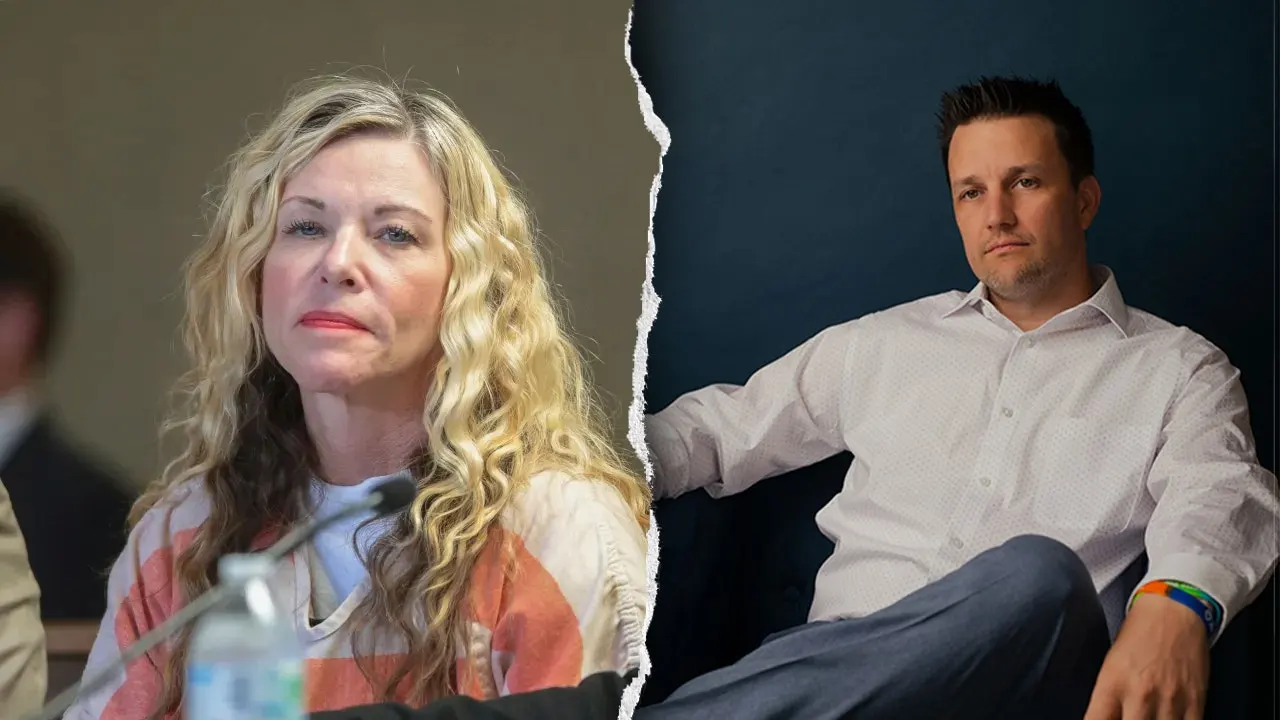
On the evening of October 2, 2019, Brandon Boudreaux pulled his Tesla into the driveway of his home in Gilbert, Arizona. It was an ordinary homecoming—one of those small, unremarkable routines that most people never think twice about. He had finished his work, driven through familiar streets, and turned into the neighborhood where his children were waiting. Then, in the span of a few seconds, everything changed. He noticed a parked Jeep Wrangler nearby, and the rear window began to lower. The detail struck him as odd, but he had no time to process it. A gunman inside the Jeep opened fire. The first shot missed his head by inches, slammed into the driver’s-side door, and sent glass exploding across the car. Boudreaux somehow escaped with his life, but the ambush was no random act of violence. It was an assassination, plotted by people he knew. Investigators soon identified the suspected shooter as Alex Cox, the brother of Lori Vallow Daybell. Prosecutors would later argue that Lori herself had recruited Cox to kill Boudreaux because he was in the middle of a bitter divorce from her niece, Melani Pawlowski. The custody battle over his children had turned him into a target. In that moment, with the window shattered and his ears ringing, Boudreaux could not have imagined that the shooting would lead him into the dark heart of one of America’s most disturbing criminal cases—a case involving missing children, apocalyptic beliefs, and a woman who became known as the “cult mom.” For Boudreaux, home no longer felt safe. Every shadow carried a threat. He had to think about his children, about whether the next attack would come when they were nearby. The physical danger was real, but the psychological toll was only just beginning.
The roots of the shooting were tangled in a divorce that had gradually become a nightmare of religious fanaticism. Boudreaux and Melani Pawlowski filed for divorce in July 2019, just months before the ambush. The marriage had collapsed as Pawlowski drew closer to her aunt, Lori Vallow Daybell, and embraced a supernatural worldview that divided the world into spirits and demons. What had once been a family relationship became something unrecognizable. According to a 2020 custody filing in Maricopa County Superior Court, Pawlowski’s second husband, Ian, wrote that she believed a “dark entity” or demon had possessed Boudreaux. The same filing recounted a disturbing statement allegedly made by Chad Daybell, the self-described religious figure who was then Lori’s husband: something had to happen to Boudreaux to advance his spirit and the Lord’s plan. For Boudreaux, those words were not abstract theology. They were a threat that explained the bullet fired at his head. The people closest to him had come to believe that his death would be a spiritual service. The custody fight, which should have been about the welfare of children, turned into a survival battle. Boudreaux later testified at Lori’s Idaho murder trial that his marriage to Pawlowski unraveled as she grew closer to Vallow. He spoke about the painful reality that the mother of his children no longer saw him as a flawed but loving father. She saw an obstacle, perhaps even a demon, standing in the way of a divine plan. That belief made him expendable. It is hard to imagine a more complete betrayal: the woman he had married, and the family she had chosen over him, were willing to erase him from the world. Pawlowski herself has never been charged in connection with the shooting, but the evidence presented in court suggested that the attack was inseparable from the religious war raging inside her family.
The aftermath of the shooting moved with agonizing slowness. Police identified Alex Cox as the suspected gunman almost immediately, but Cox died in December 2019. No charge would ever be brought against him. He was gone, and the full extent of his role—along with everyone who may have encouraged him—would have to be established without his testimony. For Boudreaux, that meant living with uncertainty. Was the threat over? Had someone else been involved? The answers would only come through the prosecution of Lori Vallow Daybell, and those prosecutions were unlike anything seen in recent memory. In June 2025, an Arizona jury convicted Lori of conspiring to kill Boudreaux. The verdict arrived two months after another Arizona jury found her guilty of conspiring to murder her estranged husband, Charles Vallow, who was shot and killed by Cox in July 2019. Those convictions came after Lori’s 2023 Idaho trial, a case that horrified the country. Jurors found her guilty of murdering her two children, sixteen-year-old Tylee Ryan and seven-year-old Joshua “JJ” Vallow. They also convicted her of conspiring to kill Tammy Daybell, the former wife of Chad Daybell, and of grand theft for continuing to collect the children’s Social Security benefits after their deaths. For Boudreaux, sitting through these trials meant reliving his own trauma while absorbing an even larger horror. The woman who had orchestrated the attack on him was not just a bitter adversary in a divorce. She was someone who had killed her own children to keep them from standing in the way of a twisted new life. The verdicts were a kind of justice, but they also raised an impossible question: how could anyone have become so lost? Boudreaux did not expect the verdicts to erase the past. He simply needed to know that the truth had been told and that the people responsible for his children’s suffering could no longer hide behind religious claims.
Long before the verdicts, Boudreaux had begun trying to make sense of the unthinkable. He wrote a book with that title, “Unthinkable,” but at first he never expected to publish it. The manuscript was a private letter to his four children, a way to tell them the full story of what had happened and why their father made the choices he did. He knew he was not perfect. He admitted, “I’m sure I made some mistakes.” What he wanted was to be understood. He wanted his children to know that the shooting, the divorce, and the years of legal drama were not just headlines; they were events that tore through their family and left wounds that he had tried, sometimes imperfectly, to protect them from. He also wanted them to understand the source of his resilience: his faith. But he was careful not to turn that faith into pressure. He gave his children the freedom to choose their own spiritual paths. “I want them to understand their dad,” he said, “and maybe in understanding their dad and why he made the choices he did, maybe they’ll understand themselves better.” The book might have stayed a private family document if he had not shown it to trusted friends and loved ones. Over and over, they encouraged him to share it. “They all encouraged me,” he recalled. “They said they thought it was good enough and there was enough in there that people would be interested in.” Still, Boudreaux did not rush into the public eye. He deliberately waited until the criminal process had moved forward. He had testified in court and knew that a defense attorney would question every detail. “I needed to go on the stand with a defense attorney,” he said. “I just felt more comfortable waiting and making sure that I let that process go first.” Now that the major trials are behind him, he believes the time is right. “Unthinkable” is his attempt to turn a painful past into a meaningful message.
Even after the verdicts, Boudreaux’s life remains shaped by the attack. He remarried in 2020, finding love and stability again, but the emotional scars from the divorce and the shooting are not the kind of wounds that heal cleanly. He described struggling with trust long after the physical danger had passed. Having been shot at, and having believed for months that the people behind the shooting might still be looking for him, he found it difficult to let anyone get close. “You’re just naturally gonna have some trust issues,” he admitted. The hypervigilance did not go away overnight. A car idling on the street, a stranger standing too close, an unexpected noise—all of these could send him back to the moment in his driveway when the rear window of a Jeep slid open. The public attention that came with being connected to Lori Vallow Daybell’s story added another layer of strain. Boudreaux did not seek fame, and he admitted that the visibility was uncomfortable at times. But he also found kindness in unexpected places. Most people who recognized him treated him with respect, and he learned to accept that his name would always be associated with the case. He remains careful, however, not to interfere with the work of law enforcement. When asked about the active investigation into the 2019 shooting, he declined to discuss specifics. “I encourage them to continue the investigation,” he said. “I really don’t want to talk about the investigation. I want to leave that up to them.” The Gilbert Police Department has confirmed that the investigation remains open, meaning that even after the convictions, loose ends may still exist. For Boudreaux, the unresolved pieces are a reminder that he cannot completely close the door on that chapter. He can only keep living.
At its core, “Unthinkable” is not simply a true crime story. It is a story about human resilience and the quiet power of choosing how to respond to suffering. Boudreaux hopes that readers will close the book with a sense of purpose. “I hope that everybody has value and everybody can help someone else,” he said. That belief is remarkable given what he has endured. A bullet nearly ended his life. A divorce tore apart his family. The legal process forced him to relive the worst moments in front of juries and cameras. Yet he has emerged not with bitterness, but with a desire to help others facing their own unthinkable circumstances. “Just because something hard happens in your life doesn’t mean that you have to respond a certain way,” he said. These words carry the weight of experience. They are not a simple platitude; they are a hard-won philosophy. Boudreaux could have chosen to live in fear, to isolate himself, or to let anger define him. Instead, he rebuilt his life. He remarried, he wrote a book, and he spoke honestly about his mistakes and his faith. He gave his children permission to ask hard questions and to find their own answers. He allowed the legal system to do its work, even when it was slow and painful. And he trusted that sharing his story might help someone else feel less alone. The title “Unthinkable” captures the horror of what happened, but Boudreaux’s life after the shooting demonstrates something just as powerful: even the unthinkable can be survived. The past cannot be rewritten, but it does not have to be the final word. For Brandon Boudreaux, the final word is not a bullet or a courtroom verdict. It is a life still being lived, a family still being loved, and a message that every person, no matter how broken, still has value.