



Tokenized Copper Hits the Market: A New Digital Bridge to Physical Metal
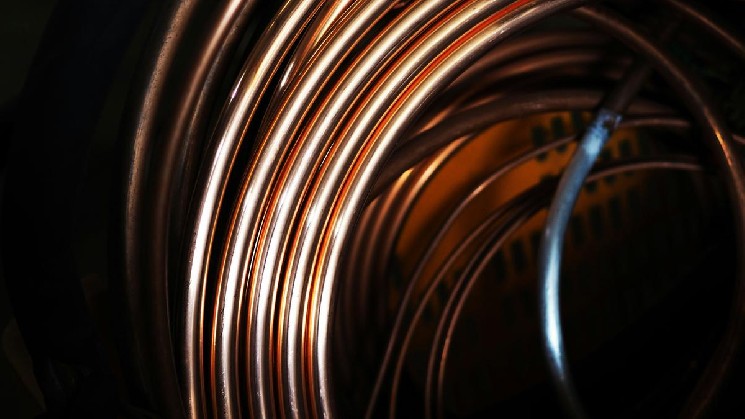
The newest addition to the world of blockchain-based commodities is a token with an unmistakably industrial heart. Known as xCu, the digital asset represents actual refined copper stored in Hamburg, Germany — not a futures contract, not a mining stock, and not a claim on ore that remains buried underground. “An xCu holder owns a portion of branded copper cathodes located in Hamburg, Germany,” said Elvidge, a representative of the platform behind the product. “This is real, physical, refined copper, not unmined copper or concentrate still in the ground.” That distinction matters more than it might seem. For years, the commodity sector has been defined by paper-based trading, where barrels of oil, bushels of wheat, and tons of metal change hands without anyone physically touching them. But the rise of real-world asset tokenization is beginning to change that equation, and copper is emerging as one of the most intriguing test cases. By turning a warehouse load of refined copper into a registered digital token, the project connects one of the oldest industries in the world to one of the newest financial technologies, giving investors a way to hold a piece of a physical industrial metal with the ease of moving a digital asset.
The mechanics behind xCu are designed to address the questions that often come up whenever digital assets are linked to tangible goods. Holders of the token can redeem their holdings for physical copper, but the process is not quite as simple as clicking a button. Investors need to have a suitable storage account in place, and they must pass identity verification and anti-money laundering checks before taking delivery. The physical weight of the metal also introduces a practical constraint: each sheet of refined copper weighs approximately 125 kilograms, which means that is the minimum amount an investor can choose to redeem. That threshold reflects the reality of industrial copper markets, where cathodes are produced and traded in large, standardized units rather than in small retail-friendly quantities. For smaller investors, the xCu token offers exposure to the metal through digital ownership, while the physical redemption process is available to those who can manage the logistics of industrial-scale storage. Behind the scenes, Archax, a regulated digital asset platform based in the United Kingdom with a presence in the United States, the European Union, and the United Arab Emirates, plays a central role as trustee. The platform is responsible for verifying that the copper held in Hamburg matches the circulating token supply, ensuring that every xCu token is backed by real inventory rather than by an IOU.
This launch is not Archax’s first venture into tokenized materials. The company already has five other tokenized metals trading on its platform, and together they offer a snapshot of how institutional and sophisticated retail interest in this sector is evolving. Uranium currently leads the pack, with a market capitalization of roughly $9.2 million, followed by gold at approximately $4.1 million. But copper, despite being a newcomers, has already made an impression. According to the company, the initial market value of its tokenized copper exceeds the combined value of its nickel, cobalt, and rare-earth products. That early momentum suggests that investors see copper as more than just another industrial metal. With its central role in construction, electronics, renewable energy systems, and electric vehicle manufacturing, copper has become a bellwether for the global transition toward lower-carbon infrastructure. Tokenized copper allows investors to gain exposure to that demand without the complexities of purchasing and storing physical metal on their own, and the market appears to be responding accordingly.
Of course, tokenized metals are not a brand-new concept. Tether’s XAUT and Paxos’ PAXG have long offered tokens backed by physical gold, and those products have carved out a recognizable niche in the crypto economy. Gold, however, has a long history as a store of value, and its size and liquidity make it a natural fit for tokenization. Copper is a different story. It is an industrial input, not a monetary metal, and its market has traditionally been dominated by futures exchanges, physical traders, and large-scale manufacturers. The launch of xCu is therefore a test of whether tokenization can expand beyond precious metals into commodities that power the real economy. It also stands in sharp contrast to other high-profile tokenization projects in the mining sector. Bridgetower’s $11 billion Arizona copper-gold tokenization project, for example, has drawn attention for its scale, but it involves mineral resources that have yet to be extracted. In that model, the underlying value depends on future mining output, development timelines, and a host of operational risks. The xCu model takes a more conservative approach: the copper already exists, it has already been refined, and it is already sitting in a warehouse. That distinction may appeal to investors who want exposure to hard assets without the uncertainty of resource development.
Why copper, though? The answer lies in a combination of market fundamentals and technological opportunity. Copper is one of the most widely used metals in the world, and clean energy transitions are expected to dramatically increase demand for it in the coming decades. Electric vehicles require significantly more copper than conventional cars, and wind turbines, solar arrays, energy storage systems, and power grids all depend on copper wiring and components. This long-term demand outlook has made copper an attractive asset for investors seeking to position themselves for the energy transition. But the barriers to entry in physical copper markets have historically been high. Futures require brokerage accounts and contract rollovers, mining equities come with company-specific risks, and physically holding copper means dealing with storage, insurance, and logistics. Tokenized copper seeks to bridge that gap by offering digital ownership of a tracked, verified quantity of metal. It is not a perfect substitute for a copper futures contract or an ETF, but it does offer a fundamentally different kind of exposure—one that is grounded in a specific, identifiable asset. For investors who value transparency and simplicity, that can be a significant advantage. At the same time, the success of such products depends heavily on trust, which is why the presence of a regulated trustee and rigorous verification protocols is so important.
Looking ahead, the launch of xCu could be an early sign of a broader shift in how commodities are bought, sold, and held. The tokenization of real-world assets has been one of the most talked-about themes in digital finance, and copper represents a particularly compelling use case because it is standardized, widely traded, and central to the modern economy. The road, however, is not without challenges. Copper’s relatively small tokenized market remains niche compared to the enormous scale of the global physical copper trade. Regulatory frameworks are still evolving, and the infrastructure for buying, holding, and redeeming tokenized industrial metals is far from universal. But the early data points are encouraging. Archax’s decision to add xCu to its lineup of tokenized metals signals that the company sees a sustainable long-term market for this type of product, and the strong early interest in copper suggests that investors are looking for new ways to access industrial assets. Whether tokenized copper becomes a mainstream investment vehicle or remains a specialized tool for particular markets, one thing seems clear: the idea of owning a piece of a physical metal through a digital token is no longer theoretical. From a warehouse in Hamburg to a digital wallet anywhere in the world, the bridge between the physical and the digital is being built one token at a time. And as Elvidge put it, the metal is real. That, in the end, is the point.