


On a gray Thursday morning in the Bronx, a fifteen-year-old boy named Javits Frimpong left his home and headed toward school, carrying the ordinary hopes of a teenager who had only recently arrived in America. He had come from Ghana about a year earlier to live with his father and begin a new life, and like so many immigrant children, he carried with him the dreams of a family that had sacrificed everything for a chance. But that morning, before nine-thirty, a bullet struck him in the abdomen. The street, which should have been filled with the sounds of students hurrying to class, became a scene of chaos and sirens. Javits was rushed to a hospital, but the wound was too severe. He was pronounced dead, leaving a father in New York, a mother thousands of miles away in Ghana, and an entire city struggling to understand how a child could be killed on his way to school. In the days that followed, grief moved across oceans, and an unexpected moment of political cooperation emerged when New York City Mayor Zohran Mamdani announced that President Donald Trump had agreed to grant a visa to Javits’s mother so she could travel to the United States to say goodbye to her son in person. The mayor’s words were simple but heavy with empathy: “The murder of a child is a pain no parent should have to endure, let alone from thousands of miles away. Javits Frimpong’s mother deserves to say goodbye to her son in person. I just got off the phone with President Trump and he has agreed to grant her visa immediately.”
The shooting itself remains shrouded in the kind of senselessness that leaves communities searching for answers. Police say Javits was walking to school in a Bronx neighborhood shortly before 9:30 a.m. when he was shot in the abdomen. There were no immediate arrests, and the investigation is ongoing. The lack of answers only deepens the wound for those who knew him and for a neighborhood already weary of gun violence. Every morning, children in the Bronx walk the same streets, past the same corners, carrying backpacks and dreams. Javits was one of them. He was not a name in a statistic; he was a teenager with a quiet personality, a son who had crossed an ocean to be with his father, a young man with a future that stretched out before him. His death has shaken the borough, prompting elected officials, community leaders, and ordinary residents to speak out with a mixture of sorrow and anger. U.S. Representative Ritchie Torres, a Democrat who represents the Bronx, expressed the collective grief when he said, “Our entire borough is mourning a young man who should have had his whole future ahead of him. Every child in the Bronx deserves to walk to school without fearing for their life, and no parent should ever have to endure what Javits’s father, Thomas, is enduring now.” Those words resonate not only because they come from a public official, but because they capture the fundamental violation of safety that occurs when a child is killed in broad daylight on the way to school.
To understand the depth of this tragedy, one must understand the story of Javits’s family. He arrived in the Bronx from Ghana about a year ago, leaving behind his mother and the only world he had known, to stay with his father and begin a new life in the United States. It was the kind of decision that immigrant families make every day, a mixture of hope and sacrifice, believing that the journey will lead to better opportunities. Thomas Frimpong described his son as a quiet teenager, the kind of boy who did not cause trouble, who went to school, who listened to his father. But in the days before the shooting, Thomas learned something that troubled him. It was the school principal who told him that Javits was being bullied. Two other students had been bothering him, and the principal had suspended them. Thomas called his son to check on him, to make sure he was all right. “My son is at school. He’s innocent, so I call him. I talk with my son, he said ‘dad, I’m okay.’” Those were among the last words they shared. A father’s instinct to protect his child, a son’s reassurance that everything was fine, and then a phone call that would change everything. The image of that conversation is heartbreaking in its ordinariness. A father trying to be present from a distance, a son who did not want to worry him, and a promise of safety that was broken within days. Now Thomas is left to navigate a grief that no parent should ever know, while his son’s mother, Doris Adu Gyamfi, remains in Ghana, desperate to see her child one last time.
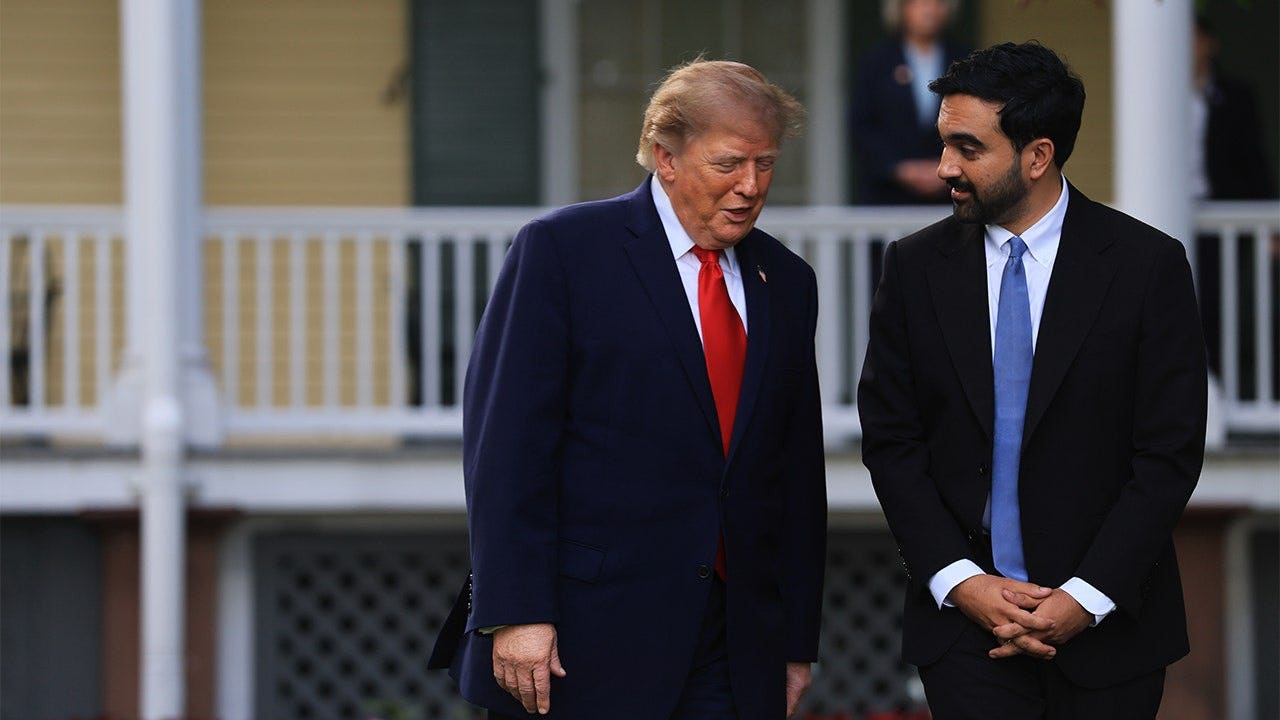
The response to this tragedy has transcended the usual boundaries of politics, at least for a moment. Mayor Mamdani, a progressive Democrat who has often clashed with President Trump, made a direct appeal on behalf of a grieving mother, and Trump agreed to grant the visa. The phone call between the mayor and the president, announced on X, was a reminder that even in a deeply polarized time, there are moments when humanity breaks through. The White House did not immediately comment, but the mayor’s announcement was enough to offer a glimmer of hope to a family in mourning. Ghanaian Foreign Minister Samuel Okudzeto Ablakwa also weighed in, saying that Ghanaian officials in New York were coordinating with local authorities and that the foreign ministry would work tirelessly with U.S. authorities to ensure justice is secured. He welcomed Mamdani’s intervention and Trump’s “timely decision” to grant the visa. Perhaps most movingly, he acknowledged the mother’s unimaginable pain and said that everything must be done to ensure she is present to pay her respects. The Ghanaian government, he added, would take care of the full cost of her travels and stood ready to contribute toward a dignified funeral. In the midst of tragedy, there is something profoundly human about this cooperation: a mayor picking up the phone, a president saying yes, a foreign government offering to pay for a mother’s journey, all because a boy died too young and a mother deserved to say goodbye.
But the larger story is not only about one family’s grief; it is about the epidemic of gun violence that continues to claim young lives in American cities. Javits’s death is part of a painful pattern that has repeated itself too many times in the Bronx and across the nation. Children are shot while walking to school, while playing outside, while sitting in their own homes. The statistics blur together, but each name represents a unique human being with a family, a story, and a future that was stolen. The community’s response to Javits’s killing has been marked by both sorrow and resolve. There is a recognition that no child should have to fear for their life on the way to school, and no parent should have to receive the call that Thomas Frimpong received. There is also a determination to demand answers, to hold whoever is responsible accountable, and to address the conditions that allow violence to flourish. Representative Torres’s words echo that determination: “Every child in the Bronx deserves to walk to school without fearing for their life.” It is a simple statement, but it speaks to a fundamental right that should be guaranteed in any society. The investigation into Javits’s death is ongoing, and no arrests have been made. His family, his community, and the authorities are all waiting for justice, knowing that no outcome can bring him back, but hoping that accountability can provide some measure of closure and perhaps prevent another family from suffering the same loss.
As the world waits for Javits’s mother to arrive, there is a sense that her journey will be both a farewell and a reckoning. She will travel from Ghana to New York, not to celebrate a reunion, but to stand over the body of her son and say the goodbyes that were denied to her by distance and circumstance. The Ghanaian government’s offer to cover the cost of her travel and contribute to a dignified funeral is a testament to the bonds of community and the shared recognition that no mother should face such a loss alone. Mayor Mamdani’s intervention, President Trump’s decision, and the outpouring of support from elected officials and ordinary citizens all reflect a simple truth: that grief has the power to unite even those who disagree. Javits Frimpong was a fifteen-year-old boy from Ghana who came to America seeking a better life. He was quiet, he was innocent, and he was loved. His death has left a hole in the hearts of his father, his mother, and all who knew him. But even in the midst of this darkness, there are moments of grace: a father’s last phone call with his son, a mayor’s phone call to a president, a foreign minister’s promise of support, and a mother’s determination to be with her child one final time. The hope is that her arrival will bring some comfort, that the funeral will be dignified, and that justice will be done. But the deeper hope is that Javits’s death will not be in vain, that it will remind a city and a nation of the cost of gun violence, and that one day, every child will be able to walk to school without fear. Until then, all of New York City mourns, and a mother prepares to say goodbye to the son she will never see grow up.