




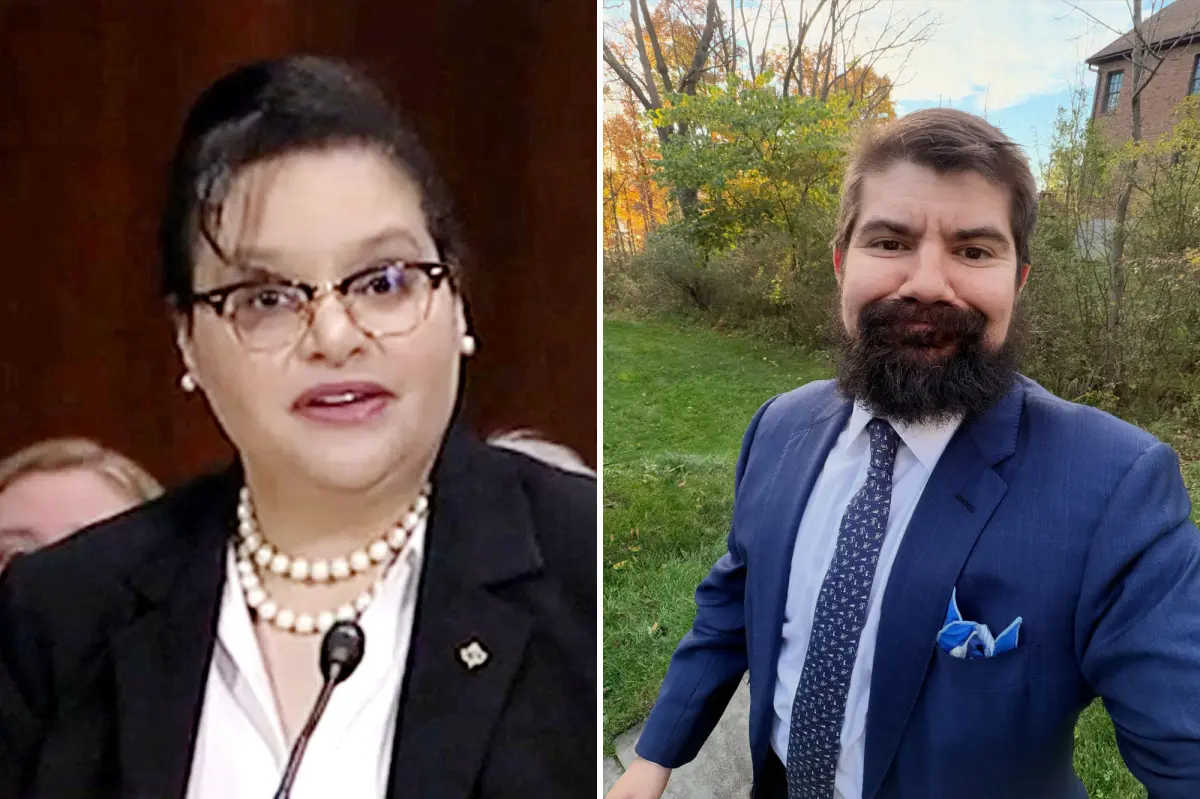
On the surface, a federal courtroom is a place of order—where a robe, a gavel, and the prestige of a lifetime appointment turn ordinary women and men into arbiters of justice. But the robes are worn by human beings, and the gavel is held by a hand that can tremble. When Judge Ada Brown, a federal district judge sitting in Dallas, faced attorney Ezra Young in April, the dignity of that chamber gave way to something far more personal and painful. Brown, who is Black and of Native American descent, had summoned Young to explain sealed documents found on his personal website, months after she barred him from litigating in her courtroom. The encounter quickly descended into a series of racially charged accusations. She accused Young, a Columbia Law School graduate now representing a Black law professor suing Southern Methodist University, of mistreating Black attorneys. She told him he seemed “intimidated … with black excellence, in light of your white mediocrity.” She questioned whether he looked white, pressed him about being “White-presenting,” and called him the “white savior” there to rescue “all the stupid black lawyers in Texas” from New York. The public release of those comments triggered a misconduct complaint, a federal investigation, and ultimately an order for Brown to undergo psychiatric evaluation. The Judicial Council of the Fifth Circuit had begun investigating on August 11 after Young filed his complaint. By October, Brown was temporarily suspended from overseeing cases and facing a requirement to submit to an independent psychiatric exam. None of this happened quickly; the wheels of judicial discipline are deliberately cautious, but the paper trail left behind tells a story of a judge unraveling in real time. This is not simply a legal dispute about judicial misconduct; it is a human story about how race, identity, power, and mental health can collide inside a profession that insists on impartiality. It is a story about what happens when someone tasked with deciding the fate of others loses her footing, and about the slow, difficult machinery of accountability trying to catch her fall.
To understand how a routine hearing turned into a national scandal, one has to look at the exchange between the judge and the lawyer. Young, whose family roots are in Mexico, had taken his wife’s last name, and his appearance did not fit Brown’s assumptions. When she told him he looked like a White man, he revealed he was Latino. Brown then asked, “Well, you are White-presenting; is that fair to say?” Young replied, “I’m fair-skinned, Your Honor, yes.” He later declined an interview with the Post, but made clear he is of Mexican heritage and was representing a Black law professor in a discrimination lawsuit against Southern Methodist University. The exchange laid bare a deep misunderstanding, and more than that, a judicial officer imposing her own racial frame on an attorney appearing before her. Brown went on to accuse Young of using honorifics for white lawyers but first names for Black ones, and of carrying himself as a “white savior” who came from New York to rescue inferior Texas lawyers. She framed her own comments as candid conversations about race, but the transcript shows a judge with extraordinary power lecturing a lawyer about his perceived racial identity, his failures, and his place. For Young, a civil rights attorney, the moment was not only humiliating; it threatened the integrity of the proceedings and revealed, in his view, a judge unable to separate her personal biases from her judicial duties. The fact that she had already barred him from her courtroom made the summons all the more chilling. He had no expectation of a fair hearing. Instead, he received a litany of accusations that appeared rooted in his skin tone, his surname, his client, and his origin. The transcript, later posted by Bloomberg Law, gave the public an uncomfortable window into how race and identity can contaminate even the most formal settings. And it raised a question that would echo through the ensuing investigation: was this simply bad behavior, or was something deeper and more troubling beneath it? Young clearly believed the latter when he filed his complaint and explicitly raised concerns about Brown’s mental health.
When Young filed his misconduct complaint on May 14, he did more than list the offensive words Brown had used. He suggested that Brown’s behavior raised questions about her mental health. The accusation was serious, but so were the facts: a sitting judge summoning a lawyer she had already banned, then interrogating him about his race and declaring herself a kind of truth-teller about Black lawyers. Brown responded on July 28 with a 76-page letter in which she denied having a mental illness. She admitted the discussion with Young “might have been handled more delicately,” and she offered an apology for any offense. But she also defended her demeanor, writing, “I do not believe my demeanor was inappropriate at any time, especially during the candid conversations about race.” More strikingly, she turned the investigation back on Young, accusing him of showing “concerning behavior towards black lawyers, and women that he does not exhibit to white men.” In other words, Brown refused to accept the narrative that her racial comments were evidence of bias or instability. Instead, she constructed a counter-narrative in which she was the guardian of Black professional dignity and Young was the interloper, a fair-skinned attorney who condescended to Black lawyers and women. That response placed the Judicial Council in an impossible position: how do you evaluate a judge who sees herself as honest about race but whose words, recorded in a transcript, suggest a troubling disconnect from reality? The committee had to weigh Brown’s self-assessment against the unmistakable harm she had caused, not just to Young, but to public confidence in the courts. Brown’s letter was apologetic in tone, yet defiant in substance, a combination that made the investigation more difficult and more necessary. It also showed a woman who seemed genuinely convinced of her own righteousness, even as her career was beginning to unravel. Perhaps that is the most painful part of the story: she appeared to believe that she was fighting racism, while many of her words sounded exactly like the kind of racial stereotyping she would have condemned in others.
The machinery of judicial discipline moves slowly and quietly, but it did move. Chief Circuit Judge Jennifer Walker Elrod appointed a special committee of three judges to investigate. On September 10, the committee notified Brown that she was expected to meet with them on September 21. What followed was an erratic sequence that underscored the seriousness of the committee’s concerns. Brown told the court twice that she would resign, then changed her mind and remained in office. She did not appear for the September 21 meeting. On that same day, the committee ordered her to undergo an independent psychiatric evaluation within 30 days. She was given seven days to state in writing whether she would comply. She did not respond. For a federal judge, a lifetime appointee with one of the most protected jobs in the country, the order was extraordinary. No judge wants to hear that her mind is in question; no judge wants to be examined like a patient. But Brown had stopped engaging with the disciplinary process altogether, and the committee had no choice but to document her noncompliance. The court document released on October 19 revealed the order for evaluation and the deadline for confirmation. In that document, dated October 1, Walker Elrod concluded that there was a “reasonable basis” to believe Brown’s mental condition was interfering with her ability to perform her duties. The language was careful, clinical, and devastating. It did not declare Brown insane or mentally ill. It simply said that something was wrong—something serious enough that she could not reliably do her job. For anyone who has watched a once-capable professional descend into denial, withdrawal, or a distorted sense of reality, the pattern is hauntingly familiar. Brown was not only refusing to cooperate with an investigation; she seemed unable to see herself as others saw her. The judge who had demanded that Young answer for his behavior was now refusing to answer for hers, and the people tasked with holding her accountable could only watch as she disappeared further into her own resistance.
The committee’s investigation also uncovered signs that Brown’s struggles were not limited to a single case. Since June 1, she had recused herself from more than 40 cases. For a judge in Dallas, that is not a modest workload; it is an abdication. She had essentially stopped presiding over the very people who depend on the courts for justice. The committee wrote that she had “abandoned her post as a federal judge” and had failed to answer questions about when, if ever, she intended to return. On Friday morning, she failed to appear before the committee for an interview, adding yet another layer of defiance to a growing pile. It is worth pausing to consider what abandonment means in human terms. Every recusal is a case pushed to another judge, a trial delayed, a family waiting for an answer, a defendant hoping for resolution. More than 40 times, Brown stepped away, perhaps because she felt she could not be impartial, perhaps because she was overwhelmed, perhaps because she was dealing with something she could not name. The exact reason matters less than the pattern: a federal judge, insulated from removal, was effectively disappearing from the bench while still holding her title and salary. The committee’s language—“abandoned her post”—sounds like a military accusation, but it also sounds like a plea. In a democracy, the judiciary is the last refuge for the powerless. When a judge stops showing up, the promise of justice collapses into a waiting room without a doctor. Brown’s failure to appear for the Friday interview suggested she was not merely entangled in procedure; she was absent, perhaps emotionally and psychologically, as much as physically. The Fifth Circuit’s investigation remained ongoing, but the evidence before the committee was already enough for extraordinary measures. The order for a psychiatric exam was not a punishment; it was an intervention, a way of forcing a person in crisis to confront the possibility that she is not the reliable narrator of her own life.
This case is about one judge, but it resonates far beyond a single courthouse. It reminds us that judges are not robes and gavels; they are human beings with histories, identities, wounds, and mental health struggles. Brown is a Black woman of Native American descent who rose to one of the most powerful positions in the legal system, only to find herself accusing a Latino lawyer of suffering from “white mediocrity.” The irony is hard to ignore: a woman who had faced barriers and prejudice herself, using race as a weapon against someone who appeared white but was not. It is also a story about gender, power, and the difficulty of admitting vulnerability. Brown insisted she did not have a mental illness, and maybe she was right. But the committee’s decision to order an evaluation was not made lightly. It was an attempt to protect the public, to protect litigants, and perhaps to protect Brown from herself. There is a temptation to dismiss this as a scandal, to laugh at a judge who called herself “black excellence” while disparaging a Latino lawyer as a white man. But beneath the absurdity is a profound sadness. A capable lawyer, a devoted judge, a public servant—someone who, by all accounts, had spent years in the legal profession—had become so isolated in her own worldview that she could no longer see the injury she was causing. She stopped showing up, stopped responding, stopped fighting. In a society that often treats mental health as weakness and judges as above human frailty, Brown’s downfall is a cautionary tale. It also shows the power of accountability: a lawyer did not stay silent, a judicial council did not look away, and the system, fragile as it is, moved to intervene. Whether Brown gets help remains uncertain. But her story, in its messy, uncomfortable entirety, is a reminder that justice cannot thrive when the people who administer it are not well. It is a demand for compassion, transparency, and the courage to say when something is wrong. And it is a testament to the quiet, persistent hope that even in the darkest moments, the law can still find a way to bring a person back to herself.