


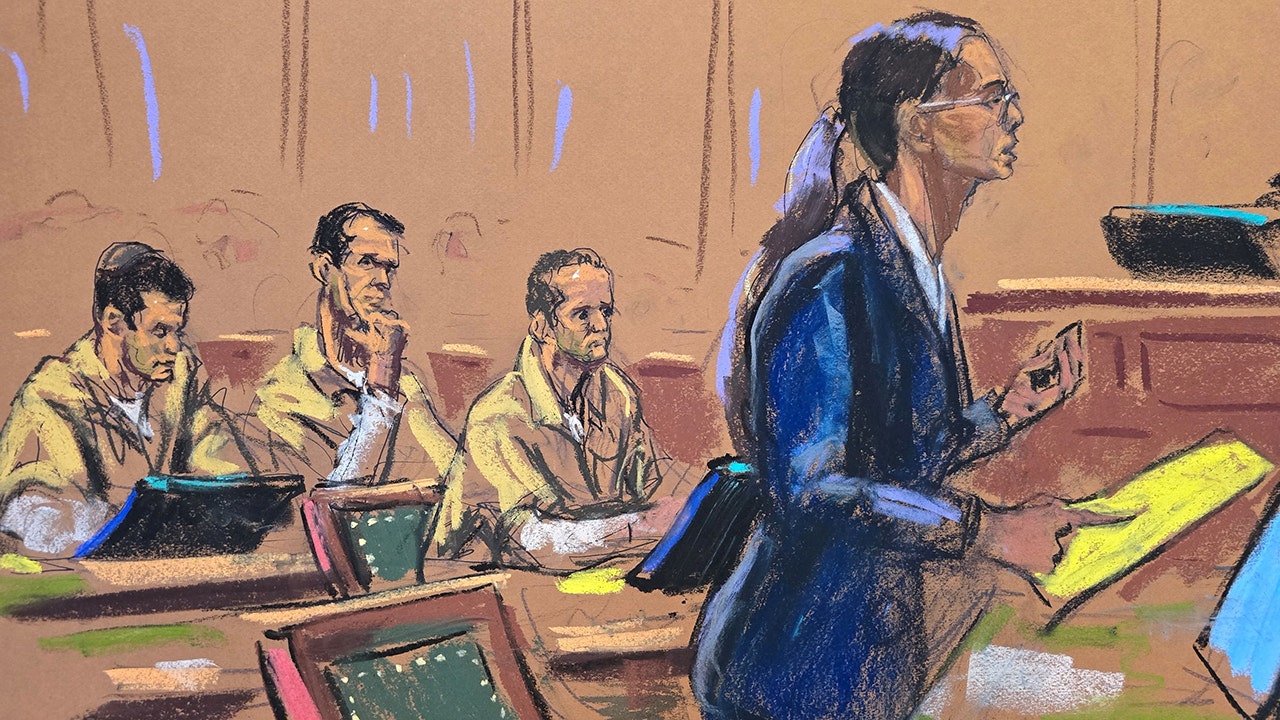
Behind the gleaming facade of private jets, superyachts, sprawling mansions, and the intoxicating promise of access to the rich and powerful, there was a darker machinery at work. That is the central argument made by attorney Michael J. Willemin, who represents three women pursuing civil claims against Alon, Oren, and Tal Alexander, the three brothers convicted in a sprawling federal sex-trafficking case. On Tuesday in New York, each was sentenced to 30 years in federal prison for a yearslong scheme that prosecutors said relied as much on the brothers’ wealth and social standing as on the drugs and alcohol they allegedly used to incapacitate their victims. But for Willemin, and for the women he represents, the sentence is hardly the end of the story. It is, in many ways, the beginning of a longer reckoning—one where the very trappings of wealth and status that allowed the brothers to operate for more than a decade become central pieces of evidence in a broader fight for accountability. Speaking with Fox News Digital, Willemin explained that these material luxuries were never incidental to the crimes; they were tools, deliberately deployed to lure women into environments where they would be isolated, impaired, and ultimately sexually assaulted. The same fortune that bought the brothers access to the highest echelons of society also built a fortress of intimidation around their victims, leaving many terrified that no one would believe them if they ever dared to speak out.
Willemin described the brothers’ lifestyle not merely as a backdrop, but as an active instrument of predation. “They used things like luxury trips and parties and introductions to celebrities and powerful individuals and private jets and super yachts, mansions and estates,” he said. These glittering experiences, he explained, functioned “as a compliment in some ways to the drugs and the alcohol that were used to impair the memory of their victims and ultimately allowed them to get away with this sort of behavior for as long as they did.” Federal prosecutors alleged that between at least 2008 and 2021, the brothers used their prominence and affluence to create countless opportunities to sexually assault women. The women were identified through social media platforms, dating apps, in-person encounters, and party promoters, before being dangled the prospect of exclusive travel, accommodations, and access. On multiple occasions, according to prosecutors, women were then drugged and forcibly raped or sexually assaulted—sometimes by multiple men. During closing arguments, Assistant U.S. Attorney Andrew Jones summarized the pattern as a “consistent playbook to lure, isolate and rape their victims.” But the wealth did more than open doors and lower defenses. Willemin stressed that the brothers’ extraordinary resources also created an added layer of fear and vulnerability for those who might consider coming forward. “There’s an added layer of concern that the women who come forward are going to be retaliated against,” he said. Those fears were not abstract: victims worried about being cast out of social circles, being surveilled, or facing other forms of abuse—or worse. “That’s something that is a very real fear for women that is exacerbated when someone can use wealth and power to help secure silence,” Willemin added. In this sense, the luxurious world the Alexander brothers curated was not just a lure; it was a muzzle.
One of those women seeking accountability is Angelica Parker, whose case offers a window into the alleged pattern. Parker sued all three brothers in 2024, and her allegations are among the most detailed to emerge publicly. She alleges that in 2012, Oren Alexander invited her and a friend to the New York City apartment he shared with Tal and Alon. Once there, the brothers allegedly offered the women ecstasy, which they both declined. After Parker’s friend left the apartment, she says, Alon and Tal sexually assaulted her together while Oren watched. These allegations are separate civil claims, and they were not adjudicated by the federal jury that convicted the brothers. Yet Willemin said the evidence introduced during the criminal trial lends significant weight to Parker’s account, particularly the notion that the assaults were not spontaneous or accidental but rather deliberate and planned. “There was a whole host of evidence with respect to text messages and videos and other behaviors that suggested that these sexual assaults were not the random acts of spontaneity, but were, in fact, planned, which helps also support the allegation made by Ms. Parker,” he told Fox News Digital. That distinction is crucial for the civil cases, because it goes to the heart of the brothers’ defense—that encounters were consensual and that the women’s memories are unreliable. But the broader evidence, according to Willemin, tells a different story: one of coordinated, calculated predation, where the brothers leveraged their social stature and material wealth to stage situations in which they could commit acts that they believed would never see the light of day.
The conclusion of the federal criminal case has opened the door for the civil cases to proceed with renewed momentum. Willemin explained that one of the roadblocks to progress in the civil lawsuits was the need to let the criminal prosecution run its course. “The civil cases are moving forward now,” he said. “One of the sort of roadblocks to that was to have the criminal case completed. That’s now obviously completed to a degree and now the civil cases should be able to move forward.” But there are still significant legal hurdles ahead. Parker’s case, Willemin noted, has advanced further than the other two cases his firm is handling, and it is now entangled in an appeals process concerning whether older sexual assault claims can proceed under existing law. An argument is scheduled for January before the New York Court of Appeals on legal questions that Willemin said could determine the fate of numerous civil cases against the brothers. These proceedings are about more than compensation; they are about establishing a public record that holds the brothers accountable in a way that even a criminal conviction might not fully achieve. Willemin also indicated that the scope of the brothers’ alleged misconduct may be far broader than what has been publicly documented. When asked whether additional women may have been victimized but never come forward, he did not hesitate. “I wouldn’t doubt that at all,” he said. “It would be, you know, frankly, pretty surprising if every woman who had been the victim of a sexual assault by the Alexander brothers has come forward, given the evidence that we have as far as how widespread this occurred.” His words highlight a sobering reality: the visible cases may be only the tip of an iceberg, with many survivors still silenced by shame, fear, or intimidation.
Tuesday’s sentencing brought a measure of closure to the federal ordeal, but it also exposed the deep moral divides surrounding the case. Federal prosecutors had sought life sentences for the brothers, while defense attorneys argued for the mandatory minimum of fifteen years. U.S. District Judge Valerie Caproni ultimately settled on thirty years for each brother, to be followed by ten years of supervised release. Alon and Oren were each fined $300,000, while Tal was fined $350,000. Notably, even at the sentencing hearing, the brothers continued to deny the charges that they had drugged, raped, or trafficked women. They did, however, acknowledge and express regret for past attitudes and comments about women, a distinction that Willemin found deeply unsatisfying. “The criminal convictions were welcome for sure, and the sentence, although it could have been longer, it could have been life, was also significantly longer than the minimum sentence that could have been given,” Willemin said. But when asked whether the thirty-year sentence was just, his answer was pointed. He pointed to the brothers’ continued denials and insisted that true accountability remains absent. “At this point in time, life really seems like the only fair sentence,” he said. The refusal to accept responsibility and the persistent claims of innocence, even in the face of overwhelming evidence, left the victims and their advocates with a lingering sense that justice had been only partially served.
For Willemin’s clients, the civil justice system now offers an alternative path toward a fuller reckoning. Their goal is not simply to secure financial compensation, though that is an important part of the remedy. It is to bring their stories before a jury, to have their experiences validated, and to force a public examination of the patterns of abuse that allowed the Alexander brothers to operate with impunity for years. Willemin said his firm hopes to move the three civil cases through discovery and ultimately to trial, where his clients want juries to recognize that they were wronged and provide a remedy through the civil justice system. The criminal convictions, while significant, do not erase the pain and trauma endured by the survivors. The civil cases represent an opportunity for the women to speak in their own voices, outside the constraints of a criminal proceeding, and to demand answers to questions that remain unanswered. Behind the glamour of the brothers’ former lives—the yachts, the private jets, the celebrity friendships, the lavishly staged parties—there are human beings whose lives were forever altered by the very wealth and status that the brothers used to dominate and exploit them. As the legal gears continue to turn, the central message from the women and their attorney is clear: the full truth has yet to be told, and the quest for justice is far from over. Fox News Digital reached out to the Alexanders’ attorneys for comment, but the weight of the evidence and the testimony of the survivors continues to shadow every denial, every legal maneuver, and every attempt to rewrite what happened. In the end, the story of the Alexander brothers is not just a tale of how wealth can be weaponized—it is a reminder that in a system where even the most powerful predators can be brought to some form of justice, the courage to speak out remains the most powerful force of all.