


-
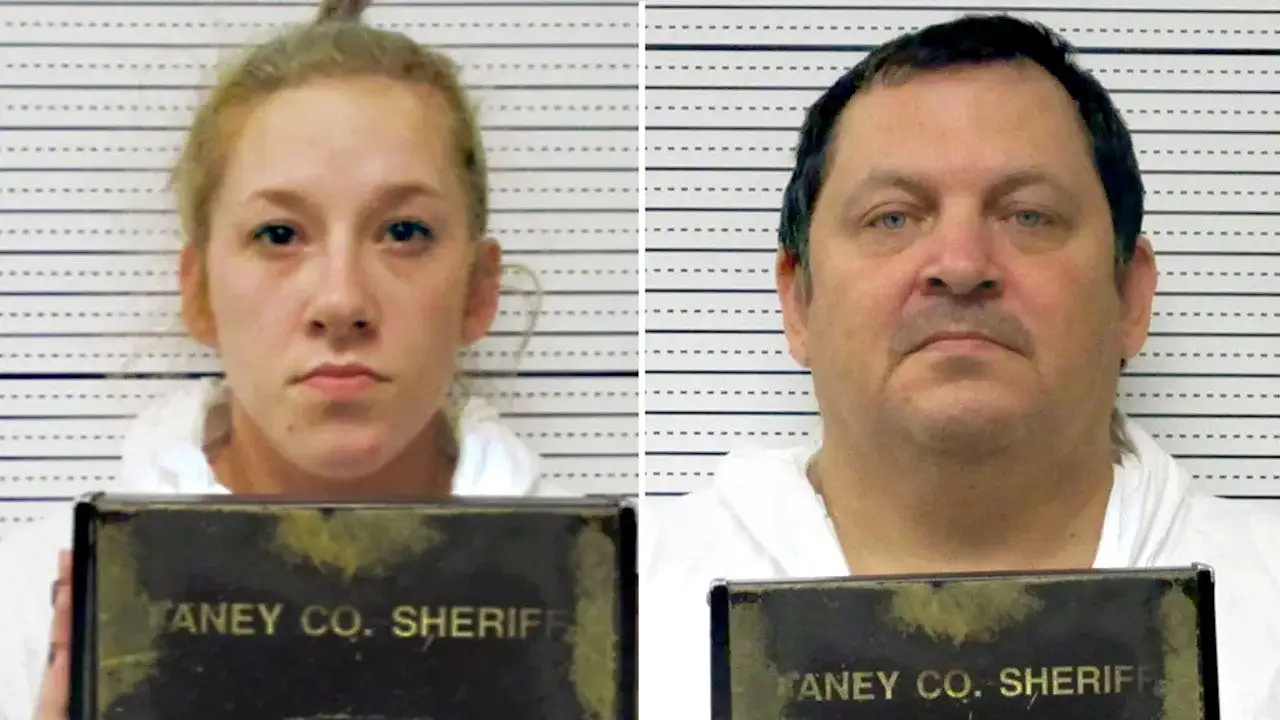
Sydney Loofe was the kind of young woman whose absence leaves a shape in the world that cannot be filled. At twenty-four, she worked as a cashier at Menards, a home improvement store in Lincoln, Nebraska, and lived alone in a small apartment with her cat, Mimsy. Her friends would later describe her as trusting, warm, and a little lonely—someone who was searching for connection in the quiet spaces of an ordinary life. When she matched with a woman named Audrey on Tinder, she felt a spark of excitement. The two went on a first date, and Sydney was smitten. She texted her friends, bubbling with hope, and made plans for a second date the very next night. She laid out her work clothes, set out her purse, and posted a selfie on Snapchat with the caption, “Ready for my date.” Then she vanished. Her family and friends would soon learn that “Audrey” was actually Bailey Boswell, the girlfriend of a fifty-two-year-old con man named Aubrey Trail, and that Sydney had walked into a trap that had been waiting in the dark. What makes this story so haunting is not just the brutality of what happened, but the way Trail later framed it. In a recorded conversation from death row, he reportedly said, “I don’t regret killing Sydney. I don’t regret killing somebody, but I regret killing … I picked the wrong person.” He meant that Sydney had too many people who loved her, too many devoted friends and family who would not let her disappearance go cold. He was not sorry for taking her life. He was only sorry that her death had led to his capture. That chilling lack of remorse is at the center of the new Hulu docuseries “Swipe Right on the Devil,” and it forces us to sit with a terrible truth: some monsters do not see their victims as people at all, but as targets, and the only mistake they regret is choosing one whose disappearance would matter.
-
The details of Sydney’s murder are almost unbearable to absorb, but they are part of the story that must be told. According to investigators and testimony at trial, Trail and Boswell lured Sydney to their apartment on the night of November 15, 2017, under the guise of a second date. Hours before she arrived, surveillance footage captured the couple at a Home Depot in Lincoln, purchasing tools that investigators believed were used to dismember her body. Inside the apartment, something went horribly wrong. Prosecutors described a frenzy—an FBI agent reportedly said the culprits were in a frenzy, looking to commit an act of violence, and Sydney was simply the available target. She was trusting and innocent, and she fit the profile. Trail strangled her with an electrical cord. Then he cut her body into fourteen pieces, placed the remains in garbage bags, and dumped them in roadside ditches near Edgar, Nebraska. The apartment was scrubbed with bleach, and the couple fled. Trail, who described himself as a powerful warlock and the leader of a sex cult, had surrounded himself with young women he called witches. He spoke of gaining powers through killing, and at one point told investigators, “Witches kill … the more they kill, their power increases.” It is easy to dismiss such talk as the ravings of a disturbed man, but the filmmakers behind the docuseries spent years speaking with Trail and studying his history. They came to believe that he genuinely believed in his own dark magic—that he thought he could manipulate vulnerable people into bending to his will, and that murder could unlock supernatural abilities. That belief, twisted as it was, gave him a sense of purpose and power. And Boswell, twenty-five years old, was not a passive follower but an active participant. As the prosecutor said during the trial, “Aubrey and Bailey had four arms, four legs and one mind.” They fed off each other’s darkness, and Sydney was the one who paid the price.
-
What saved Sydney’s case from becoming just another cold missing-person file was the fierce love of her friends and family, who refused to accept that she had simply disappeared. When Sydney failed to show up for her morning shift, her family requested a welfare check. Police found her car in the driveway, her work clothes laid out, her purse ready, her cat unfed. Something was deeply wrong. Sydney’s friend Brooklyn McCrystal knew she had been on a date the night before, so she did something extraordinary: she created a Tinder profile herself, posing as someone new, and matched with “Audrey.” She exchanged phone numbers with Boswell and handed that information to police. That single act of bravery became the first major break in the case. It was a classic catfishing of the catfishers, and it showed how devoted Sydney’s friends were. Investigators traced Boswell’s burner phone to hotels in the area, where surveillance video and a state-issued ID helped identify her as “Audrey.” The video also revealed that she was traveling with an older man—Trail. Sydney’s phone had last pinged at the couple’s apartment. When police obtained a search warrant, they found the apartment reeking of bleach, with rent paid early and the occupants gone. Boswell and Trail released a video on social media denying any involvement, claiming Boswell had dropped Sydney off at a friend’s house after their second date. But they were already running. They were arrested on November 30, 2017, near Branson, Missouri, on unrelated federal fraud charges. Nearly three weeks after Sydney disappeared, investigators used cellphone data to trace the couple’s movements and identify rural areas where they had slowed down or stopped. On December 4, 2017, they searched a roadside ditch near Edgar, Nebraska. There, they found car keys, a phone, a label with Sydney’s name, and her dismembered upper arm—bearing a tattoo that read, heartbreakingly, “Everything will be wonderful someday.” The garbage bags also contained her clothing. The discovery was both the end of a search and the beginning of a long, painful reckoning.
-
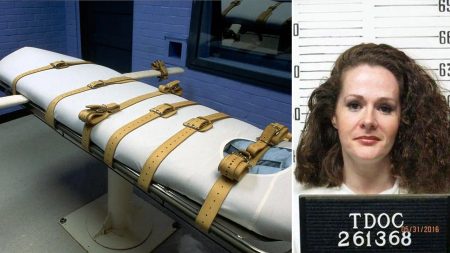
The trials that followed were as disturbing as they were revealing. Trail and Boswell were tried separately, and the courtroom became a stage for the dark world they had built. Several young women came forward to testify about their experiences with the couple. Ana Golyakova said Trail required her and Boswell to be intimate in front of him. Ashley Hills described a regime of control so total that she had to remain naked, ask permission to use the bathroom, and avoid speaking to other men. Trail beat her when she disobeyed. He told her he practiced witchcraft and could control people’s minds. These women described a pattern of grooming and manipulation that made them feel both trapped and complicit. They were young, searching for belonging, and vulnerable in ways that Trail knew how to exploit. The filmmakers emphasized that these survivors were not just witnesses to the horror—they were essential to putting Trail and Boswell away. Without their willingness to testify, the prosecution would have had a much harder time painting a complete picture of the couple’s methods and motives. Trail was convicted of first-degree murder and conspiracy to commit first-degree murder in 2019, and pleaded no contest to improper disposal of human skeletal remains. In 2021, he was sentenced to death. Boswell was convicted of first-degree murder, conspiracy to commit first-degree murder, and improper disposal of human skeletal remains in 2020, and was sentenced to life in prison the following year. Justice was served, but it could not bring Sydney back. It could not undo the terror of her final hours or the grief of her family. What it did do was ensure that Trail and Boswell would never again have the chance to lure another trusting soul into their orbit. And it sent a message that even the most calculated evil cannot hide forever, especially when a community refuses to look away.
-
The Hulu docuseries “Swipe Right on the Devil” is not just a true crime story; it is a meditation on the dangers of loneliness, the seduction of belonging, and the masks we wear in the digital age. Filmmakers Christopher St. John and Brian Biegel spent years immersed in the case, speaking with Trail from death row and interviewing Sydney’s loved ones, investigators, and survivors. They were acutely aware that Trail was a liar—a serial one, as St. John put it. “There’s truth in and among the lies, so we were constantly trying to check ourselves and be like, ‘Are we being manipulated by him just like he manipulated these young women?’ And honestly, we didn’t want to give him more of a platform for his, frankly, out-there views.” Yet they also felt it was important to show how Trail’s belief in his own dark powers shaped his actions. Biegel said he believes Trail genuinely believes he has special abilities, and that he used those beliefs to manipulate vulnerable people. The series also highlights how Boswell used multiple identities on Tinder to meet women, including Sydney. It is a cautionary tale about the strangers on the other side of the screen. But it is also a story about resilience. Sydney’s friends turned their grief into action. Investigators followed every digital breadcrumb. Survivors found the courage to speak. The filmmakers wanted to honor that courage, not give Trail a platform. At the heart of the story is Sydney Loofe—a young woman who, like so many of us, was searching for connection in a world that can feel cold and isolating. She was not naive. She was hopeful. And that hope was weaponized against her.
-
In the end, the story of Sydney Loofe is a tragedy, but it is also a reminder of the fragile, beautiful bonds that hold us together. Sydney was at the wrong place at the wrong time, as Biegel said. She came into Trail and Boswell’s world at a moment when they were ready to perform their supposed beliefs in witchcraft and dark magic. There was a thirst for doing something awful that had built up in their orbit, and Sydney walked into it. But the reason her case was solved, the reason her killers were brought to justice, was the web of love and loyalty she had built in her short life. Her friends refused to let her become a statistic. Her family pushed for answers. Investigators worked tirelessly, and the FBI joined the effort. The docuseries is a tribute to that collective refusal to let darkness win. It is also a warning: we never truly know who is on the other side of a screen, and the search for belonging can make us vulnerable to predators who hide in plain sight. But it would be wrong to let Sydney’s story be defined only by her death. She was a young woman with a cat named Mimsy, a job at Menards, and a heart full of hope. She believed that everything would be wonderful someday. That tattoo, found on her arm in a roadside ditch, became a symbol of the cruel gap between her dreams and her fate. Yet in the years since her murder, her loved ones have carried that message forward. They have spoken her name, demanded justice, and ensured that she will not be forgotten. Sydney Loofe was not the wrong person to kill. She was the wrong person to underestimate. And in the end, it was her life—and the love that surrounded it—that brought her killers down. That is not a story of evil triumphing. It is a story of light refusing to go out, even in the darkest of places.