


Paragraph 1
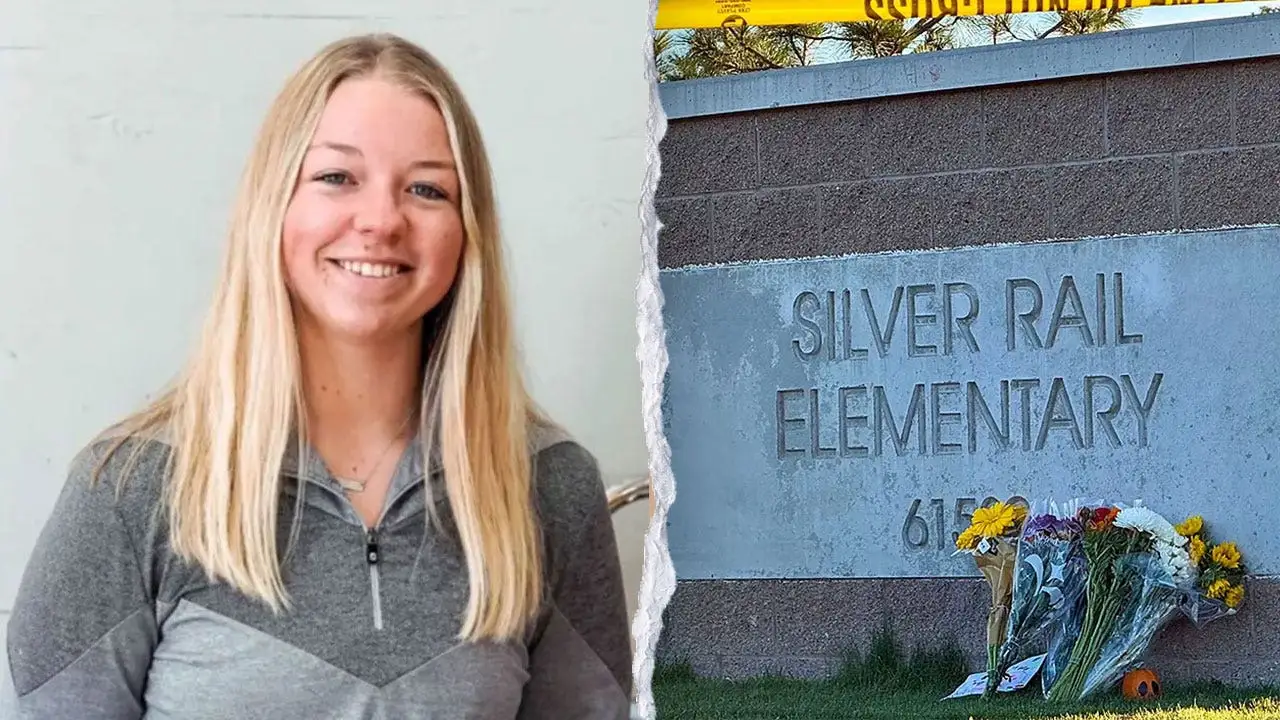
The quiet town of Bend, Oregon, has been forever altered by a single, devastating morning in October. Two weeks after a gunman stormed into Silver Rail Elementary School, Cassidy Schutz, the learning specialist who became an unlikely hero, finally stepped forward to share the weight of what she experienced. Her statement, released through the school district, was not a triumphant account of bravery, but a raw and aching confession of sorrow. “There are no words to describe the depth of sadness I am feeling,” she wrote, her voice trembling through the printed words. She did not boast about wrestling a shotgun from a teenage killer or throwing her phone to distract him. Instead, she spoke of loss, of the faces she will never see again, and of a pain that she will carry “forever.” In her eyes, this was not a story of heroism; it was a horrific, heartbreaking tragedy that has become her real life. She extended her heart to the families of the victims, to the wounded, and to everyone who shared that terrifying classroom. Her plea for privacy was not an act of withdrawal but a desperate need to find a way to breathe again, to heal in a world that suddenly felt unrecognizable. The world listened, not to a hero, but to a woman shattered by the impossible task of surviving a nightmare.
Paragraph 2
The attack itself was merciless in its speed and cruelty. A 16-year-old former student, armed with a shotgun, entered the school and made his way to a classroom that served students with special needs—a place meant to be the safest haven for the most vulnerable. Within minutes, the room became a scene of chaos and terror. Megan Lambert, a 25-year-old teacher who had dedicated her young life to nurturing these children, was killed. Alongside her, three students lost their lives: Rhoam Summer, just five years old, and two other children, aged eight and eleven, whose names were withheld to spare their families further grief. The innocence of these children—children who likely never understood why violence found them—is a wound that Bend will carry for generations. The classroom, once filled with laughter, learning, and the gentle patience of educators, became a mausoleum. Outside, the rest of the school erupted in panic as teachers barricaded doors and students hid under desks, listening to the dreadful echo of gunfire. The attacker moved with a deliberate, horrifying intent, leaving behind a trail of blood and brokenness. By the time law enforcement arrived, the damage was done. The community was left to count the cost of a moment that would forever define their town, not by its beauty but by its unbearable sorrow.
Paragraph 3
Amid the chaos, Cassidy Schutz did not freeze. Though her title was certified learning specialist, her role on that day transcended any job description. When the shooter burst into the room, she reacted with a primal instinct that would later be praised by Bend Police Chief Mike Krantz. She hurled her cellphone at the gunman—a desperate, almost futile act—but it was enough to create a split-second diversion. Then she lunged at him, grappling for control of the shotgun. She was not a soldier or a police officer; she was a teacher, someone who had probably never fired a weapon in her life. But in that moment, she fought, not out of courage but out of love for the children behind her. She wrestled with the attacker, her hands on the cold metal of the gun, her mind screaming with the terror of a hundred what-ifs. She did not defeat him alone—hero dad Kaylub Giamanco would ultimately stop the threat—but her actions bought precious seconds, perhaps saving lives. In her statement, she did not mention her own bravery. Instead, she spoke of the speed of it all, wishing she had “more time.” That wish cuts deep: more time to protect, more time to save, more time to say goodbye. Her humility in the face of such extraordinary valor is a reminder that heroes are often ordinary people who choose to act when every fiber of their being wants to run.
Paragraph 4
She was not the only one whose instincts took over that morning. Becky Drury, another teacher, saw the gunman approaching her classroom and made a split-second decision that would cost her dearly. She attempted to slam the door shut, hoping to keep the shooter out, but she was too late. A bullet tore through both her arms, shattering bone and muscle, and she collapsed to the floor. In a moment of terrifying clarity, she played dead, lying perfectly still amid the screams and the smoke, praying that the gunman would not fire again. Her wounds were severe, but her survival was nothing short of miraculous. She would later recount how she heard the attacker moving through the room, the sound of his boots on the floor, and the silence that followed each breath she took. Meanwhile, across the school, Kaylub Giamanco, a father who had come to pick up his son, heard the gunfire and did not hesitate. He ran toward the sound, a man with no training but with an unshakable resolve to protect the children. He confronted the shooter and fired, ending the rampage. His actions were those of a parent, a guardian, a hero in the truest sense. These stories of sacrifice—Schutz’s struggle, Drury’s desperate play for life, and Giamanco’s charge into danger—are the human threads that hold the community together in the aftermath, proof that even in the darkest hour, there are those who choose to fight.
Paragraph 5
In the weeks since the shooting, Bend has been a community in mourning. The school has been closed, its halls silent, its classrooms empty except for the lingering ghosts of children who will never return. Psychologists and grief counselors have descended, offering support to students, teachers, and families who are grappling with a new reality. The victims’ families have held funerals, laying to rest small bodies in coffins far too tiny for such a tragedy. The wounded, including Drury and a 7-year-old girl, face long roads to physical and emotional recovery. And Cassidy Schutz, the teacher who fought so fiercely, has retreated into a private space, asking for the time and space to heal. Her request is a testament to the gravity of what she endured—she cannot simply return to normalcy, because normalcy no longer exists. She will forever remember the faces of the children she could not save, the sound of gunfire, the feeling of helplessness mingled with desperate action. The community’s response has been one of solidarity, with candlelight vigils and messages of support, but the pain is not something that can be eased by words alone. It will take years, perhaps a lifetime, to reconstruct a sense of safety. For now, the town sits in a hush, holding its children a little tighter, whispering prayers, and wondering how to move forward when the past feels so impossibly heavy.
Paragraph 6
This tragedy is not an isolated event; it is another scar on a nation that has grown all too familiar with the sight of school shootings. But it is also a deeply personal story of loss and resilience. Cassidy Schutz’s words remind us that statistics and headlines are made of flesh and blood, of teachers who become warriors and children who become angels. The loss of Rhoam Summer, who was only five years old, is a wound that defies comprehension. The loss of Megan Lambert, a teacher who gave her life in the line of duty, is a reminder of the selflessness that educators embody every day. And the actions of Schutz, Drury, and Giamanco show that bravery is not the absence of fear but the refusal to let fear dictate one’s actions. As Bend begins to heal, it does so with the knowledge that its community was forever changed, but also with the conviction that love and courage can emerge from the ashes of violence. Schutz asked for privacy, not for silence. She will carry this loss forever, but she will also carry the knowledge that she did everything she could in a moment when everything was at stake. The road ahead is long, but it is paved with the memories of those who were lost and the heroism of those who survived. In the end, the story of Silver Rail Elementary is not one of despair, but of the human spirit’s capacity to endure, to mourn, and to hope for a future where no child has to fear the sound of a door being kicked in.