



TikTok’s New Must-Eat Guide: When Social Media Becomes Your Dinner Date
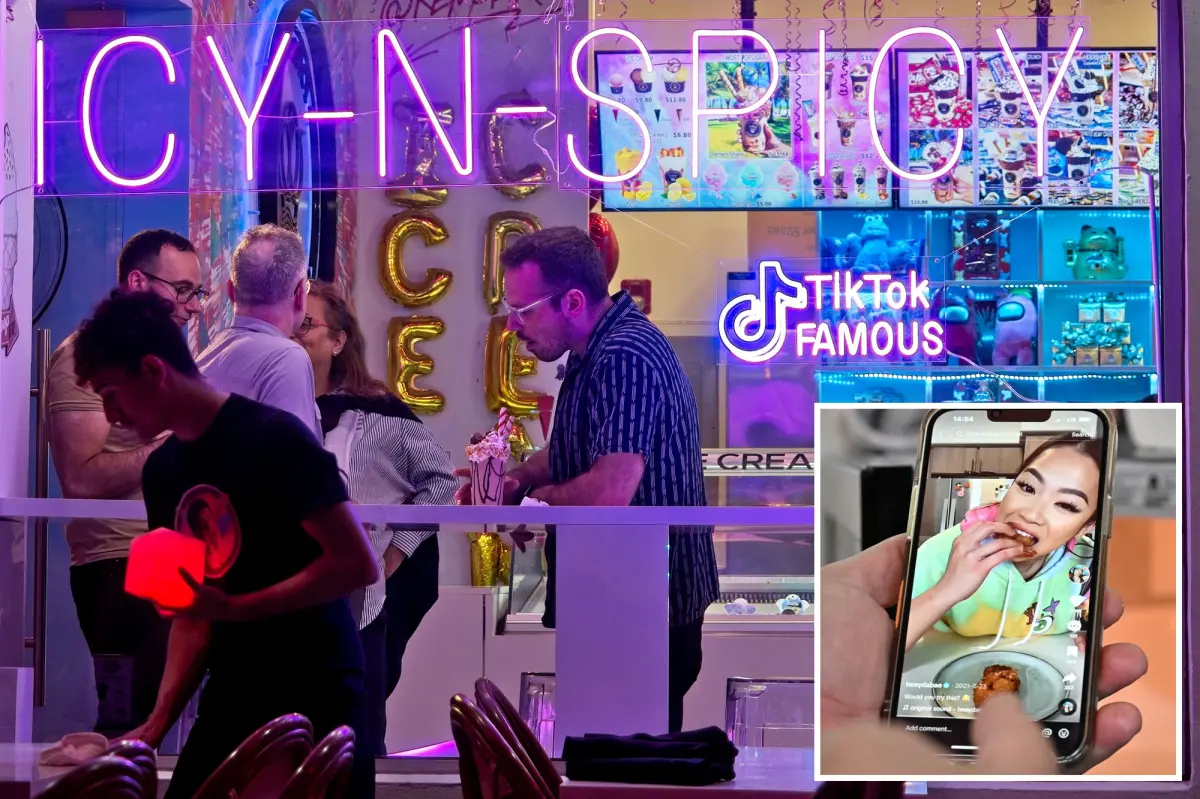
For years, TikTok has been the place where you go to watch someone dance, laugh at a funny skit, or get lost in an algorithmically curated rabbit hole of content that somehow knows exactly what you need to see at 2 a.m. But somewhere along the way, something unexpected happened: it became your most trusted dinner companion. You’ve probably experienced it yourself—you’re scrolling through your feed, minding your own business, when a video pops up of a sizzling plate of tacos being drizzled with crema, or a perfectly marbled slice of steak being cut into with a knife that glides through like butter. Before you know it, you’re saving the video, screenshotting the restaurant name, and planning your weekend around trying that exact dish. It’s a scenario that has played out millions of times across the country, and now TikTok is officially recognizing just how powerful that food-obsessed corner of its platform has become. The tech giant recently announced the launch of Must-Eat, an ambitious new “community-powered” guide designed to help users discover local restaurants in three of America’s biggest culinary capitals: Los Angeles, the Bay Area, and New York City. It’s a bold move that transforms the app from a place where you watch food content into a place where you actively seek out and book your next meal, blurring the lines between entertainment, social connection, and practical utility in a way that feels both inevitable and groundbreaking for the platform.
The new guide represents TikTok’s most significant step yet into the world of local discovery and commerce. Instead of relying solely on a handful of influencers telling you where to eat, Must-Eat harnesses the collective wisdom of the entire TikTok community—millions of users who have already been sharing their favorite hidden gems, hole-in-the-wall spots, and splurge-worthy celebrations on the platform. The structure is thoughtfully designed to cater to different dining occasions and moods. The recommendations are split into two distinct categories: Everyday Eats, which focuses on casual neighborhood spots perfect for a quick lunch, a weeknight dinner, or grabbing something delicious without breaking the bank, and Elevating Dining, which curates more upscale establishments ideal for special occasions like anniversaries, birthdays, or any night when you want to feel a little fancy. This bifurcation acknowledges that dining out isn’t a one-size-fits-all experience—sometimes you want a comforting bowl of ramen in your sweatpants, and other times you want to dress up and celebrate something meaningful. To make the experience even more tailored, users can filter their search by cuisine type, price point, score, and location, ensuring that whether you’re craving Ethiopian food in LA or a specific type of pasta in Brooklyn, you’ll find exactly what you’re looking for without having to wade through pages of irrelevant suggestions.
Perhaps the most exciting feature of this new guide is how seamlessly it integrates with your existing TikTok habits. When you find a restaurant that catches your eye, you can book a reservation through OpenTable directly within the TikTok app—no jumping between platforms, no copying and pasting links, no friction in the journey from discovery to dining. It’s a seamless experience that makes acting on your craving almost effortless. Beyond that, the guide allows users to save restaurants to their existing TikTok collections, meaning you can start building your own personalized culinary bucket list right alongside the fitness routines, travel inspo, and home decor ideas you’ve already saved. You can even create multiple lists—perhaps one for “Date Night Ideas,” another for “Places to Try with My Parents,” and a third for “Late Night Cravings.” This level of personalization transforms the guide from a static directory into a living, breathing tool that evolves with your tastes and plans. For users in New York, Los Angeles, and the Bay Area, accessing the guide is as simple as searching “Must Eat” in the app, after which you’ll be greeted with a curated selection of dining options that represent the best of what your city has to offer, all vetted and recommended by fellow users who genuinely love their local food scene.
The launch of Must-Eat isn’t just a new feature—it’s backed by some seriously impressive numbers that underscore just how much influence TikTok has already had on the restaurant industry. According to company data, a staggering 27 million Americans have visited an independent restaurant, cafe, or shop after first discovering it on the app. That’s not just a casual coincidence or a passing trend; that’s a fundamental shift in the way people discover and decide where to spend their dining dollars. This behavior has generated an estimated $4.7 billion in local spending, money that has flowed directly into small businesses, family-owned establishments, and independent eateries that have traditionally relied on word-of-mouth to build their customer base. These numbers tell a compelling story about the power of social media to drive real-world economic impact, particularly for the kinds of independently owned restaurants that often struggle to compete with national chains and their massive marketing budgets. TikTok has essentially become the modern equivalent of asking your friend for a recommendation—except your “friend” is a community of millions of people who share your taste, your curiosity, and your willingness to try something new. It’s social proof at scale, and it’s changing the restaurant landscape in ways that are only beginning to be understood.
The human element of this shift is perhaps best illustrated by the stories of restaurant owners who have experienced TikTok’s power firsthand. Take The Serving Spoon, a beloved family-owned establishment in Inglewood, California, that has been serving up soul food and community warmth for over forty years. Justin Johnson and Jessica Bane, the co-owners and grandchildren of the original founders, recently shared their perspective on what TikTok has meant for their family’s legacy. “For over 40 years, our family’s restaurant grew through word of mouth,” they said in a press release. “TikTok has taken that to a whole new level, introducing our grandfather’s food to a diverse generation of new customers.” There’s something deeply touching about that statement—the notion that a platform built on short-form video could carry forward a grandfather’s culinary traditions into the hands of a new generation. The owners expressed particular joy at seeing young people walk through their doors, excited to try dishes that have been part of their family for decades. “Seeing young people walk through our doors excited to try the dishes we grew up on means everything to our family,” they added. It’s a sentiment that captures the beautiful intersection of tradition and technology, showing how a modern social media platform can actually help preserve and propagate cultural heritage through food. For every viral food video that makes you laugh or makes you hungry, there’s a story like this—a family business, a beloved recipe, a community gathering place that gets a second chance at relevance thanks to a teenager with a phone and a passion for sharing what they love.
Of course, TikTok isn’t entering this space without competition. The food recommendation landscape is already crowded with established players, each vying for the attention of hungry diners looking for their next great meal. Beli, a food recommendation app that has been gaining significant traction, boasts an impressive collection of over 75 million restaurant ratings spanning 30,000 cities, with a user base that’s overwhelmingly young—the company revealed last year that 80% of their users are under 35, making them a direct competitor for the same demographic TikTok is targeting. On the other end of the spectrum sits Yelp, the granddaddy of restaurant review platforms, which has amassed over 300 million reviews and attracts an enormous 76 million monthly visits to its website. Yelp has become so synonymous with restaurant ratings that it’s practically a verb in our cultural lexicon—we “Yelp” things, we say “let me check Yelp,” even if we’re actually checking another app. Both platforms have their strengths: Beli offers a sleek, modern user experience designed for the Instagram generation, while Yelp brings decades of accumulated data and a robust review system that many users trust implicitly. But TikTok brings something to the table that neither of these apps can match: the power of video. A written review or a five-star rating can tell you that a restaurant is good, but a thirty-second video of a chef plating your meal, of the sizzle of the hot oil, of the visual explosion of colors and textures on the plate—that’s a visceral, emotional connection that text simply cannot replicate. TikTok has the benefit of showing you exactly what you’re getting before you even walk through the door, and that’s a powerful advantage in a world where people increasingly want to see before they commit.
Looking ahead, the launch of Must-Eat feels less like a single feature and more like a declaration of intent—a signal that TikTok is evolving from a pure entertainment platform into something more comprehensive, more integrated into the daily rhythms of its users’ lives. The food industry is just the beginning; if this proves successful, it’s not hard to imagine similar guides for travel, events, retail shopping, or any number of local experiences. For restaurants, particularly independent ones that have been struggling to recover in the post-pandemic economy, this represents a potential lifeline—a way to reach new customers who might never have discovered them otherwise. For diners, it means having a trusted, community-driven resource that cuts through the noise of generic advertising and delivers authentic recommendations from real people who share your tastes. And for the broader culture, it’s yet another reminder that social media, for all its flaws and complications, still has the power to bring people together around simple, universal joys—like a truly great meal. So the next time you find yourself doomscrolling past yet another dance video or lip-sync performance, remember: that same app might just lead you to your new favorite restaurant, your next memorable dinner, or a moment of connection that you’ll be talking about for years to come. After all, TikTok has already figured out what you want to watch. Now it’s determined to figure out exactly what you want to eat—and it’s putting the entire community to work to make sure you never have a bad meal again.