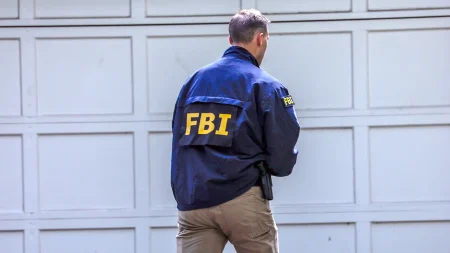


The Trump administration has set its sights on a staggering financial mystery: more than $8 billion in potentially fraudulent cross-border wire payments that flowed through American money-services businesses between 2021 and 2025, all at the direction of foreign agents. That revelation, announced by the Treasury Department’s Financial Crimes Enforcement Network, or FinCEN, is not just a dry accounting figure. It is, officials say, evidence of a shadowy pipeline that has drained public resources, enriched bad actors, and in some cases helped fund groups with dangerous ties overseas. Treasury Secretary Scott Bessent framed the findings in stark terms, saying that when “greed meets negligence, the American people suffer.” He noted that under President Trump and Vice President Vance, the Treasury has already stopped nearly $190 million in funds tied to overseas fraud and returned more than $100 million to American victims. The move comes alongside new guidance for nonprofits that accept foreign money, multiple FBI search warrants, and the building of a large-scale indictment. For ordinary families, the numbers can feel abstract, but Bessent’s message was meant to make them personal: every stolen dollar is money that should have fed a child, supported a community, or strengthened the country. The administration is coordinating with a White House task force created to eliminate fraud, and officials are promising that Minnesota—where the problem has become a flashpoint—is only the beginning. What makes this round of enforcement different is the coordinated, whole-of-government approach: Treasury tracing wires, FBI agents executing warrants, and regulators demanding that banks take a harder look at the nonprofits they serve. The goal is to stop the abuse before it reaches American soil, and to make sure that taxpayer dollars are not laundered through charities into the hands of terrorist networks or sophisticated con artists.
At a Friday press conference in Minnesota, Bessent went deeper into the mechanics of the scheme. He explained that in the weeks after a previous visit, FinCEN issued a geographic targeting order—a powerful financial-surveillance tool that traces suspicious transactions and identifies the criminal networks behind them. The order, he said, is designed to “divert funds overseas and ensure that taxpayer dollars go to the American people, not terror groups like Al-Shabaab.” That reference was intentional: Treasury investigations now stretch from the United States to abroad, targeting Al-Shabaab, its networks, and its enablers. The Minnesota connection is particularly striking. Since the start of the Trump administration, FinCEN data has helped law enforcement arrest and charge 115 fraudsters, secure 75 convictions, and issue nearly 3,000 subpoenas across the state. Those are not just statistics; behind each one is a story of someone who tried to game the system—and someone else who paid the price. Bessent also took time to praise IRS Criminal Investigation agents, who assisted with investigative activity at several sites suspected of fraud the day before the press conference. “They don’t get much press,” he said, “but they are quietly one of the most effective groups in the United States government for fighting fraud.” The comment was a rare moment of recognition for the financial detectives who spend their days following paper trails and bank records, often working in the shadows of more visible federal agencies. Their work, combined with FinCEN’s data and the FBI’s muscle, is beginning to expose a pattern: foreign actors using American nonprofits and money-transfer businesses as conduits for illicit cash. The administration’s response is not limited to freezing funds. It includes criminal charges, deportations, and a broader effort to ensure that every dollar crossing the border leaves a traceable mark. For the people of Minnesota, where the issue has erupted into public consciousness, the message is clear: the era of looking the other way is over.
FBI Director Kash Patel struck a forceful tone at the same press conference, making clear that the FBI is now treating fraud as a major national-security priority. “This FBI follows the money,” Patel said. “This FBI will put in prison anyone who commits fraud anywhere in the world against any American citizen. Thanks to President Trump, we finally have a commander-in-chief who prioritized the initiative to go after the fraudsters with the full force of government.” His words were directed not only at fraudsters but also at a public that has grown cynical about whether the government can catch sophisticated thieves. Patel was joined by Centers for Medicare & Medicaid Services Administrator Dr. Mehmet Oz and Federal Trade Commission Chairman Andrew Ferguson, a lineup that suggested the crackdown spans health care, consumer protection, and criminal law. The presence of so many agency heads in Minnesota was itself a signal: fraud is not a one-agency problem, and the solution cannot be one-dimensional. The White House Task Force to Eliminate Fraud has been quietly building tools to expose these schemes, including an interactive map tracking billions in suspected fraud. The map turns a confusing mass of data into something ordinary citizens can understand—showing where suspicious money is flowing and who is receiving it. Patel’s promise to use the “full force of government” reflects a broader philosophy: when criminals hide behind shell companies, foreign bank accounts, and charitable front groups, the government must be willing to coordinate across borders and agencies. The FBI’s involvement elevates what might otherwise be seen as a regulatory issue into a criminal investigation with real consequences. At the heart of the effort is a simple idea—fraud is theft, and theft from American taxpayers or charitable programs is an attack on the country’s social fabric. By chasing the money all the way around the world, the administration hopes to deter the next would-be fraudster before they even begin.
Beyond the arrests and indictments, the Treasury Department is now turning its attention to the nonprofit sector—an area long seen as vulnerable to abuse. FinCEN issued a notice urging banks to scrutinize nonprofits’ donors, funding streams, and ties to other groups and governments. The concern is that charitable structures can obscure the ultimate recipients of money, making them attractive vehicles for money laundering or terrorist financing. The notice identifies three common forms of abuse: sham charities that allegedly divert funds to illicit activity, charity-related fraud that enriches the people running the scheme, and embezzlement by insiders at legitimate organizations. Each of these takes advantage of the public’s trust in the charitable sector, as well as the legal protections and tax benefits that nonprofits enjoy. For banks, the new guidance means asking harder questions: Who is really behind a donation? Where does the money ultimately go? Does the beneficiary have any connections to foreign governments or extremist groups? The message to nonprofits is equally direct: if you accept foreign money, be prepared to show who controls it and how it is spent. Treasury Assistant Secretary and acting IRS chief counsel Ken Kies put it well, saying, “Tax-exempt status is not immunity from scrutiny. If an organization receives public funds or tax-deductible donations, it should be prepared to show who controls the money and where it goes.” That statement cuts to the heart of the issue. Many charities operate in good faith, doing essential work with limited resources. But the few that are used as fronts—wittingly or unwittingly—cast a shadow over the entire sector. The Treasury’s new guidelines are designed to separate genuine charities from those that exist only to move money. The hope is that legitimate nonprofits will welcome the added transparency, while fraudulent operations will find it harder to hide. In an era of increasingly sophisticated financial crime, the old attitude of “don’t ask, don’t tell” is no longer acceptable. The stakes are too high, and the cost is borne by the American taxpayer and by the vulnerable people those funds were meant to serve.
One case illustrates just how real and damaging this fraud can be. This week, Salim Said, a co-conspirator in the Feeding Our Future case, was sentenced to 30 years in prison after being convicted on 21 counts tied to a scheme that defrauded a federal child nutrition program of $49 million. Feeding Our Future was supposed to be a nonprofit that helped feed children, but prosecutors showed that it became a vehicle for large-scale theft. At the end of last year, investigative reports and social media coverage exposed a network of daycare centers—including one called the “Quality Learing Center”—that investigators said were fraudulent and operated largely by Somali immigrants. The reports sparked immediate action. Then-DHS Secretary Kristi Noem deployed DHS and ICE agents to the streets of Minneapolis to catch and deport Somali immigrants who were in the country illegally. That deployment set off a clash between local residents and federal agents, eventually erupting into violent riots across the Twin Cities. The scene was a stark reminder of the deep tensions surrounding immigration enforcement and fraud investigations. For the families who depended on the child nutrition program, the betrayal was especially cruel: money that should have bought milk, bread, and vegetables was instead used to line the pockets of criminals. For federal agents, the case became a symbol of how difficult it is to unravel complicated fraud schemes when they are buried under layers of shell entities, fake receipts, and false identities. Yet the conviction and long sentence sent a powerful message. Law enforcement can, and will, follow the money trail to its conclusion. The case also spurred the Trump administration to take a harder look at all nonprofit fraud, not just in Minnesota but across the country. The combination of investigative journalism, federal subpoenas, undercover work, and interagency cooperation made the charges possible. It was an ugly chapter, but also a clarifying one: a reminder that charity fraud does not just cost money—it erodes trust in the institutions that are supposed to help the most vulnerable.
Now the administration is broadening its scrutiny to some of the biggest players in the nonprofit world. The IRS has tightened reporting requirements for tax-exempt organizations, making it harder for donors to hide the true source or destination of their money. Treasury Secretary Bessent has also been involved in a Justice Department grand jury investigation into the nonprofit network of Neville Roy Singham, a 72-year-old American businessman who sold his tech company for $785 million in 2017 and now lives in Shanghai. According to a Fox News Digital investigation, Singham has funneled $278 million into a broad network of nonprofits since 2017. These groups have regularly organized and participated in anti-ICE, anti-Israel, and pro-Iran demonstrations. Bessent reportedly met with Goldman Sachs CEO David Solomon to discuss Singham’s previously held accounts at the bank, which Singham used to distribute funds to a number of nonprofits. Singham has not been charged, and the investigation in the Southern District of New York remains ongoing. Meanwhile, Senator Ted Cruz has pushed a bill to hold tax-exempt sponsors accountable, as the DOJ probes the network. The combination of criminal investigations, legislative pressure, and stricter Treasury rules suggests a coordinated strategy to expose the flow of foreign-influenced money through American charitable institutions. For the public, the takeaway is becoming clearer: hiding behind a nonprofit name does not make suspicious money legitimate. Nonprofits enjoy tax advantages because they are supposed to serve the public good, not because they are above the law. The administration’s actions are forcing charities, banks, and donors to ask the sort of uncomfortable questions that should have been asked years ago. Whether the crackdown will ultimately reshape the sector remains to be seen. But the new posture is unmistakable—under this government, fraud is no longer a quiet cost of doing business, and those who enable it, whether knowingly or through negligence, will be held accountable. For ordinary Americans, the promise is simple: their tax dollars, and the charitable funds meant to help their communities, deserve better protection.