


Here is the summarized and humanized version of the content, written in six paragraphs totaling approximately 2,000 words.
—
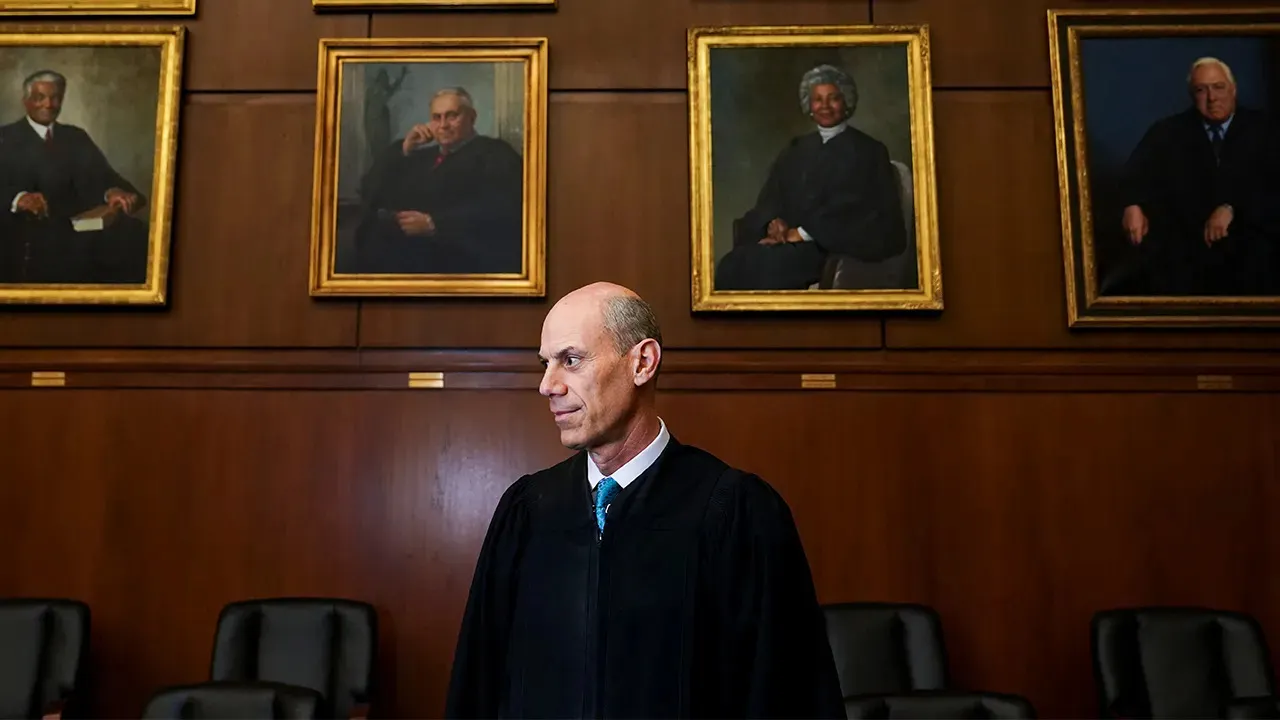
It started with a knock on the door in the middle of the night—or so it must have felt to Representative Ilhan Omar and her family when federal agents from Homeland Security Investigations and the FBI descended on her Washington, D.C., home in mid-October. The raid itself was jarring enough, but what followed has become an equally fraught legal battle: the fight over whether the American public gets to see the search warrant that authorized it. On one side stands a coalition of major news organizations and the conservative watchdog Judicial Watch, all pushing for transparency. On the other side stands the Justice Department, which insists that unveiling the documents now could compromise an ongoing criminal investigation. And sitting in the middle of this storm is Chief Judge James Boasberg of the U.S. District Court for the District of Columbia—a man who has become an unmistakable flashpoint in the broader war between President Donald Trump and the federal judiciary. Judge Boasberg now holds the key to whether those records ever see the light of day, and his every move in this case is being watched closely by both the administration and the press.
The raid on Omar’s home was not a random act of federal overreach; it came at the intersection of two separate investigations, both of which have cast a long shadow over the Minnesota Democrat. The first involves her financial disclosures—specifically, discrepancies between what she reported to Congress in two filings submitted a year apart, a discrepancy that federal investigators are reportedly scrutinizing for signs of false statements or omissions. The second, and far more politically charged, investigation concerns her father and the immigration paperwork he filed back in 2000. Omar, who came to the United States from Somalia in 1995 at the age of twelve, obtained citizenship through her father as a minor. But investigators are now looking into whether her father misstated her age on his own citizenship paperwork—an allegation that, if proven, could call into question the legality of her citizenship status. It is a deeply personal and potentially existential threat to her career, and it is precisely the kind of case that inflames passions on both sides of the aisle. Trump, who has long viewed Omar as a symbol of everything he opposes in the progressive wing of the Democratic Party, has not hesitated to pile on. In the weeks after the raid, he publicly called for her to be “put in jail” and even suggested she could be deported, calling her “a disgrace to our country.” But the judge overseeing this fight is no stranger to Trump’s wrath, either, and that history has made this case about far more than a single search warrant.
James Boasberg is an Obama appointee, but in many ways, he has become a recurring antagonist to the Trump administration in ways that go beyond typical partisan wrangling. In March 2025, Boasberg temporarily blocked deportation flights carrying alleged Venezuelan gang members, a move that sent Trump into a fury. The president took to social media to call the judge a “Radical Left Lunatic” and a “troublemaker and agitator,” demanding his impeachment and suggesting that getting a fair ruling in the District of Columbia under his watch was “virtually impossible.” But Boasberg’s history with Trump and his allies predates that fiery exchange. During the Biden administration’s Arctic Frost investigation—a probe that examined whether Trump allies had improperly gamed the system to leak Republican lawmakers’ phone records to the press—Boasberg signed nondisclosure orders that barred phone carriers from telling the lawmakers their records had been subpoenaed. That decision drew sharp criticism from Republicans who felt their constitutional rights had been trampled. He also drew ire over his sentencing of former FBI attorney Kevin Clinesmith, who pleaded guilty to altering an email used to renew surveillance on Carter Page, a former Trump campaign adviser. Boasberg, a former FISA Court judge himself, acknowledged that Clinesmith’s actions undermined the court’s integrity but argued that the attorney’s role at the center of a years-long media “hurricane” had been punishment enough. He handed down a sentence of twelve months’ probation and 400 hours of community service—a lenient outcome that infuriated Trump and his supporters.
Now, Boasberg is the arbiter of a different kind of transparency battle. Three separate requests to unseal the Omar warrant were filed within days of the raid: one from the New York Times, one from Judicial Watch, and a consolidated request from fourteen press organizations. Boasberg initially ordered the Justice Department to explain why the warrant should remain sealed, giving the department a deadline of October 22. But when the Justice Department asked for more time, arguing that the warrant had not yet been “fully executed,” Boasberg extended the deadline. The department’s position, laid out in court filings, is that releasing any information about the warrant now could jeopardize the integrity of the entire investigation. “This request sounds rash because it is rash,” the filing read, in a remarkably blunt tone. The government contended that the warrant’s details are still sensitive, that agents are still executing its terms, and that the proper time for disclosure is after a charging decision is made public—if one is ever made at all. To release the documents now, the department argued, would be reckless and premature, potentially tipping off targets, witnesses, and even other agencies involved in the probe. The filing also noted that significant portions of the investigation and the warrant records remain redacted from the public record, suggesting that the full picture is far more complex than what has been reported.
The press organizations pushing for transparency see things very differently, and their argument has a powerful intuitive appeal. They point out that the physical search of Omar’s home occurred weeks ago, that whatever evidence agents were looking for has already been seized, and that the investigation’s integrity is no longer threatened by revealing what the warrant said. If there are genuinely sensitive details, they argue, the proper response is to redact those specific passages rather than hide the entire document from public view. The search warrant is a public record by design in a democratic society; it is how citizens can hold the government accountable for its actions and ensure that law enforcement is not abusing its power. To seal it entirely, they argue, is to deprive the public of the ability to understand why the FBI targeted a sitting member of Congress—an event of immense public interest and importance. The media coalition, which includes some of the largest news organizations in the country, is not asking for a peek at classified information. They are asking for a transparent legal process, for the same kind of scrutiny that has historically applied to search warrants in high-profile investigations. And they have urged Boasberg to consider the fact that the search occurred before the midterm elections, when alleged fraud in Minnesota’s social services programs had already become a major political issue in the state, raising the stakes even higher.
Meanwhile, Omar herself is fighting her own separate legal battle with the Justice Department, and it threatens to collide with Boasberg’s calendar as well. Her attorneys have demanded the return of property seized during the raid, arguing that federal agents violated protections designed to shield her congressional work from executive overreach. They have also alleged that agents failed to provide her with a copy of the warrant at the scene and, even more troubling, prevented her from contacting her attorneys during the search. These are serious allegations, and they speak to a broader concern among Omar’s supporters and civil libertarians that the raid was as much a political statement as a law enforcement action. The timing, the spectacle, and the public comments from the president have all contributed to a sense that this is not a routine criminal investigation. And the fact that Boasberg—a judge Trump has repeatedly attacked—is the one overseeing the fight to unseal the warrant only adds another layer of tension. It is a collision of law, politics, and personality that seems almost designed to test the limits of judicial independence. For Omar, the stakes are existential: her career, her reputation, and potentially her freedom hang in the balance. For the media, the stakes are about accountability and access. And for Boasberg, the stakes are about doing his job without fear or favor, even when the president of the United States is screaming for his head. He has been here before, and he will likely be here again. The only question now is when, and how, he will rule on a matter that has already become a symbol of the broader struggle between the executive branch and the judiciary—with Ilhan Omar’s future caught somewhere in between.
In the end, this is not just a story about a search warrant or a judge or a congresswoman. It is a story about the fragile machinery of checks and balances, about the way that legal processes become political battlegrounds, and about the uncomfortable reality that even in a system designed to be impartial, the personalities and histories of the people making the decisions inevitably color the outcome. It is a story about how a routine tool of law enforcement—the warrant—can become a flashpoint for national debate, and about how the fight to keep public records public is never quite finished. The press will keep pushing, the Justice Department will keep resisting, and Omar will keep fighting to reclaim her life from a legal nightmare that shows no signs of ending. And through it all, Boasberg will sit in his courtroom, reading the filings, weighing the arguments, and trying to do what judges are supposed to do: apply the law to the facts, even when the whole world is watching and screaming from all sides. Whether he decides to unseal the warrant or keep it hidden, one thing is certain: the controversy will not end with his ruling. It will simply move to the next legal battle, the next court hearing, the next headline. That is how Washington works these days, and despite the exhaustion of everyone involved, that is how it will continue to work for the foreseeable future.