


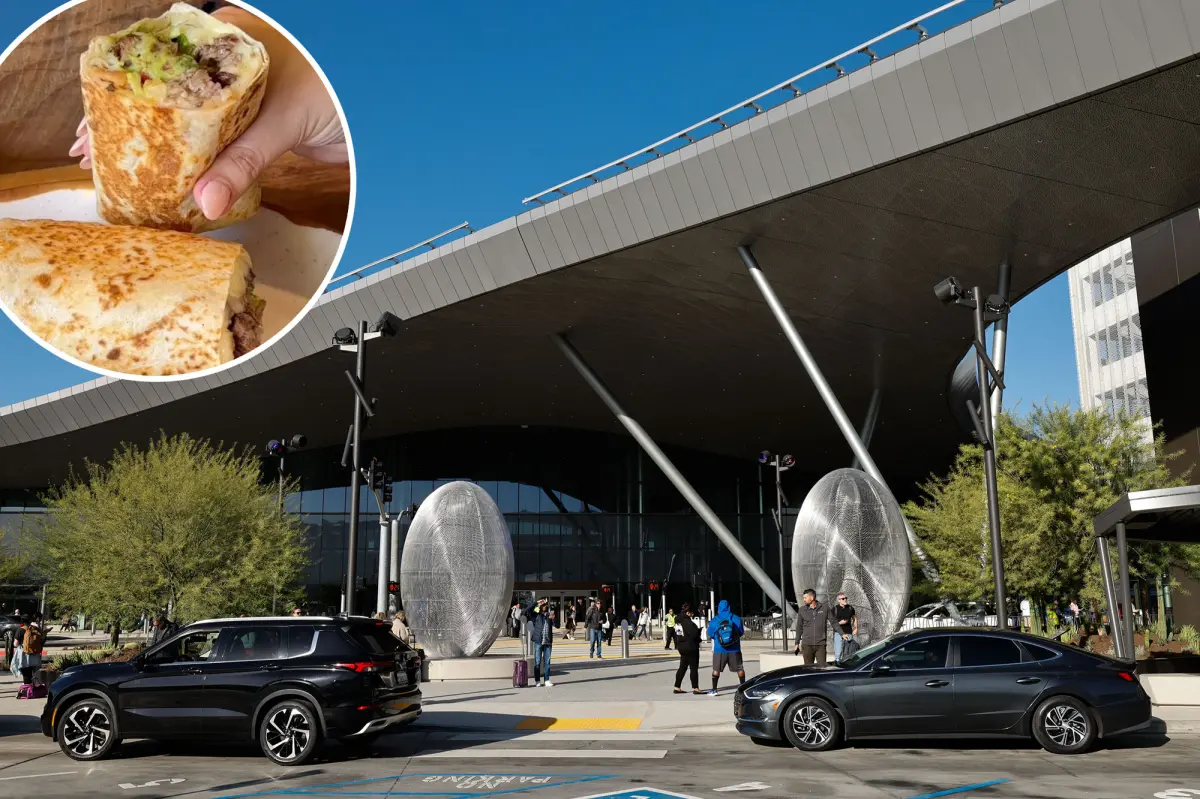
The shiny new terminal at Hollywood Burbank Airport was supposed to signal the dawn of a brighter travel era. For years, the small, bite-sized airport just over the Los Angeles hills had been known for convenience rather than comfort. Passengers appreciated the short lines and relative calm, but they also endured a cramped, dated space first built in 1930. The $1.3 billion reinvention promised to change all of that. After just over two years of construction, the new terminal finally welcomed the public on October 13, and the reviews were initially glowing. Spanning 355,000 square feet, the facility featured polished floors, floor-to-ceiling windows, a state-of-the-art TSA security checkpoint, spacious gate areas, and a tempting lineup of local food vendors. There was Jones Coffee from Pasadena, Guy Fieri’s Flavortown, longtime Southern California favorite Border Grill, and Poquito Mas, a beloved local Mexican chain. For a few shining weeks, it felt like a real upgrade—a place where you might want to arrive early just to soak in the atmosphere. But the excitement lasted about as long as a pre-flight bag of peanuts. Just weeks after the doors swung open, travelers are already fed up, not with the architecture, but with the cost of a gateside nosh. The complaints began with a single Reddit post and quickly snowballed into an online uproar. One angry flyer reported seeing a basic bean and cheese burrito at Poquito Mas priced at $25. Not a loaded burrito with steak or shrimp, not a massive platter meant for two—just beans and cheese, wrapped in a tortilla. “Seriously? We are still doing this bulls–t?” the traveler fumed. The post ignited threads full of people sharing their own airport horror stories, and suddenly the conversation wasn’t just about one overpriced burrito. It was about a system that treats hungry passengers like ATMs. The airport may be flying first class on the outside, but for travelers, the experience feels more like a shakedown before takeoff.
The Reddit fury centered on an inconvenient truth: you can buy the exact same food just outside the airport for a fraction of the cost. At a separate Poquito Mas location in Burbank, the same bean and cheese burrito sells for $11.95. That means the airport version carries a staggering 109 percent markup—more than double the street price. “$25? I can buy enough bean and cheese to make burritos for a month,” one Redditor observed. Another traveler reported paying $35 for a breakfast burrito and a coffee, calling the expense “absolutely ridiculous and outrageous.” Still another said they spent nearly $50 on three tacos and a bottle of water, joking, “Plan on taking out a loan.” The trend extends well beyond Mexican food. One commenter was stunned to find a smash burger at an outlet called West Coast Smash going for $25, while the same double smash burger from the chain costs $15 at a streetside location—a 66 percent increase. Even the basics are a doozy. A single chocolate bar reportedly set someone back $19.95, and bags of nuts inside the convenience store were described as “ridiculously priced” compared with a 7-Eleven. What makes these stories sting is the sense of helplessness. Once you’re past security, you’re a captive audience. You can’t easily run out to a cheaper option, and if you’re hungry or need a caffeine fix, you have little choice but to open your wallet. The airport seems to be betting that convenience will win out over cost, and to some extent, it will. But that doesn’t make it feel any less like a rip-off. Travelers are not just annoyed; they’re insulted. It’s one thing to pay a small premium for airport dining. It’s another to feel like you’ve been ambushed at 6 a.m. with a $35 breakfast. “Burbank airport is officially more expensive than Erewhon,” one commenter complained, referencing the luxury grocery store known for eye-watering prices. That comparison says everything: flying out of Burbank now feels like a luxury you pay for before you even board.
What makes these prices even more infuriating is that they may actually violate the rules. According to a 2025 concession document between the Federal Aviation Administration and Hollywood Burbank Airport, food and beverage products at the airport are supposed to be priced no more than 15 percent above the established street price benchmark. The idea behind the rule is simple: airports shouldn’t be allowed to gouge passengers just because they happen to be traveling. But the markups travelers are reporting at Burbank far exceed that cap. A 66 percent increase on a burger and a 109 percent increase on a burrito are nowhere near the allowed 15 percent. Even a $19.95 chocolate bar defies common sense, let alone regulatory guidelines. The high prices may even go against regulations, some watchers said amid the social media chatter. The discrepancy raises serious questions about how the airport’s concession program is monitored and enforced. Is anyone actually checking prices against the benchmarks? Are vendors simply ignoring the rules because they know passengers will pay? Or is the 15 percent figure being calculated in a way that gives operators enough wiggle room to justify absurd prices? The California Post reached out to airport authority officials for comment, but there was no meaningful response. For travelers, the situation is deeply frustrating because it feels like a violation of trust. You expect to pay a little extra at an airport; you don’t expect to be price-gouged. The FAA document suggests that someone, somewhere, is supposed to be protecting passengers from exactly this kind of predatory pricing. But if the rules aren’t enforced, they’re just words on paper. Passengers are left to wonder whether the beautiful new terminal was built for them—or for the corporations cashing in on their hunger. A terminal can be state-of-the-art, but if the prices are predatory, the whole experience leaves a bitter taste.
The conversation about airport food prices often circles back to labor costs, and for good reason. At Los Angeles International Airport, high prices have long been part of the travel experience, and part of the explanation lies in the city-mandated minimum wage for airport employees. That wage currently rises above $30 per hour in certain circumstances, and it’s slated to increase even more in the coming years. When you’re paying workers a living wage, someone has to foot the bill, and that someone is often the passenger. Burbank, however, doesn’t have that excuse. Hollywood Burbank Airport is not subject to the same city-mandated wage rules as LAX. Employees there can be paid as little as the California state minimum wage of $16.09 per hour. That’s a significant difference—nearly half the hourly cost of airport labor at LAX. So why are Burbank’s food prices sometimes as bad as, or worse than, LAX’s? It’s a question that has left travelers scratching their heads. If lower labor costs were supposed to translate into lower menu prices, the new Burbank terminal has missed the mark entirely. Instead, it seems to have embraced the very pricing model that made LAX notorious. Some might argue that rents at a brand-new terminal are high, and that concessionaires need to charge more to cover their expenses. But that explanation only goes so far. A $25 burrito isn’t just about covering costs; it’s about maximizing profit. It’s about recognizing that passengers have nowhere else to go and charging whatever the market will bear. The irony is hard to ignore. Burbank has long been positioned as the user-friendly alternative to LAX, a smaller and less stressful airport where you could breeze through security. But with these prices, it’s quickly becoming a luxury destination in its own right—except without the luxury service. You might be paying first-class prices for your burrito, but you’re still eating it off a plastic tray while sitting in a plastic seat. The lack of a wage excuse only makes the price gouging feel more cynical.
Let’s give credit where credit is due: the new terminal at Hollywood Burbank Airport is genuinely nice. The original airport has been around since 1930, and for decades it showed its age. The old facilities were cramped, dated, and in dire need of safety upgrades. In 2023, plans for the new terminal were officially unveiled, and after just over two years of construction, the space finally opened on October 13. It’s a dramatic improvement. The 355,000-square-foot building features a modernized TSA security checkpoint that promises faster, more efficient screening. The gate areas are more spacious, with plenty of seating and natural light. The bathrooms are cleaner than they’ve ever been. And the food options are designed to reflect the local flavor, not just generic airport chains. You can grab a coffee from Pasadena’s Jones Coffee, a bite from Guy Fieri’s Flavortown, or a taste of longtime Southern California favorite Border Grill. On the surface, it’s exactly what a modern airport should be: bright, clean, and welcoming. It’s the kind of place where you might arrive a little early just to wander around and grab a snack. But the glamour fades fast when you look at the price tag. The beauty of the terminal is undeniable, but it’s hard to enjoy the atmosphere when you feel like you’ve been financially mugged between the security checkpoint and the gate. The terminals of the future, it seems, come with a hidden cost. And while the airport is proud of its local restaurant partners, the community connections feel a little less meaningful when those same local businesses are charging triple the street price. There’s something almost surreal about paying $25 for a burrito while sitting beneath a soaring ceiling and polished wood accents. The contrast between the luxurious surroundings and the sticker shock creates a deeply ironic experience: you’re technically in first class, but your wallet is flying coach.
In the end, the Burbank airport food controversy is about more than just expensive burritos. It’s about the quiet erosion of trust between travelers and the institutions that serve them. Airports have a long history of price-gouging because they know they have a captive audience, but the new terminal at Burbank was supposed to be a fresh start. Instead, the same old priorities are showing through. Passengers aren’t asking for free food; they’re just asking for fair prices. They want to be able to buy a breakfast burrito and a coffee without feeling the need to take out a loan. They want to grab a snack without wincing. They want the “street price plus 15 percent” rule to mean something. The airport is clearly hoping that the novelty of the new terminal will overshadow the complaints, at least for a little while. But social media doesn’t forget, and the Reddit threads are hard to ignore. Travelers are already making a mental note: pack snacks, eat before you fly, or maybe just bring your own bean and cheese from home. That might sound like a joke, but it captures the mood. For now, this controversy is a cautionary tale for airports everywhere. Building a beautiful terminal isn’t enough; you also have to treat passengers with basic respect. The first-class experience isn’t about high ceilings and nice espresso machines. It’s about not feeling gouged every time you’re hungry. Until the prices come down—or the regulations are enforced—Burbank Airport is going to keep flying first class in the looks department, but economy in the way it makes people feel. Flyers will keep showing up because it’s a convenient airport. But they’ll arrive grumbling, with granola bars in their carry-ons, wondering why a bag of nuts costs more than a six-pack of beer. And if the airport doesn’t listen, the terminal will be remembered less for its beautiful architecture and more for $25 burritos and $20 chocolate bars.