


Paragraph 1
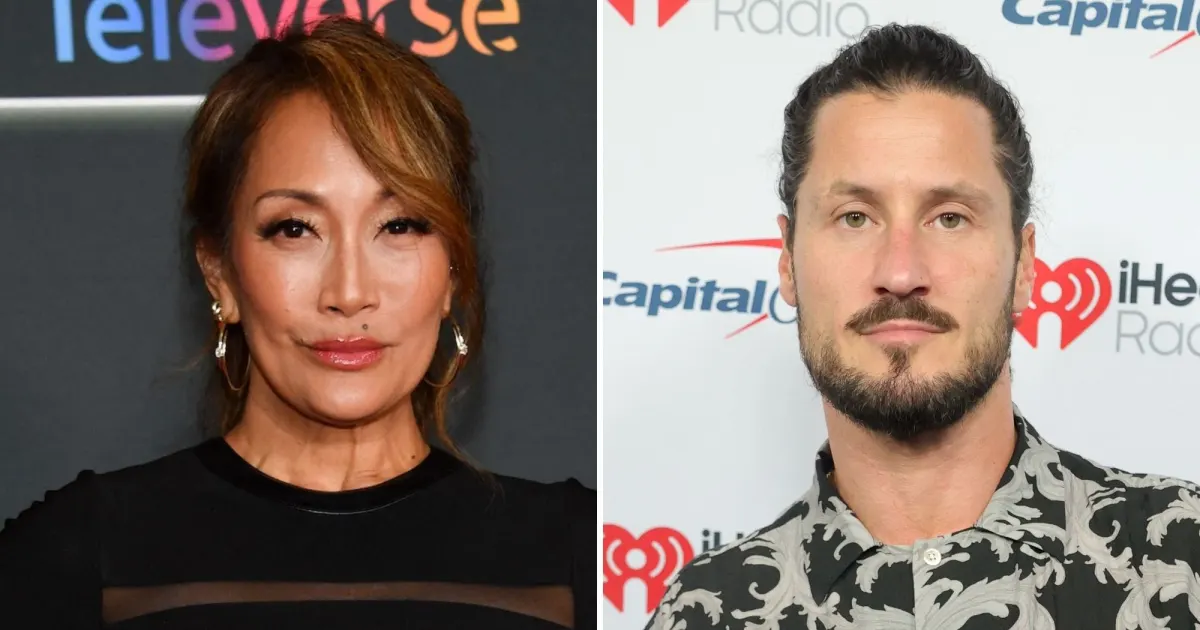
In the shimmering, high-stakes world of Dancing With the Stars, where every paso doble and quickstep is scrutinized under the glare of spotlights and social media, a quiet moment of reconciliation unfolded that had nothing to do with perfect scores or lifted feet. It was Tuesday, October 27, during the show’s spooky Horror Movie Night, and the ballroom was buzzing with the usual adrenaline of costumes, fog machines, and dramatic choreography. But for judge Carrie Ann Inaba and pro dancer Val Chmerkovskiy, the real drama was happening just off the main floor, in a tender, whispered exchange that would speak volumes about forgiveness, ego, and the fragile threads that hold a professional family together. A behind-the-scenes video, shared on Instagram after the episode aired, captured the duo in a moment of genuine vulnerability: Inaba, 58, gently holding Chmerkovskiy’s shoulders while he wrapped both arms around her waist, their heads close together, deep in quiet conversation. They nodded softly, their expressions serious but warm, before pulling each other into a full, heartfelt embrace. For anyone who had been following the recent weeks of tension, this was more than a friendly gesture; it was a public thawing of a very cold war, a silent declaration that the storm had finally passed. The footage spread quickly, with fans and commentators alike reading into every subtle gesture, eager to see whether this fragile peace would hold.
Paragraph 2
To truly understand the weight of that embrace, one had to rewind to the controversy that led to Chmerkovskiy’s one-week suspension from the dance competition. The trouble began on October 13, during the show’s Super Bowl Night, when Inaba called out an illegal lift in a samba performed by Chmerkovskiy’s wife, Jenna Johnson, and her celebrity partner, Harry Shum Jr. As a judge, Inaba was simply doing her job, pointing out a technical violation that could affect scoring. But the critique clearly struck a nerve. Chmerkovskiy, watching from the wings, felt that Inaba’s remark was unduly harsh on Johnson, and in a moment of heated frustration, he took to social media to defend his wife. In a now-infamous post, he referenced Will Smith’s notorious 2022 Oscars slap, using it as a metaphor for his own protective instincts. The implication was that he was ready to defend his partner at all costs, much like Smith had done for his wife, Jada Pinkett Smith. The post went viral, drawing widespread criticism and forcing the production team to issue a suspension. Chmerkovskiy was benched for a week, a rare and serious disciplinary action that underscored just how far his comments had crossed the line. The fallout was immediate: fans took sides, tabloids spun the narrative, and the on-set atmosphere became thick with unspoken tension. For two professionals who had shared the ballroom for years, the rift seemed more than just a momentary disagreement—it threatened to fracture the very camaraderie that makes the show work.
Paragraph 3
When Chmerkovskiy returned to the floor on Horror Movie Night, all eyes were on him and Inaba. Would they ignore each other? Would there be a cold, professional distance? The answer, it turned out, was a resounding no. As the video showed, the pair not only spoke but shared a connection that felt deeply personal. Inaba, clearly aware that their interaction was drawing stares from the crew and other dancers, turned to the crowd with a calm, almost amused demeanor. “So everyone’s staring. We are coworkers and we are completely cordial. We are good, OK?” she announced, cutting through the awkwardness with her trademark directness. It was a simple statement, but it carried a lot of weight—acknowledging the elephant in the room while firmly shutting down any lingering drama. But the reconciliation went even further. Inaba later took to Instagram to address the earlier tension with Jenna Johnson, clarifying that she had never spoken about it before out of professional courtesy for those still competing. She explained that standards and practices kept them separated, but wanted everyone to know that she and Johnson had already hugged it out immediately after the Super Bowl show. “Jenna was an absolute professional about it,” Inaba wrote, “and two women worked through the moment.” That particular note was important: it reframed the narrative from a feud between a judge and a pro to a story of two women handling a difficult situation with grace and mutual respect. Inaba’s willingness to reach out, to acknowledge the human side of the conflict, and to publicly share her side of the story, showed a maturity that went beyond the typical reality TV drama.
Paragraph 4
Val Chmerkovskiy, for his part, was equally eager to put the past behind him. In an interview conducted after his reunion with Inaba, he spoke with an openness that revealed just how much the conflict had weighed on him. “It felt cathartic relief, you know?” he admitted, his voice carrying a mix of exhaustion and gratitude. “I think it was just really important for me to make sure that she feels safe and knows that, firsthand from me, I want nothing but love for her.” He continued, his words deliberate and heartfelt, “I want nothing but joy for her and as much as the world might say otherwise, I want her to know how I feel, not how others want me to feel, but how I genuinely feel. I will have nothing but love for Carrie Ann. I have nothing but respect for what she has to say.” Those remarks humanized a moment that could have been easily reduced to a PR move. Chmerkovskiy acknowledged that the public perception of their relationship had been shaped by social media, by soundbites, and by the inevitable biases of outsiders. But he was determined to set the record straight, not through a press release, but through a one-on-one conversation, eye to eye. In that quiet, behind-the-scenes hug, he was not just apologizing for his outburst; he was reasserting his respect for Inaba as a judge and as a person. The fact that he took the time to say these words aloud, to let her know his genuine feelings rather than the ones being attributed to him, is a testament to his desire to repair what had been broken. It also served as a reminder that the people on our screens are not just characters—they are individuals with complicated emotions, regrets, and hopes for reconciliation.
Paragraph 5
Beyond the personal reconciliation, the drama also shed light on the delicate ecosystems of televised competition shows. Inaba, who has served as a judge on Dancing With the Stars for over a decade, has always been known for her emotional investment in the contestants and pros. She has cried, cheered, and critiqued with equal intensity. That same passion likely contributed to the tension with Johnson, as she took her role seriously, calling out what she saw as a technical flaw. But the aftermath revealed that even in the heat of criticism, there lies an opportunity for growth. The show’s “standards and practices,” as Inaba mentioned, kept judges and competitors separated to ensure fairness, but it also meant that conflicts were left unresolved in the immediate moment. It takes a conscious effort, a willingness to be vulnerable, to bridge that gap—which is exactly what both women did. And while the drama between Inaba and the Chmerkovskiys dominated headlines, the actual competition continued unabated. Horror Movie Night proved to be a night of shocks and surprises, culminating in a double elimination that sent Tyler Cameron and Sharna Burgess, as well as Jackson Olson and Emma Slater, home. The spectacle of the show—its glittering costumes, its haunting movie-themed dances, its emotional eliminations—carried on, as it always does, providing a backdrop for both human drama and athletic artistry. The fact that such a tense personal conflict could unfold and then be resolved within the same glittering ballroom speaks to the unique pressure-cooker environment of Dancing With the Stars, where the stakes are high, the emotions are higher, but the need for partnership and mutual respect remains paramount.
Paragraph 6
In the end, the story of Carrie Ann Inaba and Val Chmerkovskiy is not really about an illegal lift, a social media post, or a suspension. It is a story about the messy, beautiful, human process of forgiveness. In a world where disagreements are often amplified by algorithms and headlines, where a single misstep can define a person’s public image for weeks, the choice to sit down, look someone in the eye, and say “I’m sorry” is both radical and necessary. The footage of their embrace is a small but powerful reminder that behind every controversy, there are real people with real feelings—people who want to be seen, to be heard, and to be accepted, even after they have stumbled. For Inaba, the moment was a reaffirmation of her belief in professional courtesy and the strength it takes to move forward. For Chmerkovskiy, it was a chance to strip away the noise and share his raw, genuine affection for someone he has worked alongside for years. And for the audience, it was an opportunity to witness something rare: a public reconciliation that felt less like damage control and more like a heartfelt reunion. As the season continues, and as new dances are performed and new scores are given, the memory of that hug will linger. It serves as a testament to the resilience of the human spirit, the importance of direct communication, and the simple, profound power of choosing love over lingering grudges. In a ballroom filled with shining stars, it may have been the most luminous moment of all.