


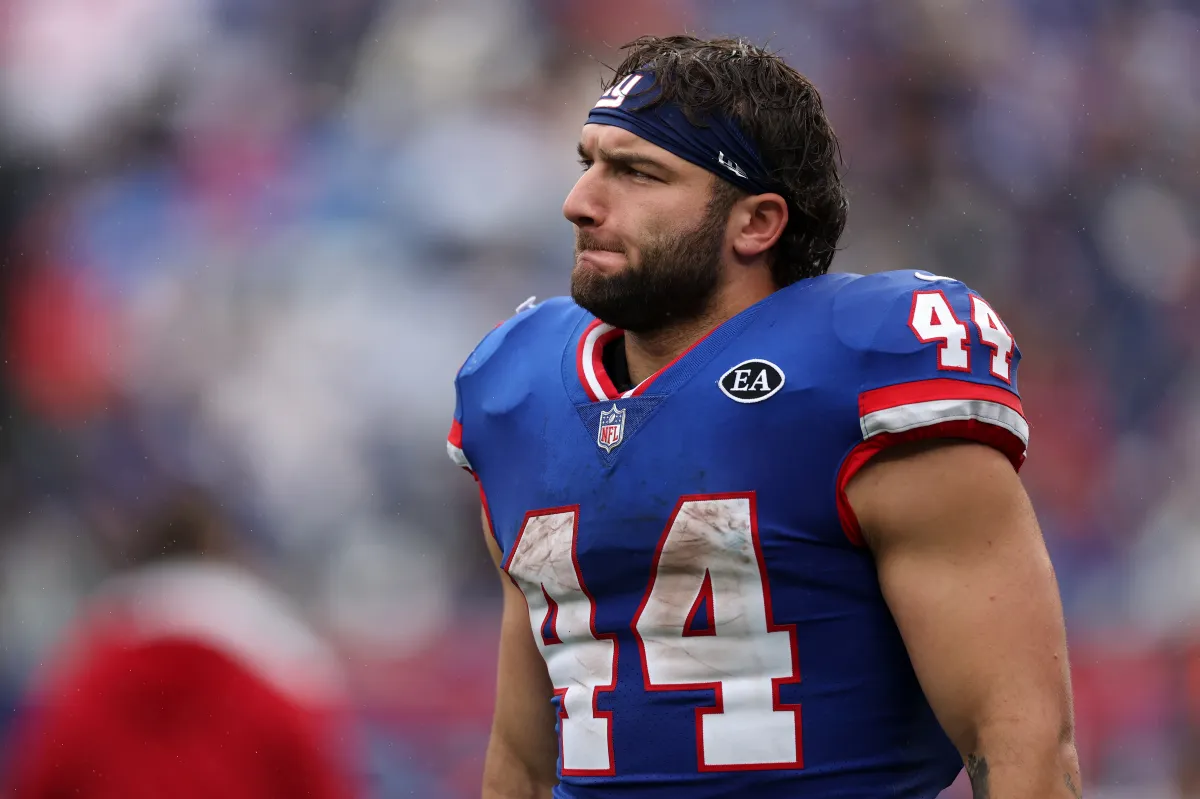
Cam Skattebo spent the better part of a week carrying a quiet, gnawing frustration that only a football player can truly understand. In Week 6, against the New Orleans Saints, the New York Giants running back never got a single touch. No carries. No catches. No chance to affect the game. For a player whose entire identity is built on physicality, contact, and the kind of relentless running that makes defensive backs flinch, that silence was almost unbearable. Then came Sunday, and with it, the kind of redemption arc that makes sports feel like scripted drama. The Giants were locked in a tense battle with the Houston Texans, a game that stretched into overtime and demanded someone step forward. That someone was Skattebo. He ran with a vengeance, a bruising, angry style that seemed to say, “You should have trusted me earlier.” He carried the ball for a season-high 124 yards, found the end zone, and helped push the Giants to a 27-21 overtime victory. It was a statement performance, not just to the coaching staff, but to the entire league: this is who Cam Skattebo is, and this is how he will always play the game.
But football, as Skattebo learned, is never simple. The same ferocity that made him the hero of the afternoon also put him directly in the league’s crosshairs. Early in the first quarter, during a run that embodied everything he stands for, Skattebo lowered his helmet and initiated helmet-to-helmet contact with a Texans defender. The official’s flag flew immediately, and the call on the field was unnecessary roughness. To many watching from home, the hit looked like the kind of violent, old-school football that highlights reels are made of, the kind of collision that makes fans gasp and then cheer. But to the NFL, it looked like a violation of safety protocols, a textbook example of why the league has spent years trying to legislate certain kinds of contact out of the game. Social media erupted almost instantly, with fans and analysts dividing into two camps. Some argued that Skattebo was simply running the only way he knows how, and that the defender put himself in a bad position. Others insisted that lowering the helmet is exactly the behavior the league must eliminate, no matter how explosive the runner is. The debate was loud, passionate, and deeply familiar, because it is the same debate that has haunted football for more than a decade. Where exactly is the line between the violence that makes the sport compelling and the violence that makes it dangerous? And why does it seem to shift from week to week, play to play, player to player?
After the game, with grass still on his jersey and sweat still dripping from his face, Skattebo stood in front of reporters and handled the controversy the way he handles everything else: with raw honesty and a touch of defiance. When asked what the officials told him after the flag, he paused, smiled a little, and said that the conversation would stay between him and them. But he didn’t stop there. He had more to say, and it was clear that this was about something bigger than one call on one Sunday afternoon. Skattebo pointed out a frustrating irony that has become all too familiar for physical runners in today’s NFL. The league loves to post his greatest hits on social media, the bone-rattling runs and punishing stiff-arms that get millions of likes and views. Those same highlights are used to promote the product, to sell tickets, to remind fans why they love this game. But then, when he actually plays that way on the field, the league throws a flag and threatens to take money out of his pocket. “I’ll keep that conversation between us,” Skattebo told reporters, his tone making it clear that he had plenty to say but was choosing to hold back. “But I will say the NFL loves to post me when I do stuff like that. But then also wants to take stuff from me. I’m going to run the ball like I want to run the ball. If I’m going to continue to get flags for it or fined for it, guess I’m going to play for free.”
Those words hit hard, because they speak to a deeper tension that every physical player eventually confronts. Skattebo is not a finesse back. He doesn’t dance, he doesn’t slide, he doesn’t avoid contact. He hunts it. He runs like someone who knows that every carry could be his last, like someone who believes that defense is a mentality and that running backs are allowed to be aggressors too. That style has made him a fan favorite and a nightmare for opponents. It has also made him a target for league discipline. Skattebo’s comment about playing for free was not just a joke; it was a genuine frustration born out of a system that feels contradictory to him. The NFL markets itself on violence, then punishes the players who deliver it. The league celebrates a running back who breaks tackles, then fines him for lowering his shoulder into a defender. Skattebo is not the first player to voice this complaint, and he certainly won’t be the last. But hearing it from him, in the raw aftermath of a game where he gave everything he had, felt different. It felt like a player trying to figure out how to be true to himself while also staying within the ever-narrowing boundaries of what the league will allow. He knows that his physicality is his ticket to staying in the NFL, but he is also beginning to realize that the very thing that makes him special might also cost him.
The league office will now review the play, as it does with so many controversial moments, and decide whether Skattebo deserves a fine. If history is any guide, there is a strong chance that he will face some kind of punishment, a financial penalty that, for a player, is more than just a number on a screen. It stings. It sends a message. It tells him that the people who run the league are willing to take his money even as they profit from his effort. But at the same time, it is hard to imagine Skattebo changing his approach. His entire game, from his footwork to his pad level to the way he finishes every run, is built on being the hammer, not the nail. You cannot ask a player like him to suddenly start running soft. It would be like asking a boxer to stop throwing punches, or a pitcher to stop throwing inside. The physicality is not a choice for Skattebo; it is a necessity. It is the reason he has made it this far, and it is the reason his teammates trust him to get the tough yards when the game is on the line. There is a certain tragic beauty to this situation, a collision between the old soul of football and the modern era of player safety. The NFL wants to protect its players while still selling the idea that this is the toughest sport in the world. Players like Skattebo are caught in the middle, expected to deliver highlight-reel violence but also expected to somehow avoid the exact hits that make those highlights possible.
For now, though, Skattebo and the Giants can celebrate what happened on Sunday, because it was a win that mattered in more ways than one. It was a win over the Texas and a win against the noise and doubt that had followed him since his quiet Week 6. It was a reminder that running backs still matter, that a physical running game can still control a football game, and that players with something to prove are often the most dangerous ones on the field. The Giants now get their much-needed bye in Week 8, a chance to rest, heal, and reflect on a season that has been full of ups and downs. When they return in Week 9, Skattebo will be back in the backfield, running the same way he always has. He will not change. He has made that clear. He will continue to lower his shoulder, break tackles, and punish anyone who tries to get in his way. And if the NFL wants to fine him for it, so be it. He will keep running, keep playing with the same reckless abandon that has carried him to this point, and keep reminding everyone that football is still a game of collision and consequence. Whether the league sees that as a problem or as entertainment is a question for another day. For Skattebo, the answer is simple: he is going to run the ball like he wants to run the ball, and the rest of the world can either watch, celebrate, or throw its flags. The sport, the fan, and the heartbeat of a player who refuses to compromise himself for anybody. That is what he has to offer, and on Sunday, that was more than enough. Now, with a bye week ahead and a season still full of possibilities, Skattebo can rest knowing that he did everything his way, and that his way is exactly what makes him worth watching.