


As Halloween creeps closer, the temptation to spend money on elaborate haunted houses or squeeze through tourist-packed ghost tours can feel almost obligatory. But there’s a quieter, more atmospheric—and often completely free—way to embrace the season: wandering through historic cemeteries. These are places where crumbling mausoleums, weathered angel statues, and tangled ivy create a kind of beauty that no artificial fog machine can replicate. They are also, as it turns out, some of the most underrated cultural attractions in Europe. A new ranking from the travel eSIM app Saily, called the “Tombstone Tourism Index,” set out to find the continent’s most fascinating burial grounds by scoring cemeteries across five factors: famous residents, visual appeal, heritage status, how crowd-free they feel, and how easy they are to reach from the city center. The result is a list that celebrates cemeteries not as morbid destinations, but as open-air museums full of sculpture, history, and human stories. As Saily’s head of product, Matas Cenys, put it: “Every October, people queue for hours at haunted attractions while walking straight past the real thing—some of the most atmospheric, story-filled places in any city. Historic cemeteries are open-air museums with sculpture and incredible stories, and they don’t charge entry. Halloween is a good excuse to discover them, but they’re worth visiting any day of the year.” That sentiment captures the spirit of the ranking perfectly—it’s not about cheap scares, but about connecting with the past in a place that feels genuinely alive with memory.
Topping the list is Père Lachaise Cemetery in Paris, and it’s easy to see why. This legendary burial ground spreads across 44 hectares and holds some 70,000 graves, yet what makes it truly extraordinary is the sheer density of famous names resting beneath its cobblestones. Around 1,445 notable people are buried here, from Frédéric Chopin and Édith Piaf to Oscar Wilde, Jim Morrison, Marcel Proust, Gertrude Stein, Molière, Balzac, and Sarah Bernhardt. It’s the kind of place where you can spend hours getting lost among ornate tombs and suddenly stumble upon a name you’ve studied in school or heard in a song. The grave of The Doors’ frontman Jim Morrison is particularly magnetic, drawing fans from around the world who leave tokens and pay their respects. Oscar Wilde’s tomb, famously covered in lipstick kisses, has become so popular that a glass barrier was eventually installed to protect the stone. Perhaps unsurprisingly, Père Lachaise is the most documented cemetery on Earth, with more than 4,500 photos shared on Wikimedia Commons alone. And despite its fame, it remains free to visit, just 15 minutes from the center of Paris. The only real challenge is navigation—this place is a maze, and in the spooky season, getting lost among the shadowy lanes might feel a little too atmospheric. The cemetery’s official app helps you find your way to the graves you most want to see, so you can spend less time squinting at maps and more time soaking in the haunting beauty around you.
But not every great cemetery is as famous or crowded as Père Lachaise. The index also highlights hidden gems like Vår Frelsers Gravlund in Oslo, which feels like a secret even though it sits just ten minutes from the Norwegian capital’s center. With only 123 Google reviews, it’s the best-kept secret on the entire list—a quiet, beautifully landscaped Victorian-era cemetery that most tourists never even know exists. And yet, buried here, within walking distance of each other, are some of the most important figures in Norwegian history: Henrik Ibsen, the father of modern drama; Edvard Munch, the artist behind “The Scream”; painter Christian Krohg; and polar explorer Fridtjof Nansen. Standing among their graves, you get the sense that this place holds the very soul of the nation. It’s not flashy or overrun with visitors; instead, it offers a peaceful, reflective experience that feels more like a park than a burial ground. For anyone planning a Scandinavian trip, adding Vår Frelsers Gravlund to the itinerary is a wonderful way to connect with Norway’s cultural heritage without battling crowds or paying admission. It’s proof that some of the most meaningful travel experiences aren’t the ones plastered across guidebooks, but the quiet, unassuming places that reward those who take the time to seek them out.
A little further south, in Edinburgh, the Dean Cemetery is another hidden treasure, even less known than Oslo’s gem—it has just 90 Google reviews despite sitting only steps from one of the city’s busiest streets. Tucked between Queensferry Road and the peaceful Water of Leith, this Category A listed site is filled with elaborate Victorian monuments that feel like they belong in a gothic novel. The cemetery was the final resting place for many of the people who helped build modern Edinburgh, including the architect William Playfair, who designed some of the city’s most iconic landmarks; philosopher Dugald Stewart; and portrait painter Henry Raeburn. Walking through the Dean Cemetery is like taking a quiet stroll through Edinburgh’s history, but with far fewer tourists and none of the hustle of the nearby city center. The overgrown corners, weathered stone, and gently flowing water nearby create an atmosphere that is both serene and slightly eerie—perfect for Halloween, but equally lovely on a crisp autumn afternoon. It’s a reminder that you don’t need to travel far from a city’s main attractions to find a space that feels completely removed from the modern world. For travelers who crave authenticity over spectacle, the Dean Cemetery offers a chance to reflect on the lives and legacies of the people who shaped a city, all while enjoying a moment of peace in the middle of a bustling destination.
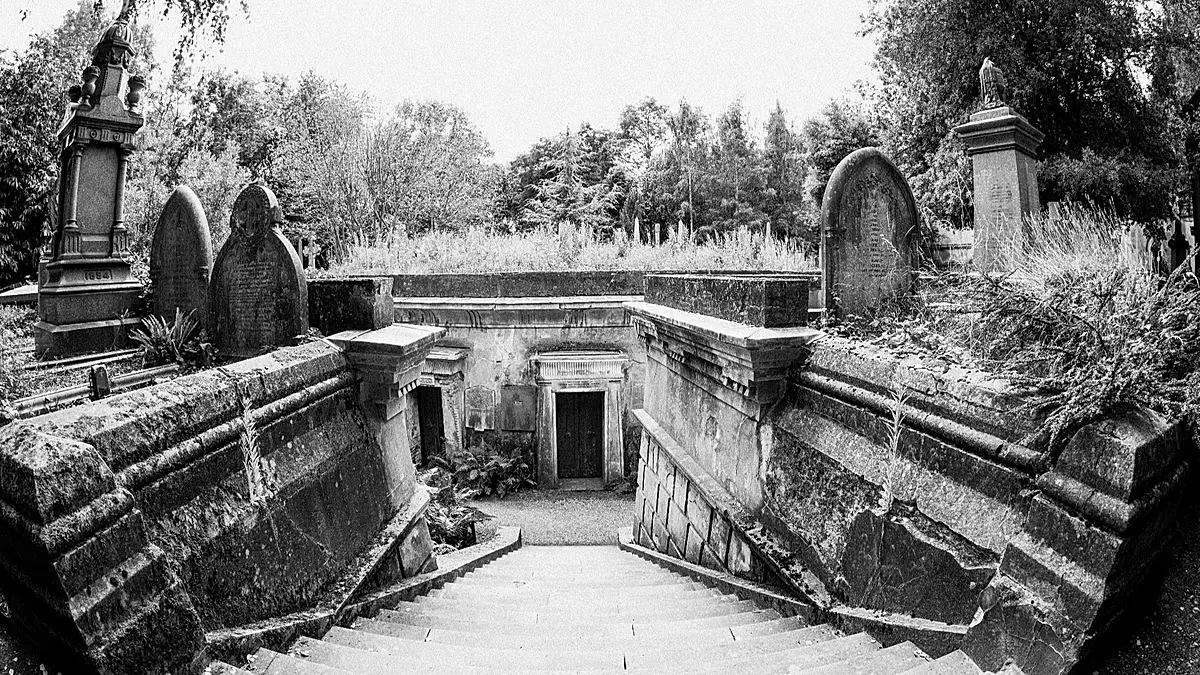
The list also celebrates two cemeteries that offer very different but equally memorable experiences. In Prague, the Olšany Cemetery is a veritable maze of crumbling Baroque tombs, elaborate Art Nouveau monuments, and overgrown pathways—an ideal place for a wandering, contemplative visit during the spooky season. One of Prague’s most famous literary figures, Franz Kafka, is buried here, which alone is enough to draw book lovers from around the world. The cemetery’s slightly wild, unpolished character makes it feel genuinely haunted, in the best possible way. If you have time, it pairs beautifully with a visit to nearby Vyšehrad Cemetery, where Czech cultural icons like composers Antonín Dvořák and Bedřich Smetana, artist Alfons Mucha, and writer Karel Čapek are laid to rest. Meanwhile, in London, Highgate Cemetery is arguably the most atmospheric burial ground in the United Kingdom, though it does come with a small caveat: unlike most cemeteries on the list, it isn’t free to enter unless you’re a grave owner or hold a grave owner’s pass. Still, it remains wildly popular, and for good reason. Karl Marx is buried here, alongside literary greats like George Eliot and Christina Rossetti, as well as scientist Michael Faraday. The Victorian Gothic architecture is stunning—overgrown mausoleums, ivy-draped angels, and the famous Egyptian Avenue, all set within a Grade I listed landscape that contains around 950 notable burials. It’s deeply photogenic and richly atmospheric, the kind of place that feels like stepping into a different era entirely.
Ultimately, the Tombstone Tourism Index is a celebration of cemeteries as places of beauty, memory, and storytelling. Whether you’re standing before Jim Morrison’s grave in Paris, watching the leaves fall in Oslo’s peaceful Victorian grounds, or getting lost among the mossy monuments of Prague, these spaces offer something that typical Halloween attractions simply cannot: a genuine connection to the past. They invite you to slow down, to wonder about the lives behind the names, and to appreciate the artistry of the sculptors and architects who created these enduring memorials. And because most of them are free, they’re accessible to everyone, no matter the budget. So this Halloween, consider skipping the long lines and ticket booths. Instead, take a walk through a historic cemetery—whether it’s one of the famous spots from this list or a small graveyard in your own hometown. You might just discover that the real magic of the season isn’t in manufactured fear, but in the quiet, beautiful, and sometimes eerie experience of remembering those who came before us. As Saily’s Matas Cenys noted, these places are worth visiting any day of the year—but there’s something especially fitting about spending a little time among the tombstones when the nights grow longer and the air turns crisp. After all, the best stories often begin where the living and the dead share the same shadowy ground.