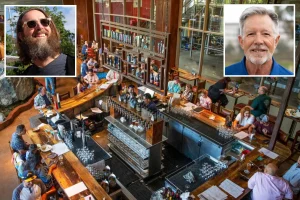



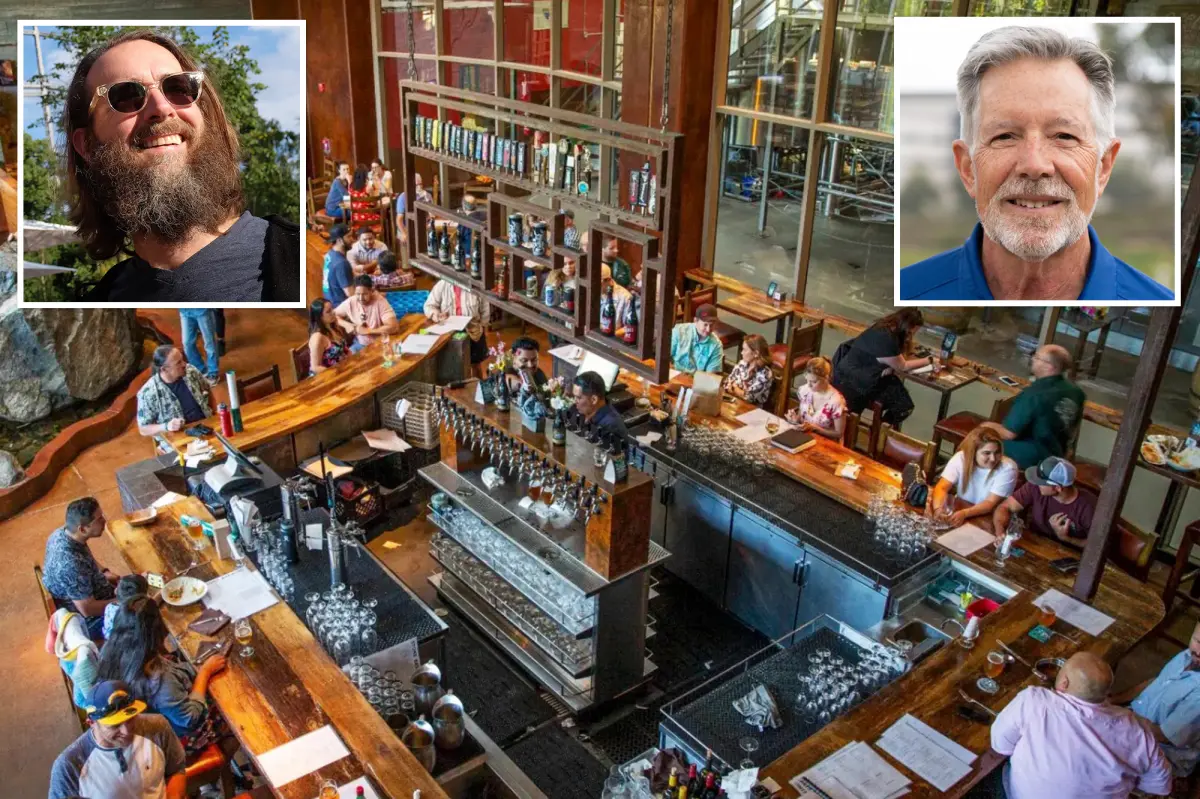
The news arrived like a bittersweet echo from the past, a familiar name rising from the ashes of corporate retreat. Greg Koch and Steve Wagner, the two visionaries who built Stone Brewing into a California icon, are coming home. After their beloved World Bistro & Gardens in Escondido was shuttered by new owners and left to gather dust, the founders have reclaimed the space and will reopen it as Quarry Escondido on November 14. The announcement sent a ripple of joy through the craft beer community, a collective exhale from locals who had mourned the loss of a landmark that was never just a restaurant, but a living, breathing testament to what passion can build. For Koch, the place is more than stone and mortar; it’s the very soil of his history. “That place will always be a very big part of me,” he confessed, his voice carrying the weight of memories. “But really, my favorite thing is to be off to the edge and just listen to the talking and the laughter and clinking of glasses and dishes.” It was that symphony of human connection he missed most, the soundtrack of a dream that outgrew its own walls.
To understand the magnitude of this resurrection, one must rewind to 1996, when a single keg of Stone Pale Ale in San Marcos announced the arrival of a brash, rebellious voice in the brewing world. Koch and Wagner were not content to simply make beer; they wanted to push boundaries, to challenge palates, and to create a space where the beverage itself was the protagonist of a larger experience. When they moved to Escondido in 2006, they unveiled their magnum opus: a sprawling 57,000-square-foot bistro and gardens that felt less like a commercial establishment and more like a pilgrimage site. Carved into the earth, with massive boulders, meandering paths, ponds reflecting the sky, and a vine-enclosed hideout, it was a playground for adults. The expansive patio, dotted with fire pits, invited long conversations that stretched into the night. At its zenith around 2016, it was the third-largest tourist attraction in the region, drawing nearly 500,000 visitors a year, trailing only Legoland and the San Diego Zoo Safari Park. Doug Constantiner, founder of Societe Brewing, remembered it with reverence: “They built a place where beer, food and hospitality were one experience. When I came to San Diego to learn from the best, their bistro was the gold standard. It set the bar across this town and the country.” It was more than a tasting room; it was a cathedral where the craft beer movement came to worship.
Then came the corporate tides, cold and impersonal. In 2022, Stone Brewing fell into the hands of Japanese giant Sapporo, a union that felt uneasy from the start. The machinations of global business are rarely kind to local soul. In May, as part of a complex sale, the brand and several hospitality locations were traded to Firestone Walker and Duvel Moortgat, but the Escondido properties languished, unmentioned and unloved. By August, the new parent company announced it would shutter the three Escondido locations, moving production to Paso Robles and Kansas City, and leaving hundreds of employees scrambling for a future. In November, the Bistro & Gardens was to close its heavy wooden doors for good. The decision was a blow to the community, but for Koch and Wagner, it was an amputation. They watched as a place they had poured their lifeblood into was left to wither. They couldn’t stand it. So, with the quiet determination of founders who refuse to let their legacy become a footnote, they moved to take it back. The bistro was never part of the brand sale, so the path was clear. They would resurrect it, not as Stone, but as Quarry Escondido—a new name that honors the rugged landscape that cradles it, yet retains the spirit of the original.
The new venture is not a museum piece, but a living evolution. Koch is quick to reassure that Quarry Escondido will remain faithful to the soul that made it special, even as it forges its own identity. The beer program, he emphasized, will be a celebration of the entire craft brewing community, a tribute to the very movement that Stone helped ignite. “It will offer up new experiences and new dishes on the menu,” he said, “going back to its earlier days of an entree-focused menu. But people shouldn’t expect anything very dramatic.” The understated tone is deliberate; the founders are not trying to recreate a nostalgic past, but to breathe life into a space that has always thrived on authenticity. The stone walls, the winding garden paths, the glowing fire pits—they will all remain, but filled with a new energy. The menu will coax out flavors that complement the complex hops and malts, and the staff will be trained to curate moments, not just orders. For those who remember the glory days, it will feel like a homecoming; for a new generation, it offers a chance to discover a place that once defined an era. The reopening is a phoenix risen, fueled by the cowardice of corporations and the resilience of dreamers.
For the thousands of fans who had feared the landmark would vanish, the announcement was a balm for their collective anxiety. Social media erupted in raw, unfiltered emotion. “I’m literally CRYING TEARS OF JOY,” one Instagram user posted, speaking for a chorus of devotees. It was not an overreaction; it was a testament to the profound bond between a place and its people. The bistro had hosted first dates, anniversaries, reunions, and quiet afternoons of contemplation. It was the backdrop for countless memories, a steady character in the stories of San Diego locals. The reopening is a counter-narrative to the relentless tide of closures and corporate takeovers that have swept through the craft beer industry. That industry, which once seemed invincible, has faced a brutal reckoning. The hype of the 2000s has faded, the pandemic forced hundreds of breweries to their knees, and a national trend of declining alcohol consumption now looms like a storm cloud. Stone Brewing itself, once the ninth largest craft brewery in the U.S., has felt the tremors. Yet the founders are not retreating; they are doubling down on what matters most: place, community, and the simple, profound pleasure of raising a glass among friends.
As Quarry Escondido prepares to open its doors, Koch and Wagner are not just welcoming customers; they are reuniting with family. The bistro will once again be a stage for laughter, conversation, and the clinking of glasses—the sounds that have always been more than noise to them. “It will be a happy day,” Koch mused, his voice thick with anticipation. The decision to resurrect the venue is a lesson in humility and courage, a reminder that some things are too precious to be abandoned to the whims of distant shareholders. It is a small victory for localism, a defiant stand against the sterile uniformity of corporate sprawl. The founders know that the industry is different now; the glory days of endless growth may be behind them. But they are not chasing glory. They are chasing warmth. They are building a hearth for the community, a place where the hearth fire is always lit, and the welcome mat is always out. In a world that often feels disconnected and cold, Quarry Escondido will offer something increasingly rare: a corner of the earth where the soul can breathe, where the past and future meet over a pint, and where two old friends, having come full circle, finally get to say, “We’re home.”