

1. A Quiet Street Becomes the Scene of Unspeakable Horror
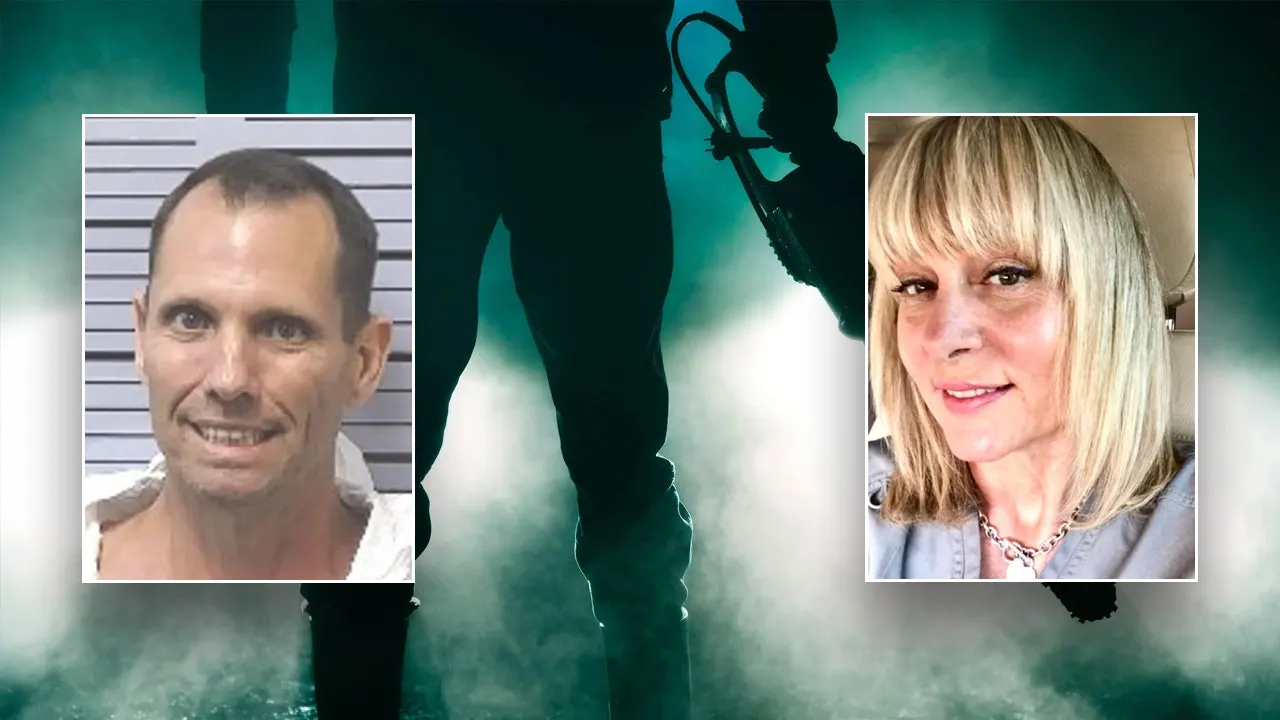
What began as an ordinary autumn evening in a quiet Mobile, Alabama neighborhood turned into a nightmare that no family could ever prepare for. On October 12, police were called to a home on Carolina Court, where they discovered the bodies of two women, both killed in a manner so violent that it immediately shocked even seasoned investigators. The victims were Christy Deloach, 65, and her mother, Dora Boone, 85. Authorities arrested Thomas Henry Steele, 47, the grandson and nephew of the victims, at the scene. He now faces two counts of capital murder, accused of using a chainsaw to take the lives of the very women who had welcomed him into their home. It is a crime that defies comprehension, not only because of the brutality involved but because it happened inside the walls of a family home, where love and safety are supposed to live. The address on Carolina Court was not just a house; it was the home where Dora and her late husband Phillip had settled in 2014, a place where Christy had devoted herself to caring for her aging mother after her father’s death. Now that home is a crime scene, and the family is left to grapple with an agony that no one could have foreseen. As the community reels, the legal system has begun its slow, careful process of determining what happened, why it happened, and what justice should look like for two beloved women whose lives ended in such a horrifying manner. But behind the legal jargon and the court dates lies a deeply human tragedy, one that involves mental illness, missed warnings, and a family trying to make sense of an incomprehensible loss.
2. A Desperate Call for Help Before the Tragedy Unfolded
In the hours before the bodies were found, there was already a sense that something was deeply wrong. A relative, worried about Steele’s behavior, placed a call to 911. The transcript of that call, later obtained by AL.com, reveals a family member desperately trying to get help for a man who seemed to be slipping away from reality. She told the dispatcher that Steele had stopped taking his lithium, a medication commonly prescribed for bipolar disorder. He had given away his phone and was talking about giving away his vehicle. He told her he planned to “live for God.” While those words might sound peaceful to some, to his family they were alarming signs of a man in the midst of a manic or psychotic episode. The relative described Steele as calm and not violent at that moment, but clearly something was off. She mentioned the possibility of contacting 988, the national suicide and crisis lifeline, and the dispatcher gave her the non-emergency number for Mobile police. The call ended without a clear resolution, and no one could have imagined that within hours, the situation would escalate into a double homicide. This 911 call is a haunting reminder of the limits families face when trying to help a loved one who is in the throes of a mental health crisis. Loved ones often find themselves navigating a fragmented system, unsure whether to call emergency services, seek a mental health commitment, or simply wait and hope. The tragedy that followed raises painful questions about whether more could have been done, whether the signs were missed, and whether a different response could have saved Christy and Dora from their horrific fate. It is a burden that the surviving family members will carry with them forever, wondering if there was some other path that could have led to a different outcome.
3. A Courtroom Outburst Adds a Disturbing New Layer
The case took an even more disturbing turn when Steele appeared in court the day after the killings. During a bond hearing and initial court appearance before Mobile County Circuit Judge S. Wesley Pipes, the judge appointed public defender Glenn Davidson to represent Steele. What happened next shocked the courtroom: Steele reportedly said “kill him” in reference to his newly appointed attorney. The comment was chilling, especially given the circumstances of his arrest, and it forced the judge to pause and reconsider the entire proceedings. Rather than moving forward with a standard hearing, Judge Pipes ordered an inpatient competency evaluation for Steele, recognizing that his mental state might prevent him from understanding the charges against him or participating in his own defense. The courtroom remark also raised the possibility of additional criminal charges. Tara Zieman, communications director for the Mobile County District Attorney’s Office, told Fox News Digital that prosecutors have “not decided” whether to pursue charges over the threat, pending the results of the mental health evaluation. In the meantime, Steele is being held without bond at a secure medical facility, where he is receiving treatment intended to restore his competency to stand trial. Davidson, the public defender who was the target of the alleged threat, confirmed that he is still representing Steele but said he does not have additional details to share while the evaluation is underway. “It’s a terrible situation but I won’t have an official way to question anybody until we get to the preliminary hearing,” Davidson said. The courtroom outburst adds yet another layer of complexity to an already heartbreaking case, and it underscores the extent to which mental illness may have played a role in the events that unfolded.
4. The Long Road to Competency and Potential Additional Charges
The legal process now moves at a pace that reflects the gravity of the situation. According to the Mobile County District Attorney’s Office, the competency evaluation could take up to 90 days and will be conducted at the Alabama Department of Mental Health. Patients who are admitted for this type of evaluation begin receiving restoration and treatment services immediately, as explained by Malissa Valdes, the Public Information Officer for ADMH. “Patients are referred for their evaluation once their symptoms are stable and they have completed the restoration program. This timeframe varies based on the patient’s treatment, clinical needs, and their symptoms,” Valdes said in an emailed statement. For Steele, this means he will remain in a secure medical facility while doctors work to determine whether he can be restored to a state where he is mentally capable of standing trial. If he is found competent, prosecutors will move forward with the capital murder charges and continue to advocate that he be held without bond until the case is resolved. If he is not found competent, the case could take an entirely different path, potentially involving longer-term treatment or civil commitment. The DA’s office is also weighing whether the courtroom threat against the public defender constitutes a separate crime, a decision that will likely depend on Steele’s mental state at the time of the outburst. Steele’s criminal history includes several DUI cases, the most recent dating back to 2009, but nothing that would have suggested he was capable of such violence. He is currently scheduled for arraignment on November 19 at 9 a.m. before Mobile County Circuit Court Judge Jay York, though that date could shift depending on the outcome of the competency evaluation. For the family and the community, this waiting period is agonizing, as they seek answers and closure while the legal system works to ensure that justice is served in a fair and methodical manner.
5. Remembering the Women Behind the Headlines
Amid the grim details of the case, it is important to remember that Christy Deloach and Dora Boone were real people with rich lives, deep connections, and a place in their community. Christy, in particular, was a familiar face in Mobile, having spent 15 years working at Mr. Sam’s Hair Fashions, a local salon where she was known not only for her skill as a stylist but for her warmth and kindness. Lenny Zanghi, the salon owner, remembered her as a “real sweet girl” and a “beautiful person.” “I considered her a friend. You know, she’d been with us for 15 years, and she cut my hair,” Zanghi told WKRG. For 15 years, Christy showed up to work, greeted clients with a smile, and made people feel better about themselves, both through her craft and her compassionate spirit. She was the kind of person who lifted others up, and her loss leaves a void that cannot be filled. Christy’s devotion extended beyond the salon, however. After her father, Phillip Boone, passed away, she took on the role of caregiver for her mother, Dora, ensuring that she was not alone in her later years. The two women lived together in the home on Carolina Court that Dora and Phillip had purchased in 2014, creating a space filled with memories and shared history. Neighbors described the women as kind and active members of the community, always willing to lend a hand or attend a local event. Their deaths have sent shockwaves through the neighborhood, and a makeshift memorial has become a gathering place for those who wish to honor their memory. In the midst of the horror, their loved ones are clinging to the beautiful moments, the laughter, the conversations, and the quiet acts of love that defined their lives.
6. A Community Grieves and Questions the Unthinkable
As the investigation continues and the legal proceedings unfold, the broader community is left to wrestle with a painful and uncomfortable truth: this tragedy might have been preventable if the system had caught the warning signs in time. The 911 call from Steele’s relative shows a family trying desperately to get help for a man who had stopped taking his medication and was exhibiting bizarre behavior. Yet there was no easy path forward. Mental health crises are notoriously difficult to navigate, especially when the person in crisis appears calm and nonviolent. The relative’s call was reasonable, her concerns valid, and her actions responsible, but the outcome was still catastrophic. Zieman told Fox News Digital that she was unsure whether the victims or other family members had made any previous legal attempts to commit Steele for mental health observation, but the question lingers in the minds of many. Could a different intervention have changed the course of events? Would a hospital stay, a court-ordered treatment plan, or a more urgent response to the 911 call have prevented the deaths of two innocent women? These are questions that may never be fully answered, and they only add to the grief and frustration felt by those who loved the victims. What is certain is that two women are gone, their lives cut short in a manner that is almost too painful to contemplate. Steele, if ultimately found competent and convicted, faces the possibility of life in prison or the death penalty, but no legal outcome can undo the damage that has been done. The case serves as a somber reminder of the fragility of the human mind and the devastating consequences that can occur when mental illness goes untreated. For now, the family mourns, the community prays, and the justice system continues its solemn work. In the end, this is not just a story about a crime; it is a story about loss, about love, and about the desperate need for compassion and understanding in the face of unimaginable darkness.