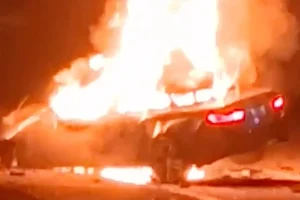


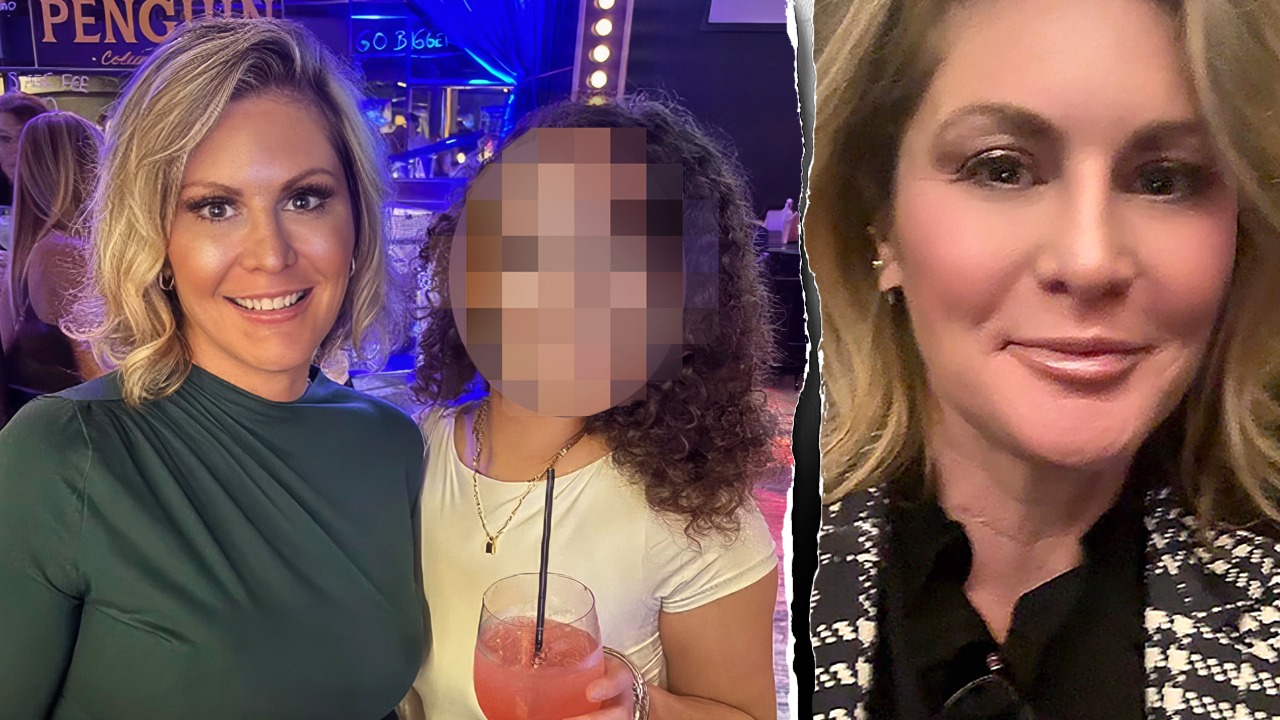
At just past one o’clock in the morning on Oct. 11, a quiet intersection outside Kansas City became the site of a tragedy that would leave a Missouri family shattered and a police department facing difficult questions. Misty Leslie, a 48-year-old mother and businesswoman, was driving her 2022 Audi SQ5 northbound through the crossing when an Independence Police Department officer, responding to an emergency call in a 2024 Ford Explorer patrol SUV, plowed into the passenger side of her luxury vehicle. The officer was traveling west on U.S. Highway 24 with his emergency lights and siren activated at the time, and the collision was so violent that both drivers had to be transported to area hospitals. Leslie arrived with serious injuries and was later pronounced dead. The officer, by contrast, was released after treatment, suffering no life-threatening harm. Early evidence, according to Independence police, indicated that the officer had a green light while Leslie faced a red light, and both drivers were wearing seat belts. But that fragment of information did little to comfort those who knew and loved her. It raised more questions than it answered: What was the emergency that made it necessary for the officer to race through the night? At what speed was he traveling? Did he slow down or check the intersection before entering? And above all, how could a routine drive end so catastrophically? Misty Leslie was not a statistic or a stranger. She was a woman with a daughter, a demanding career, and a passion for photography, someone who had worked hard to build a life. The initial police statement, issued in the clinical language of dispatch reports, offered no sense of the life that was lost. For her family, the wait for answers was only beginning.
The crash remains under active investigation by the Independence Police Department, though officials have been careful not to release additional details. They have not disclosed the speed of either vehicle, the nature of the emergency call that sent the officer through that intersection, the officer’s duty status, or whether any dashboard camera or body-worn camera footage captured the incident. Fox News Digital has since submitted public records requests under Missouri’s Sunshine Law, seeking crash reports, dispatch logs, available video, and the department’s emergency-driving policies. In the meantime, the timeline of the night has been pieced together from initial statements and witness accounts: Leslie’s northbound Audi entered the intersection as the patrol SUV raced west through a green light. Police contend the signal in Leslie’s direction was red, and if that proves true, it may shape the legal outcome. But those who loved her argue the issue is not only whether she committed a traffic violation; it is whether the officer was exercising the caution expected of someone operating a high-speed vehicle among civilians. A person who runs a red light may be negligent, but an officer speeding through an intersection in the middle of the night carries the obligation to ensure that doing so is safe. Emergency lights and sirens do not confer immunity from responsibility. They are tools meant to alert and protect, and they failed that night. The Missouri State Highway Patrol has been contacted to see if it will participate in the investigation, a move that would add an independent layer of oversight. For now, the official story remains incomplete, and every day without answers deepens the suspicion that the full truth may be harder to reveal than a simple traffic citation.
Leslie’s death lands at a moment of heightened scrutiny for the Independence Police Department, which has spent years defending its driving record. During a City Council meeting in March, interim Police Chief Douglas Brinkley acknowledged that Independence officers had conducted 541 pursuits in 2025, a startling figure when compared to Kansas City’s 137 pursuits over the same period. He told council members that he understood the department had a reputation for pursuing suspects, but insisted that risk had to be balanced against reward. A 2024 investigation by The Kansas City Star found that Independence led the entire Kansas City metropolitan area in high-speed police pursuits. The newspaper’s data showed more than 1,200 pursuits across the region in 2022, resulting in more than 150 crashes and 51 injuries, with Independence responsible for about one-third of those injuries. Those statistics prompted the department to revise its pursuit policy earlier in the year, restricting chases for minor traffic violations and city ordinance offenses. But the crash that killed Misty Leslie did not occur during a pursuit. It took place while an officer was answering an emergency call, a distinction that makes the case both different and, in some ways, more troubling. Emergency responses have a legitimate purpose, but they also carry inherent dangers, and the public has a right to know whether the officer’s driving complied with departmental training and the law. The scrutiny surrounding Independence’s pursuit culture has created an atmosphere in which residents are no longer willing to accept official statements at face value. They have seen too many statistics and heard too many promises. Now, a woman is dead, and the burden is on the department to demonstrate that this tragedy was not the predictable outcome of a culture that too often prioritizes speed over safety.
Misty Leslie was defined not by the way she died but by the fullness with which she lived. At 48, she had built a career as a district manager with Signet Jewelers, where she supported the Banter by Piercing Pagoda brand, a role that put her in contact with countless employees and customers. Colleagues remember her as a determined and competitive leader, the kind of manager who cared deeply about the people she supervised and brought an infectious passion to her work. Away from the corporate world, she channeled her creativity into her own business, EBW Photography, which she founded to capture the important moments in people’s lives. Her photographs were more than images; they were stories, preserving weddings, celebrations, and quiet family moments with an artist’s sensitivity. But those professional accomplishments, impressive as they were, took second place to her greatest source of pride: her daughter, Emarea Leslie. Her obituary put it simply: “Of all the titles Misty held throughout her life, being Emarea’s mom was the one that mattered most.” As a single mother, she built a life for her daughter and gave her the kind of unconditional love that shapes a person’s character. Friends say she applied the same standard to everything she touched—her relationships, her job, her photography, and her role as a parent. She could not do anything halfway, and that intensity was part of her charm. It meant she was all in, whether she was mentoring a young employee, capturing a bride’s first look, or cheering for Emarea at some milestone. The suddenness of her death makes it hard for those who loved her to reconcile the vitality she radiated with the silence she leaves behind. She was taken at a moment when her daughter still needed her, and that fact makes the loss all the more unbearable.
The depth of Misty Leslie’s impact is visible in the tributes that poured out after her death, none more moving than the words of her close friend Christel Meinhold. In a Facebook post, Meinhold described a friendship that had grown around raising children side by side, two women navigating the demands of motherhood and leaning on each other through life’s hardest seasons. Over the years, their bond expanded to include each other’s children, and Leslie became an irreplaceable presence in Meinhold’s son’s life. Meinhold captured the essence of her friend in a single line: “If you knew Misty, you knew that woman couldn’t do ANYTHING halfway.” It was an observation that made her friends smile because it was so true. She loved deeply, worked fiercely, and gave herself completely to the people and projects she believed in. The tribute also included a sentence that speaks to the ache of small moments forever lost: “I wish we had one more three-hour conversation that solved absolutely nothing.” Those words resonate because they evoke the ordinary magic of friendship—long talks that wander through topics, laughter that spills over into the night, and the comfort of sitting with someone who knows you completely. Meinhold’s grief is shared by many, but her words offer a window into who Misty was away from the job and the camera. She was a friend who showed up, who remembered, who cared. A funeral service was held on Oct. 19 in Lee’s Summit, Missouri, where family and friends gathered to say goodbye. They came carrying flowers, photographs, and stories, trying to celebrate a life cut cruelly short while still struggling to understand why it ended so abruptly. For every person in that room, the loss was personal, and the memory of Misty’s laugh, her determination, and her enormous heart was the only comfort available.
The death of Misty Leslie is a deeply personal tragedy, but it is also a public one. It forces a community to confront the difficult relationship between emergency response and public safety. Police officers are empowered to drive at high speeds, to use lights and sirens, and to ask other drivers to yield. With that power comes an enormous responsibility to avoid unnecessary harm. When an officer’s vehicle kills an innocent civilian, the damage extends far beyond a single crash. It erodes trust, raises doubts about training, and makes every future emergency response a little more complicated. The Independence Police Department has promised to conduct a thorough investigation, but the answers it provides will have to be more than just credible; they will have to be transparent. Already, public records requests have been filed, and news organizations are pressing for the same information that any citizen would want: the speed of the officer’s vehicle, the nature of the emergency call, whether protocols were followed, and whether any video footage exists. Those details will do more than determine liability. They will tell the community how much it can trust the people whose job is to protect them. For Misty’s daughter, Emarea, no explanation will ever be enough. No report will fill the empty chair at family gatherings. No policy change will bring back the woman who captured important moments in other people’s lives but was denied the chance to see her own future unfold. The only way to honor her is to demand that her death not become just another statistic. It should be a lesson that speed and urgency must never outrun compassion and caution. The investigation will continue, but the memory of Misty Leslie will endure, carried by the daughter who was her pride, the friends who loved her, and a community that now knows her name—and the cost of losing her.